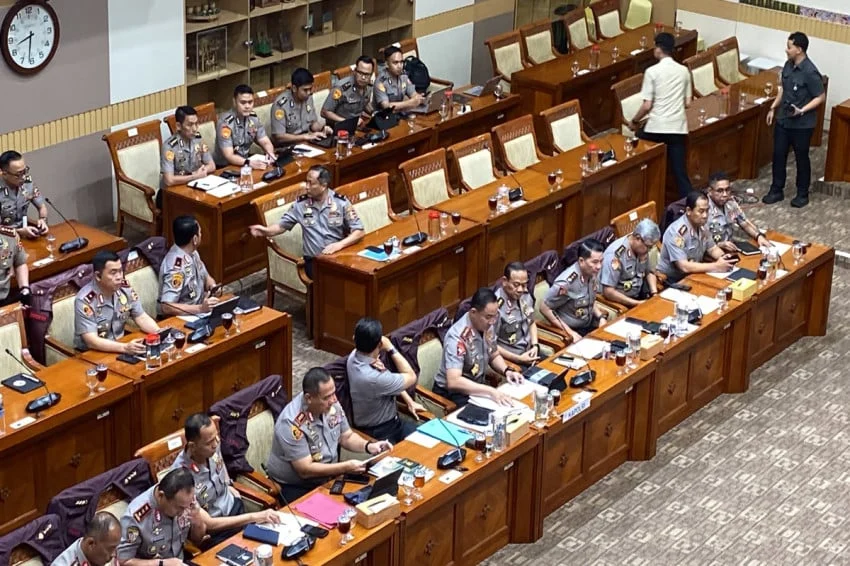
National Police Chief General Suyudi Ario Seto has officially disclosed the involvement of a high-ranking officer, identified by the initials TK and holding the rank of Brigadier General, in the highly sensitive investigation regarding the alleged illegal wiretapping of President Prabowo Subianto. The disclosure occurred during a formal working session with the House of Representatives’ (DPR RI) Commission III in Senayan, Jakarta, on Thursday, November 12, 2026. This revelation marks a critical escalation in the ongoing internal investigation into a rogue intelligence operation that has shaken the foundations of the Indonesian National Police.
The testimony provided by General Suyudi serves as a pivotal moment in uncovering the chain of command behind a sophisticated surveillance operation that allegedly bypassed standard legal protocols and judicial oversight. According to the evidence presented, the operation was not a solitary act but a coordinated effort involving multiple high-ranking officers, raising profound questions regarding the integrity of the institution’s internal surveillance mechanisms.
The Mechanism of the Illegal Surveillance
During his testimony, the National Police Chief detailed the specific roles played by the identified suspects. Central to the operation is Irjen Ahrie Sonta, who is accused of directing the illegal activities. According to the findings, Ahrie Sonta allegedly leveraged his position to order the wiretapping of sensitive targets without the mandatory warrants or the involvement of authorized investigative units.
The testimony revealed that Ahrie Sonta did not act alone in managing the tactical execution of these orders. He is alleged to have issued directives to a subordinate, identified as AS—who served as the Acting Head of Monitoring (Plt Kabagmon) between October 7, 2025, and October 1, 2026. AS, in turn, acted as the operational bridge, relaying instructions to technical operators to conduct the wiretapping.
Perhaps the most significant revelation concerning the hierarchy of the operation was the involvement of the officer with the initials TK. General Suyudi stated that after receiving reports on the wiretapping results, the operation was further expanded. TK, holding the rank of Brigadier General, was explicitly tasked with overseeing "surveillance" activities. This indicates that the operation involved a two-pronged approach: electronic interception of communications followed by physical or digital observation of the targets.
Chronology of the Internal Scandal
The uncovering of this surveillance network was not the result of external whistleblowing, but rather a consequence of a deeper internal probe initiated following the discovery of a suspicious digital trail. The investigation gained significant momentum when investigators traced the origins of the operation to a clandestine group communication channel.
As previously reported by police officials, the dismantling of this illegal ring began when authorities discovered orders related to the forced dissolution of a WhatsApp group. This specific digital evidence provided the initial "thread" that allowed investigators to unravel the entire web of conspiracy.
- October 7, 2025: Commencement of the period under scrutiny, during which AS assumed the role of Acting Head of Monitoring.
- October 2025 – October 2026: The active period of the alleged illegal surveillance operations directed at high-level state figures.
- Early November 2026: Intensified internal investigations within the National Police’s Internal Affairs Division (Propam) following the discovery of the illicit communication chain.
- November 12, 2026: General Suyudi Ario Seto formally reports the findings to Commission III of the DPR RI, naming key suspects including the Brigadier General identified as TK.
The Role of Institutional Oversight
The involvement of a Brigadier General in an operation directed at the Head of State represents a significant breach of protocol. Under Indonesian law, wiretapping and surveillance activities involving high-ranking state officials are strictly regulated and require explicit judicial or legal authorization. The bypassing of these protocols suggests a systemic failure within the specific units tasked with monitoring.
Kadiv Humas Polri, Inspector General Johnny Eddizon Isir, emphasized that the internal investigation is currently running parallel to a comprehensive criminal inquiry. The police force is working to ensure that every individual involved, regardless of their rank or position, is held accountable. The objective is to restore public trust in the National Police, which has been severely tested by this scandal.
Broader Implications for National Security
The implications of this incident extend far beyond the immediate dismissal or suspension of the officers involved. The fact that an illegal surveillance operation could persist for nearly a year without being intercepted by higher-level oversight mechanisms raises urgent concerns regarding the independence and security of the President’s communication channels.
Security analysts have pointed out that the existence of such an operation suggests the presence of "shadow networks" within the bureaucracy. If individuals within the National Police—an institution designed to uphold the law—can weaponize surveillance technology against the nation’s leadership, it calls for an immediate and comprehensive review of how intelligence assets are managed and monitored.
The legislative body, through Commission III of the DPR RI, has demanded full transparency. Members of the Commission have requested that the National Police provide a detailed report on the technical capabilities used in the wiretapping, the specific targets beyond the President, and the ultimate intent behind the surveillance. The possibility that this information was being sold, used for political leverage, or shared with third parties remains a critical area of focus for the ongoing investigation.
Institutional Reforms and Future Outlook
In response to the scandal, there is growing pressure for the National Police to undergo a structural overhaul. Observers argue that the concentration of surveillance powers within specific divisions, without adequate cross-checks from independent oversight bodies, creates a fertile ground for corruption and abuse of power.
The National Police Chief has signaled his commitment to "cleaning house." However, the path forward remains complex. The legal proceedings against a Brigadier General and an Inspector General require careful handling to ensure that the integrity of the judicial process is maintained while simultaneously preventing the leakage of further sensitive state secrets during the trial phase.
Furthermore, this case has sparked a national conversation about privacy and the digital security of state officials. As technology becomes more sophisticated, the line between legitimate national security monitoring and illicit state-sponsored espionage is becoming increasingly blurred. The Indonesian government is now under pressure to implement more robust cybersecurity measures and stricter accountability protocols for officers handling sensitive intelligence equipment.
Conclusion and Public Response
As the investigation progresses, the Indonesian public remains focused on the potential legal outcomes for the suspects. The naming of the Brigadier General TK serves as a stark reminder that no individual is above the law, regardless of their rank. The National Police is now tasked with the difficult challenge of proving that its internal mechanisms can correct systemic failures without compromising the security of the state.
Moving forward, the coordination between the DPR RI and the National Police will be vital. Regular updates to the Commission are expected, and the findings of the internal Propam investigation are likely to be made public, to the extent that national security interests allow. For now, the case of the "wiretapping of the President" remains one of the most significant internal security challenges the administration has faced in recent years, testing the resilience of Indonesia’s democratic institutions and the commitment of its law enforcement agencies to the rule of law.