The arrival of Mauricio Pochettino at the Carrington training complex marks a significant turning point for Manchester United, a club currently navigating the complexities of a challenging Premier League campaign. Following the conclusion of his tenure with the United States Men’s National Team (USMNT), the Argentine tactician officially stepped into the role of head coach on Wednesday, November 18, 2026. His appointment serves as a strategic intervention aimed at stabilizing a squad that has struggled to find consistent form, with fans and stakeholders alike watching closely to see how the former Tottenham Hotspur and Paris Saint-Germain manager will reshape the team’s identity.
A New Chapter at Carrington
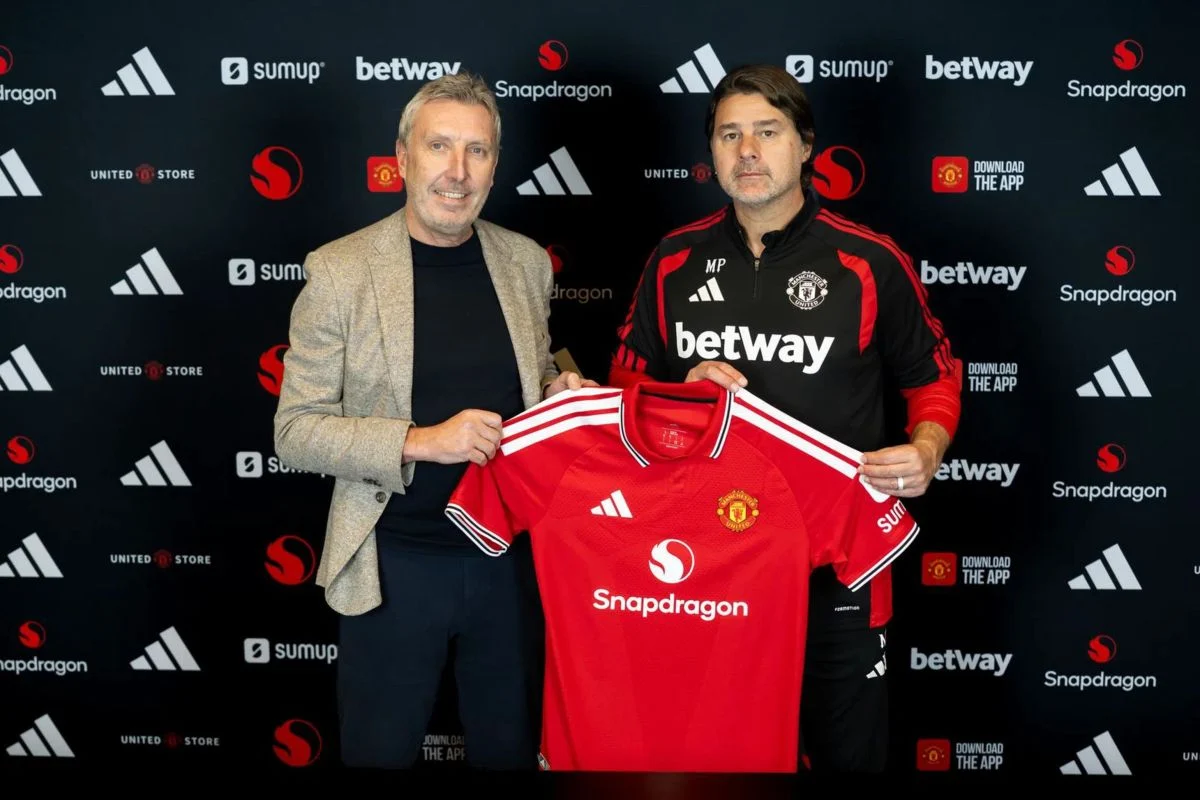
The atmosphere at Carrington was one of transition and renewed purpose as Pochettino held his first session with the available squad members. Clad in the club’s training gear, he was formally welcomed by Director of Football Jason Wilcox, with the two posing for official photographs that signaled the start of a new administrative and technical partnership. For a club that has seen a revolving door of managerial styles over the past decade, Pochettino’s arrival is viewed as an attempt to implement a long-term tactical philosophy centered on high-intensity pressing and fluid attacking play—hallmarks of his previous work in England.
In a direct address to the fanbase, released via the club’s official communication channels, Pochettino emphasized the necessity of a collective effort. "Halo Reds, this is Mauricio Pochettino. I am looking forward to meeting you all soon. I have heard many good things about you. I hope we can bring happiness by working together and staying connected," he stated. His message, delivered with a focus on solidarity, underlines his belief that the club’s performance on the pitch is inextricably linked to the morale and support of the Old Trafford faithful.
Strategic Objectives and Tactical Philosophy
Pochettino’s managerial profile is defined by his capacity to develop young talent and instill a rigorous work ethic. At 54, he brings a wealth of experience from the Premier League, having led Tottenham Hotspur to a Champions League final and multiple top-four finishes during his five-year stint in North London. This experience is expected to be vital as he inherits a Manchester United squad currently navigating a transitional phase following the departure of Michael Carrick.
The primary objective for Pochettino in the short term is to restore a sense of defensive stability and structural coherence. Data from the current season indicates that Manchester United has suffered from defensive lapses and a lack of tactical discipline, often resulting in dropped points against mid-table opposition. By prioritizing a cohesive defensive unit, Pochettino aims to provide the platform necessary for the team’s creative talents to flourish.
"This will be a special season to provide support, to make our players fight on the pitch, and to achieve the results we deserve," Pochettino noted in his introductory statement. By speaking in both English and Spanish, he underscored his commitment to inclusivity, ensuring that the diverse makeup of the United squad and its global fanbase feel a personal connection to his leadership.
The Road Ahead: The Anfield Challenge
The timing of Pochettino’s appointment presents an immediate baptism of fire. His first match in charge will be the high-stakes encounter against Liverpool at Anfield on Sunday, November 22. The rivalry between the two clubs is one of the most storied in world football, and the prospect of a managerial debut at such an iconic stadium adds an extra layer of pressure to the proceedings.
Historically, Anfield has been a difficult hunting ground for Manchester United. Success in this fixture would not only provide a massive boost to the squad’s confidence but would also validate the board’s decision to bring in Pochettino. Tactical analysts suggest that Pochettino will likely focus on a disciplined counter-attacking setup for this specific fixture, attempting to exploit the space left by Liverpool’s aggressive full-backs while maintaining a compact shape in the middle of the park.
Organizational Restructuring and Long-term Vision
The arrival of Pochettino is part of a broader, ongoing restructuring of Manchester United’s football operations under the stewardship of Jason Wilcox. The club has been working to modernize its recruitment strategy, data analysis departments, and youth development pathways. Pochettino’s involvement in these areas is expected to be significant, as he has traditionally favored a collaborative approach with sporting directors to ensure that player acquisitions align with his tactical requirements.
Furthermore, the club’s internal focus is on fostering a winning culture that extends beyond the first team. By emphasizing "unity" as a core pillar of his philosophy, Pochettino is attempting to align the staff, players, and supporters toward a common goal. "This message is about being united, like the name Manchester United. We all need to work together," he reiterated, highlighting that the club’s brand strength must be mirrored by its performance on the pitch.
Industry Context and Managerial Precedents
Pochettino’s transition to Manchester United follows a brief but notable spell with the United States national team. While his tenure with the USMNT was cut short by the opportunity to manage at the highest level of European club football, his experience in international management has added a new dimension to his coaching repertoire. He has often spoken about the need for adaptability, a skill that will be tested as he reconciles the different tactical expectations of the Premier League with the specific requirements of the current Manchester United squad.
Observers of the Premier League have noted that Manchester United’s recent history is characterized by a struggle to maintain long-term success after the departure of Sir Alex Ferguson. Several high-profile managers have attempted to restore the club to its former glory, each bringing their own distinct methodology. Pochettino, however, is perceived as a manager who understands the specific pressures of the English top flight. His familiarity with the intensity of the Premier League media and the demands of the supporters is viewed as a distinct advantage.
Economic and Sporting Implications
The economic implications of this appointment are significant. As a publicly traded entity, Manchester United’s performance on the field is directly correlated with its commercial appeal and sponsorship revenue. A successful season under Pochettino could stabilize the club’s commercial trajectory, while failure to secure European football for the following season could have long-term financial ramifications.
From a sporting perspective, the squad is currently in a state of flux. With several high-earning players facing uncertain futures, Pochettino will have to make difficult decisions regarding the composition of the team. His ability to manage the egos of world-class stars while simultaneously integrating youth academy prospects will be the ultimate test of his leadership. The "special" nature of the season, as he described it, suggests that he is aware of the high stakes and the impatience of the fanbase.
Looking Toward the Future
As the team prepares for the journey to Merseyside, the sentiment around the club is one of cautious optimism. While one manager cannot solve systemic issues overnight, the injection of fresh energy and a clearly defined philosophy provides a roadmap for improvement. Pochettino’s focus on the "connection" between the club and its supporters is a strategic move to regain the trust of the Old Trafford faithful, who have felt increasingly alienated by the team’s lack of progress.
In the coming weeks, the focus will shift from rhetoric to results. The tactical adjustments made during training sessions at Carrington, the selection of the starting eleven for the Anfield clash, and the team’s reaction to adversity will provide the first tangible indicators of the Pochettino era.
The mandate is clear: stabilize, compete, and eventually challenge for the top honors. By calling for a unified front, Mauricio Pochettino has set the tone for a tenure that he hopes will be defined by resilience, tactical intelligence, and a return to the winning mentality that Manchester United has long been associated with. Whether this vision translates into sustained success remains to be seen, but for now, the club has embarked on a new path, with the eyes of the footballing world fixed firmly on the red side of Manchester.
As the countdown to the weekend’s match begins, the message from the manager is a simple one: the club’s resurgence is a collective endeavor, and the work to restore Manchester United to its rightful place in the hierarchy of English football has officially begun. The arrival of Pochettino marks not just a change in leadership, but a potential shift in the culture of the club, prioritizing long-term stability and a cohesive, unified approach to the game.