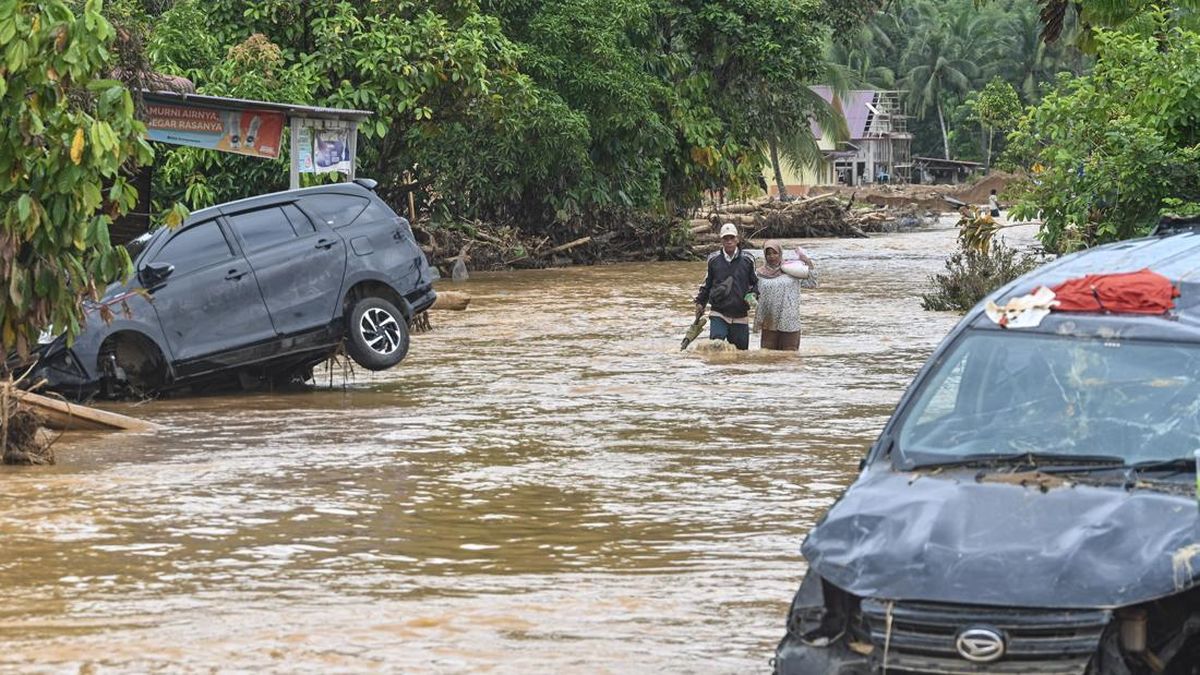
Jakarta, CNN Indonesia – Torrential downpours across Kabupaten Tapanuli Tengah (Tapteng), North Sumatra, on Saturday, July 18, 2026, have triggered widespread flooding, forcing hundreds of residents to evacuate their homes and severely disrupting daily activities across multiple districts. The deluge, which commenced early Saturday, led to significant river overflows and infrastructural damage, submerging residential areas and rendering key transportation routes impassable.
The disaster’s severity was confirmed by Sri Wahyuni Pancasilawati, Head of Emergency Response, Equipment, and Logistics for the North Sumatra Regional Disaster Management Agency (BPBD). Speaking on Sunday, July 19, Pancasilawati detailed the extensive impact across Tapteng, attributing the floods to the high intensity of rainfall that saturated the region and caused several rivers to burst their banks.
Scope of the Disaster: Districts and Villages Affected
The impact has been particularly severe in three key districts, with several villages bearing the brunt of the floodwaters.
In Kecamatan Tukka, the Kelurahan (urban villages) of Sipange, Hutanabolon, and Bonalumban have experienced significant inundation. In Sipange, the overflowing Aek Silaga-laga River sent torrents of water surging into residential properties, prompting a rapid evacuation. "The rising waters of Sungai Aek Silaga-laga forced many residents in Sipange to seek refuge in safer locations, with a significant number currently housed in temporary shelters," Pancasilawati stated, highlighting the immediate humanitarian response.
The adjacent Kelurahan Hutanabolon also saw numerous homes submerged as rivers continued to swell. A particularly critical situation unfolded in Kelurahan Bonalumban, where a crucial dyke reportedly failed under the immense pressure of the floodwaters. This breach resulted in water levels reaching waist-height in many parts of the settlement, trapping residents and causing extensive property damage. The suddenness of the dyke failure exacerbated the crisis, leaving little time for residents to secure their belongings.
Further south, Kecamatan Badiri was also significantly impacted. In Kelurahan Lopian, the swollen rivers inundated major roads, creating hazardous conditions for commuters and halting traffic. "In Lopian, the main thoroughfare was completely submerged, making it impossible for both two-wheeled and four-wheeled vehicles to pass for several hours, effectively cutting off connectivity to certain areas," Pancasilawati elaborated, underscoring the disruption to regional logistics and emergency access.
Kecamatan Pinangsori experienced similar challenges, with Kelurahan Pinangsori and Kelurahan Albion reporting widespread residential flooding. Here, the primary cause was identified as an overwhelmed drainage system, unable to cope with the sheer volume of rainfall, leading to localized flooding from stormwater runoff. This highlights a persistent urban planning challenge in areas prone to heavy rainfall.
While the situation remains critical in many areas, some regions have managed to avert disaster. In Kecamatan Sarudik, specifically Kelurahan Pondok Batu, authorities reported a noticeable increase in the debit (water volume) of local rivers. However, BPBD assessments indicated that "the situation in Pondok Batu remains stable and does not yet pose an immediate threat to residential areas," Pancasilawati confirmed, emphasizing ongoing monitoring efforts in potentially vulnerable zones.
Chronology of Events and Initial Response
The unfolding crisis began with persistent, heavy rainfall over Tapanuli Tengah throughout Saturday, July 18, 2026. This prolonged downpour quickly led to saturation of the ground and an exponential increase in river levels. By late Saturday evening and into the early hours of Sunday, July 19, the situation escalated rapidly as rivers, including the Aek Silaga-laga, began to overflow their banks.
The initial reports of flooding prompted an immediate activation of emergency protocols. The North Sumatra BPBD, in close coordination with local branches, quickly dispatched assessment and response teams to the most affected areas. The breach of the dyke in Bonalumban and the widespread inundation in Tukka and Badiri districts marked the critical phase of the disaster, requiring urgent evacuation efforts.
Upon receiving the distress calls, a joint task force comprising BPBD personnel, elements of the Indonesian National Armed Forces (TNI), the National Search and Rescue Agency (Basarnas), Babinsa (community development non-commissioned officers), and local community volunteers swiftly mobilized. Their primary objectives were immediate evacuation of stranded residents, particularly in areas like Sipange, and comprehensive monitoring of critical infrastructure such as dykes and bridges to anticipate further failures. By Sunday morning, relief efforts were in full swing, with temporary shelters being established and initial aid distribution commencing.
Emergency Response and Relief Efforts
The immediate aftermath of the floods saw a coordinated and robust emergency response. The multi-agency task force has been instrumental in mitigating the disaster’s human impact. Key actions undertaken include:
- Evacuation of Residents: Focused efforts were directed towards rescuing individuals from inundated homes and transporting them to designated safe zones. The Kelurahan Sipange in Kecamatan Tukka emerged as the area with the highest number of displaced persons.
- Establishment of Evacuation Centers: A total of 145 individuals from Kelurahan Sipange have been successfully evacuated and are currently sheltering at the HKBP Sipange Church building, which has been repurposed as a temporary relief center.
- Logistical Support and Public Kitchens: To address the immediate needs of the displaced, a public kitchen (dapur umum) has been fully operationalized at the HKBP Sipange Church. This facility is providing essential food and beverages, ensuring that the evacuees have access to warm meals and clean drinking water. "To meet the needs of the displaced, the public kitchen is actively distributing logistical aid and daily provisions," Pancasilawati confirmed, emphasizing the focus on basic necessities.
- Infrastructure Monitoring: Teams are continuously monitoring the integrity of remaining dykes, bridges, and drainage systems, particularly in areas where water levels remain high or where previous failures occurred. This proactive approach aims to prevent secondary disasters or further damage.
- Post-Flood Cleanup and Preparedness: Even as the immediate crisis subsides in some areas, BPBD personnel remain on high alert. "BPBD officers are still on standby at several locations to assist with the cleanup of flood debris and to anticipate the possibility of follow-up rainfall," Pancasilawati stated, highlighting the ongoing vigilance against potential resurgence of flooding.
Fortunately, no fatalities have been reported as a direct result of this flooding incident, a testament to the swift emergency response and community cooperation. However, the long-term impacts on livelihoods and infrastructure are yet to be fully assessed.
Background Context: Tapanuli Tengah’s Vulnerability
Tapanuli Tengah, located on the western coast of Sumatra, is geographically predisposed to such natural disasters. The region is characterized by a combination of hilly terrain, numerous rivers flowing into the Indian Ocean, and a tropical monsoon climate. This topography, coupled with its proximity to the equator, makes it susceptible to intense, localized rainfall events, particularly during the peak of the rainy season.
Indonesia, as an archipelago, experiences two primary seasons: a wet season and a dry season. The period from October to April typically brings higher rainfall, but climate change has increasingly led to unpredictable weather patterns, including more frequent and intense extreme weather events outside of traditional seasons. The July 2026 floods in Tapteng underscore this growing trend, where "heavy rain" can often exceed 50-100 mm within a 24-hour period, a volume that quickly overwhelms natural and man-made drainage systems.
Over the years, issues such as rapid urbanization, changes in land use (including deforestation in upstream areas), and inadequate or aging drainage infrastructure have exacerbated the flood risk. When rivers like Aek Silaga-laga swell, the combination of increased runoff from deforested areas and constricted waterways in populated zones often leads to rapid and severe inundation. The reported dyke failure in Bonalumban further points to potential vulnerabilities in flood control infrastructure that may require urgent review and reinforcement.
Inferred Official Responses and Meteorological Outlook
While specific quotes from all parties were not available, typical responses from relevant agencies during such a crisis can be logically inferred:
- Local Government (Regent’s Office): The Regent of Tapanuli Tengah would likely issue a public statement expressing deep concern for the affected residents, assuring them of full government support for relief and recovery efforts, and calling for calm and cooperation from the community. The Regent’s office would also likely coordinate with provincial and national agencies for additional resources.
- BMKG (Meteorological, Climatological, and Geophysical Agency): The BMKG would have likely issued early warnings for heavy rainfall in the region. Following the floods, they would continue to monitor weather patterns, providing updated forecasts regarding the potential for further rainfall, strong winds, or other meteorological phenomena that could impact recovery efforts. Their data would be crucial for BPBD in planning ongoing operations.
- Ministry of Public Works and Housing: Given the dyke failure and drainage issues, this ministry would likely be involved in assessing the structural integrity of flood control infrastructure and planning for necessary repairs or upgrades in the medium to long term.
Broader Impact and Long-Term Implications
The floods in Tapanuli Tengah, while contained without loss of life, carry significant broader implications for the region:
- Economic Disruption: The immediate economic impact on affected communities is substantial. Many residents rely on agriculture, fishing, or small businesses for their livelihoods. Submerged homes mean damaged goods, lost inventory, and inability to work, leading to immediate financial hardship. Roads rendered impassable disrupt supply chains and local commerce.
- Public Health Concerns: Standing water after floods poses significant public health risks, including the spread of waterborne diseases like cholera, typhoid, and leptospirosis. Contaminated water sources, lack of proper sanitation in evacuation centers, and exposure to disease vectors become critical concerns that require robust public health interventions.
- Infrastructure Resilience: The dyke breach in Bonalumban and the overwhelmed drainage systems highlight the urgent need for enhanced flood control infrastructure. This incident serves as a stark reminder for local and national governments to invest in resilient infrastructure, including improved dyke maintenance, modernized drainage networks, and potentially early warning systems.
- Environmental Impact: Flooding can lead to soil erosion, particularly in areas with reduced vegetation cover. The deposition of silt and debris can alter riverbeds and agricultural land, impacting long-term productivity.
- Psychological and Social Impact: Being displaced from one’s home and losing personal belongings can have profound psychological effects on individuals and families. The disruption to daily routines, education, and community life requires sustained social support services.
- Policy Review: This event will likely prompt a review of land-use planning and disaster preparedness policies in Tapanuli Tengah and similar vulnerable regions across Indonesia. Emphasis on sustainable urban development, environmental conservation, and community-based disaster risk reduction strategies will be paramount for future resilience.
As the immediate crisis subsides, the focus will shift from emergency response to rehabilitation and reconstruction. This will entail not only rebuilding homes and infrastructure but also implementing long-term strategies to adapt to and mitigate the increasing risks posed by extreme weather events in a changing climate. The collective efforts of government agencies, local communities, and non-governmental organizations will be crucial in ensuring a swift and sustainable recovery for Tapanuli Tengah.