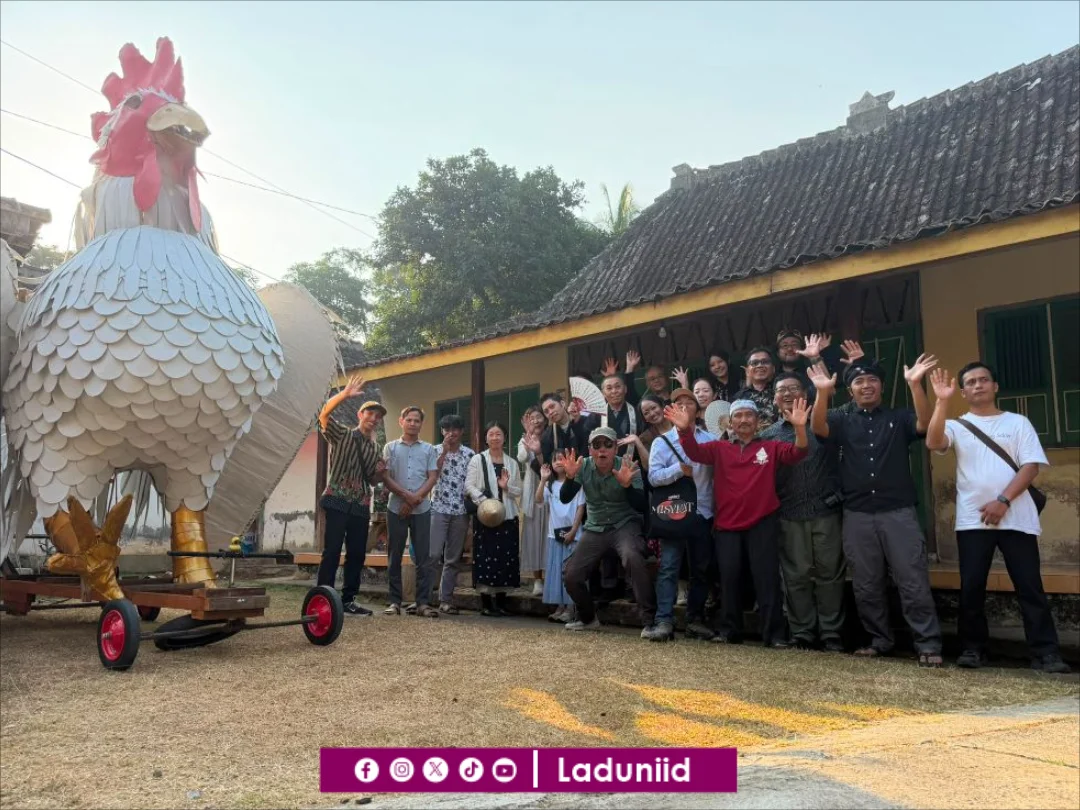
Kemetul Village, nestled within the picturesque landscapes of Susukan District, Salatiga Regency, Central Java, became the vibrant stage for a profound cross-cultural exchange on Friday, July 17, 2026. A distinguished delegation from the historic Mii-dera Temple in Shiga, Japan, accompanied by representatives from the Sakuranesia Foundation, undertook a special visit to immerse themselves in the rich tapestry of Indonesian tradition, specifically observing the revered Jolenan ritual. This significant event, deeply rooted in the agrarian rhythm of the community, serves as a quintessential ‘sedekah bumi’ or earth almsgiving, a heartfelt expression of gratitude for bountiful harvests and the enduring blessings of nature.
The Japanese delegation, led by the 164th Head Priest of Mii-dera Temple, the venerable Toshihiko Fuke, was accorded a warm and elaborate traditional welcome by the local community. Upon their arrival, they were personally greeted by the Kepala Desa (Village Head) of Kemetul, Agus Sudibyo, alongside Meela Nazary, who, in her capacity as Ibu Kepala Desa and a knowledgeable cultural guide, played a pivotal role in facilitating the visitors’ understanding of the local customs. The high-profile contingent from Japan also included Head Priest Fuke’s esteemed wife, Hiroko Fuke; key Mii-dera Temple administrators, Toshitaka Fuke and Katsuya Sumi; Toshitaka’s daughter, Iroha Fuke, who represented a younger generation engaging with cultural heritage; and temple affiliates Ichiko Horiguchi and Masao Hatase. The Sakuranesia Foundation, instrumental in orchestrating this cultural bridge, was represented by Tomomi Sakura Ijuin, Tofik, Ken Ito, and Miu Kido, underscoring their commitment to fostering deeper ties between Indonesia and Japan through shared cultural experiences.
A Deep Dive into Kemetul’s Jolenan: A Harvest of Gratitude
The Jolenan ritual, a localized manifestation of the broader ‘Sedekah Bumi’ tradition, is far more than a mere ceremony; it is the spiritual heartbeat of agrarian communities across Java. Annually observed, typically after the main harvest season, it embodies a profound philosophy of gratitude, reciprocity, and communal solidarity. Farmers, whose livelihoods are intrinsically linked to the land, offer thanks to the Almighty and the spirits of the earth for the fertility of the soil, abundant yields, and protection from calamities. In Kemetul, the Jolenan is a meticulously planned event, often spanning several days of preparation leading up to the main communal celebration.
The core of the Jolenan involves the creation of ‘jolen’ – intricately crafted offerings that symbolize the bounty of the earth. These often take the form of miniature mountains or grand floats adorned with a kaleidoscopic array of agricultural produce: rice, various fruits, vegetables, traditional snacks, and sometimes even small livestock. Each item is carefully chosen for its symbolic significance, representing prosperity, sustenance, and the cyclical nature of life. The procession of these jolen through the village, accompanied by traditional gamelan music, folk dances, and local theatrical performances, is a spectacle of vibrant colours and sounds, drawing every villager into the celebration. The culmination of the ritual typically involves communal prayers led by local religious figures, followed by a shared feast where the jolen offerings are distributed and consumed, reinforcing the spirit of togetherness and sharing. This act of sharing is critical, as it signifies the community’s collective enjoyment of nature’s gifts, ensuring that no one is left out of the prosperity.
The Kemetul community’s dedication to preserving the Jolenan tradition is a testament to its enduring cultural relevance. In an era of rapid modernization, such rituals serve as vital anchors, connecting contemporary generations to their ancestral heritage and ecological wisdom. They also act as powerful mechanisms for social cohesion, bringing people together across age groups and social strata to participate in a shared cultural identity. The atmosphere during the Jolenan is one of joyous reverence, a palpable blend of spiritual devotion and communal festivity, offering a unique window into the soul of rural Java.
Distinguished Guests from Japan: The Mii-dera Temple Delegation
The presence of the Mii-dera Temple delegation at such a localized Indonesian ritual underscores a broader trend of interfaith and intercultural engagement. Mii-dera Temple, formally known as Onjō-ji, is one of Japan’s most historically significant Buddhist temples, located at the foot of Mount Hiei in Ōtsu, Shiga Prefecture. Founded in the 7th century, it is the head temple of the Jimon sect of Tendai Buddhism and holds immense cultural and spiritual importance, housing numerous national treasures and important cultural properties. Its long history is intertwined with imperial patronage and significant events in Japanese history, making it a living monument to centuries of Buddhist practice and cultural evolution.
The 164th Head Priest, Toshihiko Fuke, leads a temple renowned not only for its spiritual teachings but also for its commitment to cultural preservation and dialogue. For a delegation from such a venerable institution to travel thousands of miles to observe an Indonesian agrarian ritual speaks volumes about their expansive worldview and genuine interest in universal spiritual themes. Buddhist traditions, particularly Tendai, often emphasize a deep respect for nature, the interconnectedness of all living things, and the importance of gratitude. In this context, the Sedekah Bumi ritual, with its focus on giving thanks to the earth and fostering community, resonates strongly with the core tenets of many spiritual paths, including Buddhism. The delegation’s visit can be seen as an exploration of these universal values, seeking common ground in expressions of reverence for life and nature across different cultures and religious frameworks.
Sakuranesia: Bridging Cultures and Fostering Dialogue
The Sakuranesia Foundation emerges as a crucial enabler of this unique cultural exchange. Dedicated to strengthening the bonds between Japan and Indonesia through various cultural, educational, and social initiatives, Sakuranesia plays an instrumental role in identifying opportunities for mutual learning and understanding. Their mission extends beyond mere tourism, aiming for deeper engagement that fosters genuine appreciation for each nation’s heritage. By facilitating the Mii-dera delegation’s visit to Kemetul, Sakuranesia not only showcased Indonesia’s rich cultural diversity but also provided a platform for meaningful dialogue between spiritual leaders and cultural enthusiasts from both countries.
The foundation’s representatives, including Tomomi Sakura Ijuin and Ken Ito, are seasoned in navigating the complexities of cross-cultural initiatives. Their expertise ensures that such visits are not just observational but are structured to maximize mutual benefit, allowing for authentic interactions and shared experiences. Sakuranesia’s involvement highlights the growing importance of non-governmental organizations in fostering international goodwill and cultural diplomacy, creating avenues for connection that might otherwise remain unexplored. Their efforts contribute significantly to building bridges of understanding, transcending linguistic and geographical barriers to celebrate shared humanity.
A Journey of Cultural Immersion: The Itinerary Unfolds
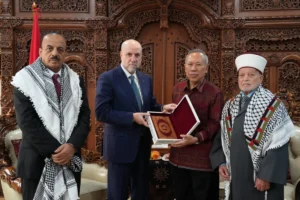
The visit to Kemetul was not an isolated event but rather a significant component of a broader itinerary designed to offer the Mii-dera delegation a comprehensive insight into Indonesia’s diverse cultural and religious landscape. Prior to their arrival in Salatiga, the Japanese delegation had already engaged in high-level interfaith dialogue. Notably, they held a significant meeting with Buya Said Aqil Siroj at the Pesantren Luhur Al-Tsaqafah, a prominent Islamic boarding school. This earlier engagement focused on discussions pertaining to interfaith harmony, shared spiritual values, and the role of religious institutions in promoting peace and understanding in a complex world. The dialogue with Buya Said, a respected Islamic scholar, provided the delegation with a crucial perspective on the rich tapestry of religious life in Indonesia, a nation celebrated for its pluralism and the peaceful coexistence of various faiths.
This meticulously planned itinerary, moving from interfaith dialogue at a renowned Islamic institution to witnessing an ancient agrarian ritual in a rural Javanese village, underscores a strategic approach to cultural immersion. It allowed the Mii-dera delegation to experience the multifaceted spiritual and cultural expressions that define Indonesia. In Kemetul, the delegates were not merely spectators but active participants in the cultural exchange. They observed the intricate preparations for the Jolenan, witnessed the communal procession, and were likely invited to partake in the shared feast, offering them a direct, sensory experience of the ritual’s significance. Meela Nazary, as the cultural guide, played a crucial role in interpreting the symbolic meanings behind each element of the ritual, ensuring that the Japanese guests gained a deep and nuanced understanding, far beyond superficial observation. The direct interaction with villagers, who proudly shared their traditions, created an atmosphere of genuine hospitality and mutual respect, fostering a profound connection between the two cultures.
Voices from the Field: Reactions and Reflections
The visit elicited overwhelmingly positive reactions from all parties involved, underscoring the success of the cultural exchange.
Head Priest Toshihiko Fuke, deeply impressed by the Kemetul community’s dedication, expressed profound gratitude for the warm reception. "It is truly inspiring to witness such a vibrant expression of gratitude to the earth and community," he remarked, his voice reflecting genuine appreciation. "Though our cultural contexts differ, the underlying spirit of reverence for nature, ancestors, and the importance of communal harmony resonates deeply with our Buddhist traditions at Mii-dera. These universal values transcend borders and remind us of our shared humanity. We are particularly touched by the hospitality and the genuine desire of the Kemetul people to share their precious heritage." He further highlighted the importance of preserving such traditional rituals in an increasingly globalized world, seeing them as essential anchors for cultural identity and spiritual well-being.
Agus Sudibyo, the Kepala Desa of Kemetul, conveyed immense pride in his village’s ability to host and share such a significant tradition with international guests. "The visit from the esteemed Mii-dera Temple delegation and Sakuranesia is a great honour for Kemetul," Sudibyo stated, his face beaming with pride. "It validates our efforts to preserve the Jolenan, a tradition passed down through generations. We hope this exposure will not only foster deeper understanding but also encourage more people to appreciate the richness of our local culture. This international attention gives our community immense encouragement to continue safeguarding our ancestral heritage for future generations."
Meela Nazary, the Ibu Kepala Desa and cultural guide, emphasized the educational aspect of the visit. "Our aim was not just to show them the ritual, but to help them understand its profound meaning – the spiritual connection to the land, the collective effort in farming, and the communal bond that Sedekah Bumi strengthens," she explained. "Seeing their genuine interest and respect for our traditions was incredibly rewarding. It proves that cultural exchange can truly build bridges of understanding and respect."
Tomomi Sakura Ijuin of the Sakuranesia Foundation reiterated the organization’s commitment to facilitating such meaningful encounters. "This visit perfectly embodies Sakuranesia’s mission: to connect people through shared cultural experiences," she noted. "The Jolenan ritual is a beautiful testament to Indonesia’s rich heritage, and we are thrilled to have enabled this direct interaction. We believe such exchanges are vital for fostering mutual appreciation and strengthening the enduring friendship between Japan and Indonesia. We look forward to exploring future collaborations that continue to highlight the diverse and beautiful cultures of both nations."
Beyond the Ritual: Implications for Cultural Diplomacy and Preservation
The visit of the Mii-dera Temple delegation to Kemetul carries implications far beyond the immediate observation of a single ritual. It serves as a powerful testament to several key areas:
Firstly, Cultural Preservation and Validation: International interest, particularly from a respected institution like Mii-dera Temple, provides significant external validation for local communities’ efforts to preserve their traditional practices. It underscores the global relevance of local wisdom and can empower communities like Kemetul to further invest in safeguarding their heritage against the pressures of modernization. This kind of recognition can help secure funding, attract local talent, and revitalize interest among younger generations.
Secondly, Intercultural and Interfaith Dialogue: The broader itinerary, including the meeting with Buya Said and the observation of the Jolenan, demonstrates a proactive approach to fostering interfaith and intercultural understanding. It highlights that common ground can be found in universal themes such as gratitude, respect for nature, and community solidarity, irrespective of specific religious doctrines or cultural expressions. Such dialogues are crucial for promoting global peace and mutual respect.
Thirdly, Sustainable Cultural Tourism Potential: The attention garnered by this visit could significantly boost Kemetul’s profile as a destination for cultural tourism. Unlike mass tourism, cultural tourism focuses on authentic experiences, respecting local traditions, and benefiting the community directly. This could open avenues for local artisans, traditional performers, and homestay providers, contributing to the economic empowerment of the village in a sustainable manner. Central Java, with its rich cultural landscape, is increasingly positioning itself as a hub for such immersive experiences, and Kemetul could become a prime example.
Fourthly, Strengthening Bilateral Ties: While informal, these grassroots cultural exchanges contribute significantly to the soft diplomacy between Indonesia and Japan. They build relationships at a human level, fostering empathy and shared understanding that complement formal diplomatic efforts. Such connections create a foundation of goodwill that can support broader economic and political cooperation between the two nations.
Finally, Academic and Anthropological Interest: The unique convergence of a historically significant Japanese Buddhist delegation observing a traditional Javanese agrarian ritual presents a compelling case study for anthropologists, sociologists, and scholars of comparative religion. It offers valuable insights into the dynamics of cultural transmission, the resilience of traditional beliefs, and the evolving nature of interfaith engagement in the 21st century.
The Future of Cross-Cultural Exchange
The successful cultural exchange witnessed in Kemetul marks a significant milestone in the ongoing efforts to foster deeper connections between Japan and Indonesia. It exemplifies how shared human values and a respect for diverse cultural expressions can transcend geographical and linguistic barriers. The positive reception and mutual appreciation demonstrated during the Mii-dera Temple delegation’s visit suggest a fertile ground for future collaborations. These could range from educational programs, artist exchanges, or even joint initiatives aimed at documenting and preserving endangered cultural practices in both nations.
As global communities navigate an increasingly interconnected yet sometimes divided world, initiatives like those facilitated by Sakuranesia and embraced by institutions like Mii-dera Temple and local communities like Kemetul are more vital than ever. They serve as powerful reminders that culture is not just about entertainment or heritage, but a fundamental tool for building bridges of understanding, fostering empathy, and creating a more harmonious global society. The echoes of gamelan music from Kemetul and the solemn prayers from Mii-dera Temple, though distinct, now resonate with a shared understanding, promising a future of enriched cultural dialogue and enduring friendship.