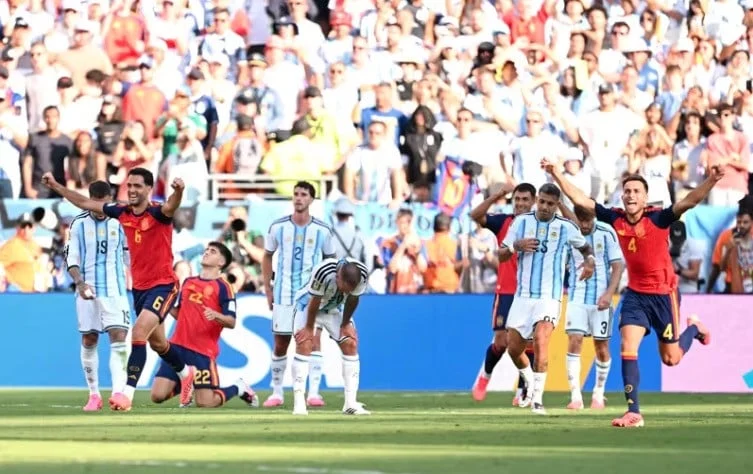
Spain has etched its name into the annals of football history once again, securing their second FIFA World Cup title with a hard-fought 1-0 victory over Argentina in the final. The decisive match, held at the iconic MetLife Stadium in New Jersey on Monday, July 20, 2026, culminated in extra time with a solitary goal from substitute Ferran Torres, ensuring La Furia Roja lifted the coveted trophy for the first time since 2010. This triumph was not merely a display of skill and determination but also a campaign defined by extraordinary records and indelible moments. Opta statistics confirm that Spain’s journey to glory was punctuated by several unprecedented achievements, setting new benchmarks for future champions.
The Historic Final: Spain vs. Argentina
The climax of the 2026 FIFA World Cup delivered a classic encounter between two of football’s most decorated nations. Spain, under the astute guidance of head coach Luis de la Fuente, faced an formidable Argentine side, determined to reclaim their dominance. The atmosphere at MetLife Stadium was electric, with a capacity crowd of over 82,000 spectators creating a cacophony of sound that reverberated throughout the Meadowlands Sports Complex. Millions more watched globally, anticipating a tactical battle and moments of individual brilliance.
The opening 90 minutes were a testament to defensive solidity and midfield control from both sides. Spain, renowned for their intricate passing and possession-based football, attempted to break down a well-organized Argentine defense. Argentina, in turn, sought to exploit counter-attacking opportunities with their potent attacking force. Chances were at a premium, with both goalkeepers, Spain’s Unai Simón and Argentina’s Emiliano Martínez, making crucial saves to keep their respective nets unbreached. The tactical chess match continued through regulation time, with neither team able to find the breakthrough, leading to an additional 30 minutes of extra time.
The decisive moment arrived in the 106th minute. A period of sustained Spanish pressure culminated in a fluid attacking move down the left flank. A precise cross found Ferran Torres, who had been introduced earlier in extra time, expertly positioned in the penalty area. Torres controlled the ball with a deft touch before unleashing a powerful, low shot that found the back of the net, sending the Spanish contingent into raptures. The remaining minutes saw Argentina push desperately for an equalizer, but Spain’s resilient defense held firm, securing their place in history. The final whistle brought an outpouring of emotion, marking the end of a captivating tournament and the crowning of a new world champion.
Spain’s Unyielding Path to Glory
Spain’s journey to the 2026 World Cup final was a narrative of consistent performance, tactical evolution, and unwavering belief. Drawn into a challenging Group C alongside Mexico, Poland, and Saudi Arabia, La Furia Roja demonstrated their credentials early on, securing maximum points with impressive victories. Their group stage performances showcased a balanced attack and an increasingly impenetrable defense, hinting at the remarkable record they would eventually set.
In the knockout stages, Spain navigated a treacherous path. They overcame a spirited challenge from Japan in the Round of 16, followed by a tense quarter-final clash against a highly-fancied England side, which they won in extra time. The semi-final saw them pitted against a formidable German team, a match that many pundits had predicted as a potential final. Spain’s disciplined approach and clinical finishing proved decisive, propelling them into their first World Cup final since their 2010 triumph. Each match presented a unique challenge, but the squad, a blend of seasoned veterans and emerging talents, rose to the occasion, displaying both technical prowess and mental fortitude.
1. A Fortress Unbreached: Best Defensive Record in World Cup History
Perhaps the most astonishing statistic of Spain’s 2026 campaign is their defensive solidity. Across eight matches, La Furia Roja conceded an astonishingly low single goal. This remarkable feat sets a new benchmark for World Cup champions, surpassing the previous record held by Italy (1938 and 1990, 2 goals in 4 matches; 1982, 6 goals in 7 matches), Brazil (1994, 3 goals in 7 matches), and France (1998, 2 goals in 7 matches; 2018, 6 goals in 7 matches). The singular goal conceded underscores the tactical discipline instilled by Luis de la Fuente and the exceptional performances of Spain’s defensive unit.
The backline, anchored by veteran defenders like Aymeric Laporte and the emerging Pau Cubarsí, along with the tireless work of full-backs Dani Carvajal and Alejandro Balde, formed an almost insurmountable barrier. Midfielders, including Rodri and Pedri, played a crucial role in shielding the defense, disrupting opposition attacks before they could reach dangerous areas. This collective defensive effort was the cornerstone of their success, allowing the attacking players the freedom to express themselves, knowing their goal was supremely protected. The historical context of this achievement cannot be overstated; in an era of increasingly potent attacking football, Spain demonstrated that a watertight defense remains a viable, even dominant, strategy for global success.
2. La Roja’s Second Star: Cementing a Legacy
The victory over Argentina bestowed upon Spain their second FIFA World Cup title, elevating them into an elite group of nations. Prior to 2026, Spain had one star on their jersey, earned from their maiden triumph in 2010 in South Africa. That historic win, secured by Andrés Iniesta’s extra-time goal against the Netherlands, marked a golden era for Spanish football, built on the foundations of Tiki-Taka.
With this latest victory, Spain now joins Brazil (5 titles), Germany (4), Italy (4), Argentina (3), Uruguay (2), and France (2) as countries boasting at least two World Cup trophies. This achievement firmly cements Spain’s status as a perennial powerhouse in international football. The 2026 squad, while distinct in personnel and perhaps subtly different in tactical execution from the 2010 vintage, shared the same core philosophy of technical excellence and mental resilience. The 2010 team was celebrated for its generational talent like Xavi, Iniesta, and Casillas. The 2026 squad, while featuring some experienced stalwarts, also showcased a new wave of Spanish talent, proving the depth and continuous development within the Spanish football system. This second star is not just a symbol of past glory but a powerful testament to the enduring strength and evolving nature of Spanish football.
3. Ferran Torres’ Golden Touch: A Substitute’s Immortal Moment
Ferran Torres’ extra-time winner was more than just the decisive goal in the final; it etched his name into a very exclusive club. His 106th-minute strike made him only the second substitute in FIFA World Cup final history to score the winning goal. The first to achieve this iconic feat was Germany’s Mario Götze, who famously netted in the 113th minute against Argentina in the 2014 final in Brazil.
Torres’ impact from the bench was immediate and profound. Coming on in extra time, his fresh legs and attacking impetus provided a crucial spark precisely when both teams were visibly tiring. The goal itself was a moment of composure under immense pressure, a testament to his big-game temperament. For any player, scoring in a World Cup final is a dream; to do so as a substitute, providing the decisive moment, adds another layer of drama and personal achievement. This goal will forever be replayed in Spanish football folklore, a testament to de la Fuente’s tactical acumen in making the substitution and Torres’ ability to seize the moment. It underscores the importance of every player in a World Cup squad, highlighting that even those starting on the bench can deliver the ultimate glory.
4. Unai Simón: The Golden Glove Winner
The unparalleled defensive record naturally translated into individual accolades. Spain’s goalkeeper, Unai Simón, was awarded the Golden Glove, recognizing him as the best goalkeeper of the tournament. His exceptional performances throughout the World Cup were integral to Spain’s success, making crucial saves and demonstrating commanding presence in his penalty area.
Simón’s ability to organize his defense, his quick reflexes, and his adeptness at distributing the ball under pressure were all on full display. His clean sheet in the final against Argentina capped a tournament where he conceded only a single goal in eight matches. This remarkable statistic not only highlights his individual brilliance but also reflects the defensive coherence of the entire Spanish team. The Golden Glove award is a fitting tribute to a goalkeeper who consistently performed at the highest level, providing the last line of defense for a team that made defensive solidity its defining characteristic. His calm demeanor and ability to perform under the most intense pressure were vital components of Spain’s championship run.
5. Luis de la Fuente’s Tactical Masterclass
Spain’s victory is also a triumph for head coach Luis de la Fuente, who masterminded the campaign with a blend of tactical innovation and strong man-management. De la Fuente, who had previously achieved success with Spain’s youth teams, demonstrated his readiness for the senior stage by guiding La Furia Roja to World Cup glory. His tactical approach was characterized by a pragmatic evolution of the traditional Spanish possession game. While maintaining control of the midfield, de la Fuente emphasized defensive solidity and quick transitions, adapting his strategy to nullify opponents and exploit their weaknesses.
His decisions, particularly in the knockout stages, proved pivotal. The timing of his substitutions, such as bringing on Ferran Torres in the final, consistently yielded positive results. De la Fuente’s ability to foster a cohesive team spirit, integrating experienced players with emerging young talents, was also a key factor. He instilled a sense of unity and purpose, allowing the squad to perform as a collective rather than relying solely on individual brilliance. This World Cup triumph firmly establishes de la Fuente as one of the most successful coaches in Spanish football history, silencing any doubts and validating the Spanish Football Federation’s decision to entrust him with the national team.
6. Youthful Brilliance Meets Experienced Steel
The 2026 Spanish squad was a masterful blend of youthful exuberance and seasoned experience, a combination that proved crucial in navigating the rigors of a World Cup. Players like Pedri, Gavi, and Nico Williams, still in their early twenties, brought boundless energy, creativity, and fearless ambition to the team. Their technical proficiency and ability to perform under pressure belied their age, showcasing the depth of talent emerging from Spanish academies.
Complementing this youthful brilliance were experienced stalwarts such as Rodri, Aymeric Laporte, Dani Carvajal, and Álvaro Morata. These veterans provided leadership, tactical intelligence, and a calming presence, particularly in tight matches. Their experience in major tournaments helped guide the younger players, ensuring stability and composure when it mattered most. This harmonious blend allowed Spain to maintain high intensity throughout the tournament, adapting to different opponents and scenarios with a versatile and balanced squad. The success of this squad composition signals a bright future for Spanish football, with a core of young talent poised to dominate for years to come, supported by a proven leadership group.
7. Record-Breaking Clean Sheets
Reinforcing their status as the best defensive team, Spain also set a new record for the most clean sheets in a single World Cup tournament. Out of their eight matches, Spain kept an astounding seven clean sheets. The only goal they conceded was during a group stage match, a testament to their unwavering defensive discipline throughout the subsequent knockout rounds.
This record surpasses previous benchmarks and highlights the systematic approach to defense adopted by Luis de la Fuente. It wasn’t merely the back four and goalkeeper, but the entire team, from the forwards pressing high up the pitch to the midfielders diligently tracking back, contributing to this remarkable achievement. The ability to consistently shut down opposition attacks, even against formidable attacking sides like Germany and Argentina, speaks volumes about their tactical organization and collective effort. This statistic is a powerful indicator of their dominance and resilience, underscoring that while flair and attacking prowess often capture headlines, a solid defense is truly the foundation of championship success.
8. Dominance in Possession and Passing Accuracy
While adapting their tactical approach, Spain remained true to their footballing identity of controlling the game through possession and intricate passing. Throughout the 2026 World Cup, Spain consistently led the tournament in average possession percentage and passing accuracy. This sustained dominance allowed them to dictate the tempo of matches, tiring opponents and creating openings through patiently constructed attacks.
The midfield trio, often featuring Rodri, Pedri, and Gavi, exhibited exceptional ball retention skills, weaving intricate patterns and maintaining fluidity in their play. Their ability to circulate the ball efficiently, switch play, and penetrate defensive lines with incisive passes was a hallmark of their campaign. This possession-based philosophy not only created attacking opportunities but also served as a defensive mechanism, limiting the opposition’s time on the ball and reducing their chances to threaten Spain’s goal. The blend of tactical pragmatism with their traditional strengths proved to be a winning formula, demonstrating that Spain can evolve while retaining the core elements that define their unique style.
9. A Global Spectacle: Unprecedented Viewership
The 2026 FIFA World Cup, hosted across the United States, Canada, and Mexico, shattered viewership records, reflecting the growing global appeal of football and the excitement surrounding the expanded tournament format. Spain’s journey to the final, culminating in their victory over Argentina, captivated audiences worldwide, contributing significantly to these unprecedented figures. The final match alone drew an estimated global audience exceeding 2 billion viewers, setting a new benchmark for sporting events.
The expanded tournament, featuring 48 teams for the first time, generated increased interest across more nations. The accessibility of matches through various digital platforms and traditional broadcast channels, combined with innovative production values, contributed to a more immersive viewing experience. The North American host cities provided a vibrant backdrop, further enhancing the spectacle. Spain’s triumph became a focal point of this global celebration, with their blend of tactical brilliance and dramatic moments resonating with fans across continents. The commercial success and record viewership underscore the enduring power of the World Cup as the planet’s most watched sporting event.
10. Economic and Cultural Ripple Effects
Spain’s World Cup victory is expected to generate significant economic and cultural ripple effects for the nation. Historically, major sporting triumphs lead to a surge in national pride, increased tourism, and a boost in consumer spending. The "Spain effect" from the 2026 win is anticipated to be substantial, with projections indicating a boost to the national GDP through increased merchandise sales, celebratory events, and heightened international visibility.
Culturally, the victory will undoubtedly inspire a new generation of footballers and sports enthusiasts in Spain. It reinforces the nation’s identity as a global sporting power and strengthens community bonds. The celebrations across major cities, from Madrid to Barcelona, were a testament to the unifying power of football. Furthermore, the success may lead to increased investment in youth academies and football infrastructure, ensuring the continued development of talent. On a broader scale, Spain’s win in North America highlights the global reach of football and its ability to connect diverse cultures, reinforcing its status as the world’s most popular sport.
Reactions from the Champions and Beyond
The immediate aftermath of the final saw an outpouring of emotion from the Spanish camp. Head coach Luis de la Fuente, visibly emotional, praised his players’ "unwavering commitment and belief." "This team showed incredible resilience," he stated in the post-match press conference. "To concede only one goal throughout the entire tournament is a testament to their discipline and hard work. This trophy belongs to every single player, every member of the staff, and every fan back home."
Ferran Torres, the match-winner, described his goal as "the most incredible moment of my career." "I dreamt of this as a child," he shared, "and to score the winning goal in a World Cup final, for my country, is truly surreal. We fought so hard for this." Captain Rodri, hoisting the trophy aloft, spoke of the team’s unity. "We came here as a squad, a family, and we leave as world champions. This is for Spain, for everyone who believed in us."
The Spanish Royal Football Federation (RFEF) also released a statement, congratulating the team on their "historic achievement" and highlighting the "dedication and talent" that led to the victory. While Argentina expressed their disappointment, coach Lionel Scaloni acknowledged Spain’s formidable defense, stating, "They were incredibly difficult to break down. We gave it our all, but it wasn’t enough on the day. Congratulations to Spain, they were deserved champions."
Implications for Spanish Football and the Global Game
Spain’s 2026 World Cup victory carries significant implications for both Spanish football and the global landscape of the sport. Domestically, it solidifies the current generation of players as legends and provides a massive boost to the national league, La Liga, potentially attracting more talent and investment. The success will likely invigorate grassroots football, inspiring countless young Spaniards to pursue the sport. It also provides a clear blueprint for national team development, showcasing the efficacy of a balanced squad featuring both seasoned professionals and prodigious youth.
On the international stage, Spain’s triumph reinforces the cyclical nature of football dominance. It demonstrates that while established powers may falter, a commitment to tactical evolution, defensive solidity, and youth development can lead to renewed glory. The tournament itself, with its expanded format and successful staging across three nations, sets a new precedent for future World Cups, potentially influencing logistical and commercial strategies for upcoming editions. Spain’s second star not only adds another glittering chapter to their own footballing story but also contributes to the rich, ever-evolving narrative of the FIFA World Cup, confirming its status as the pinnacle of sporting achievement.