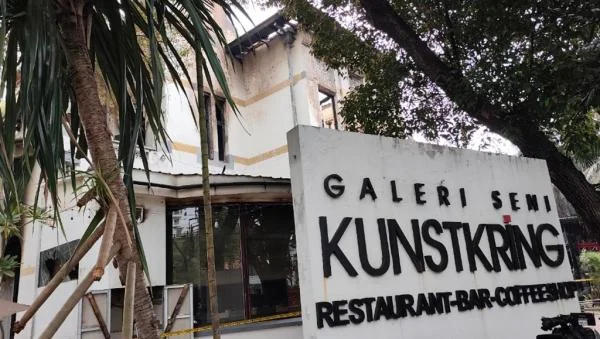
The historic Tugu Kunstkring Paleis in Central Jakarta, a landmark of colonial-era architecture and cultural significance, suffered a significant fire in the early hours of Saturday, November 21, 2026. The blaze, which broke out while the establishment was closed, has sparked immediate concerns regarding the preservation of heritage buildings in the capital and prompted government authorities to review the operational management of the site.
According to official communications from the building’s management, the fire was detected during the pre-dawn hours. Fortunately, because the restaurant and gallery operations were suspended for the night, the building was entirely vacant. There were no reports of injuries or fatalities, a detail that provided a slight reprieve amidst the otherwise distressing news of damage to a structure that has served as a cultural anchor for decades.
Chronology of the Incident
The emergency response began in the early morning hours of Saturday. Local fire and rescue services were alerted to the scene as flames were spotted emanating from the structure. Given the age and construction materials of the building, which date back to the early 20th century, the fire department mobilized multiple units to contain the blaze and prevent it from consuming the entire historic edifice.
While the exact cause of the fire remains under investigation by the forensic department of the local police, preliminary reports suggest that the fire may have originated within the restaurant area of the complex. Firefighters worked under difficult conditions to ensure that the structural integrity of the main hall remained intact. By sunrise, the situation was brought under control, and the site was secured for further inspection by authorities.
Historical Significance of Tugu Kunstkring Paleis
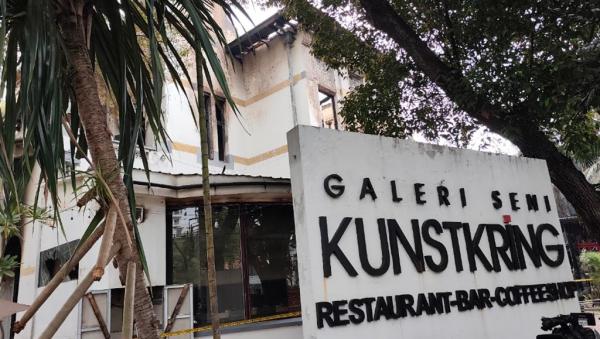
Tugu Kunstkring Paleis is not merely a restaurant or a commercial venue; it is a storied piece of Jakarta’s architectural identity. Originally constructed in 1914, the building initially served as the Fine Arts Circle of the Dutch East Indies (Nederlandsch-Indische Kunstkring). It was designed by the architect Pieter Adriaan Jacobus Moojen in a style that blended European aesthetics with local tropical influences.
Over the last century, the building has undergone various transformations, serving as an immigration office, a gallery, and eventually being restored into its current iteration as a high-end dining and art venue. Its preservation is considered a matter of public interest, as it represents a tangible link to the city’s colonial history and its evolution into a modern metropolis. The damage sustained during this fire is viewed by heritage experts as a significant loss to the cultural fabric of Jakarta.
Official Responses and Administrative Implications
In the immediate aftermath of the incident, acting government officials, including regional leadership figures such as Pramono, visited the site to assess the extent of the damage. The visibility of high-level officials at the scene underscores the seriousness with which the administration treats the safety and maintenance of state-owned or heritage-listed assets.
During his site visit, Pramono emphasized the necessity of a comprehensive review regarding the management and lease agreements of such heritage sites. The government is now moving to investigate whether the fire was a result of substandard electrical maintenance, fire safety negligence, or purely accidental circumstances. Consequently, the administration has announced a review of the current operational contracts for the Tugu Kunstkring Paleis, signaling a shift toward stricter regulatory oversight for entities occupying historic buildings.
The management of Kunstkring Paleis expressed their profound sorrow through an official statement on their social media channels, noting, "Kunstkring Paleis is not just a building. This place is rich in history, memories, art, and various stories that we have shared with all of you." They acknowledged the gravity of the situation and pledged full cooperation with local authorities to uncover the root cause of the fire and to participate in the restoration efforts required to bring the building back to its former glory.

The Broader Challenge of Heritage Preservation
The fire at Kunstkring Paleis brings to the forefront a persistent issue in urban development: the vulnerability of aging historic structures to modern safety hazards. Many of these buildings, while aesthetically and culturally valuable, possess aging electrical grids and structural components that may not comply with contemporary fire safety standards.
Experts in heritage conservation have long advocated for a specialized fire safety framework for historic districts in Jakarta. Unlike modern steel-and-glass skyscrapers, which are built with sophisticated fire suppression systems integrated into their designs, colonial-era structures require a delicate balance between preserving their original architecture and installing modern safety equipment.
The incident is expected to catalyze a broader audit of other historic sites across the city. The potential for such losses has prompted calls from urban planners for the government to provide greater subsidies or technical support to private managers of these landmarks, ensuring that they have the resources to maintain fire safety protocols without compromising the historical integrity of the architecture.
Economic and Cultural Impact
Beyond the physical damage, the closure of Tugu Kunstkring Paleis has an immediate impact on the local economy and the cultural calendar. The venue has long been a destination for international tourists, art enthusiasts, and high-profile events. The suspension of operations, while the investigation and subsequent repairs take place, will affect the livelihoods of the staff and the continuity of the art exhibits that were slated to take place there in the coming months.
The uncertainty surrounding the future of the management contract further complicates the recovery process. If the government decides to terminate or significantly alter the existing agreement, the transition could lead to a prolonged period of dormancy for the building. This potential for "dead space" is a concern for residents who view the active use of historic buildings as the best way to prevent them from falling into total decay.

Moving Forward: Restoration and Accountability
The road ahead for Tugu Kunstkring Paleis involves three distinct phases: investigation, stabilization, and restoration. The investigation phase will rely heavily on forensic evidence to determine if the fire was preventable. Following this, engineers will need to assess the stability of the damaged areas to ensure that no further collapse occurs.
Finally, the restoration process will likely require a specialized team of architects and historians to ensure that any materials used to replace damaged sections are sympathetic to the original 1914 design. This is a costly and time-consuming process that will test the commitment of both the current management and the local government to heritage conservation.
As the city watches the developments surrounding the Kunstkring Paleis, the incident serves as a stark reminder of the fragile nature of history. It highlights the inherent risks of urban density and the imperative for strict compliance with safety regulations, even in spaces dedicated to the arts and culture.
For now, the focus remains on ensuring that the damage is contained and that the administrative review is conducted with transparency. Public interest remains high, and the community expects that the lessons learned from this fire will lead to a more robust protective framework for the remaining historical monuments that define the spirit of Jakarta. Whether the building returns to its previous operational state or undergoes a new management model, the preservation of the Kunstkring Paleis remains a top priority for the city’s heritage stakeholders.
The incident also serves as a rallying point for the conservationist community, which is likely to leverage this moment to push for updated legislation regarding the maintenance of protected heritage sites. In the coming weeks, as further details regarding the forensic report are released, the public will have a clearer understanding of how such a disaster was allowed to occur and what measures will be taken to prevent a recurrence in one of the city’s most cherished landmarks. The story of Tugu Kunstkring Paleis continues, marked now by this unfortunate chapter, but with a collective hope for its eventual restoration and survival.