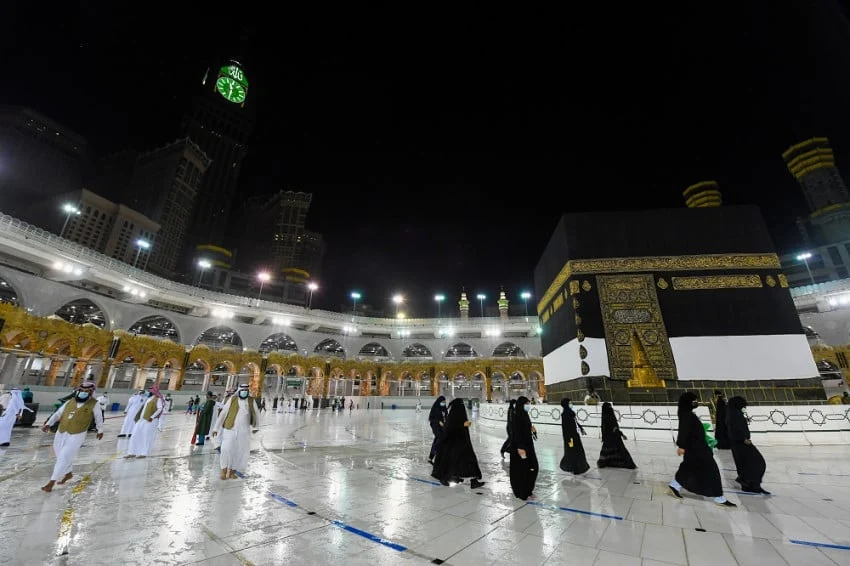
Demographic projections released by the Pew Research Center indicate a profound transformation in the global religious landscape, with Islam anticipated to surpass Christianity to become the world’s largest religion by the year 2035. This monumental shift is driven by a combination of high fertility rates, a relatively young median age among Muslim populations, and a steady influx of converts across various regions of the globe. While both Christianity and Islam are projected to experience continued growth over the coming decades, the velocity of growth within the global Muslim community significantly outpaces that of any other major faith group.
The findings are part of comprehensive, long-term demographic studies conducted by demographers and sociologists specializing in global religious trends. As the world population continues to expand toward an estimated milestone of nearly 10 billion people by the latter half of the twenty-first century, the distribution of religious affiliations will undergo a structural realignment. This article examines the core data, historical context, regional dynamics, and broader socio-economic implications of this unprecedented demographic transition.
Main Facts and Statistical Projections
According to comprehensive models developed by research institutions such as the Pew Research Center, the global Muslim population stood at approximately 2.02 billion in 2020. Over the next five decades, this figure is projected to surge by roughly 80 percent, reaching an estimated 3.64 billion by 2070. By contrast, Christianity—currently the world’s largest religious tradition—is projected to grow by approximately 30 percent, moving from its 2020 baseline to reach 2.96 billion adherents by the end of the projection window. This Christian growth rate aligns closely with the overall growth rate of the global population, whereas the Muslim growth rate significantly exceeds it.
The divergence in growth rates is not driven by a single factor, but rather by a confluence of demographic variables. Fertility rates, median population age, geographical concentration, and net religious switching play critical roles in shaping these outcomes. While other major global religions, such as Hinduism and Judaism, are projected to grow at rates lower than the global population average, traditions such as Buddhism and populations identifying with no religion at all are expected to experience relative stabilization or contraction in their global percentage share.
Historical Context and Chronology of Demographic Shifts
To understand how Islam is poised to claim the position of the world’s largest religion by 2035, it is necessary to examine the historical trajectory of global demographics over the past century. For centuries, European and North American nations held a dominant demographic footprint within global Christianity, while South Asia and the Middle East maintained high concentrations of Islamic populations. However, the post-World War II era ushered in rapid medical advancements, public health improvements, and economic transitions that dramatically altered mortality and fertility patterns worldwide.
During the late twentieth century, demographers began noticing distinct variations in fertility decline across different global regions. While Western nations and parts of East Asia experienced rapid declines in birth rates—often falling well below the replacement level of 2.1 children per woman—regions with high Muslim concentrations, particularly across Sub-Saharan Africa, the Middle East, and South Asia, maintained higher fertility rates for a sustained period.
By the early 2000s, demographic institutions initiated long-term tracking projects to project these trends decades into the future. Landmark reports published in 2015 and updated periodically through the 2020s provided clear empirical evidence that the numerical gap between the world’s two largest religions was closing rapidly. The milestone year of 2035 emerged from these longitudinal studies as the precise inflection point where the cumulative growth trajectory of the global Muslim population is projected to intersect with and ultimately surpass that of the global Christian population.
The Mechanics of Growth: High Fertility Rates and Youthful Populations
The primary engine driving the expansion of the global Muslim population is fertility. Between the years 2020 and 2025, demographic data indicates that Muslim women have a global average fertility rate of approximately 3.1 children per woman. This compares to an average of 2.5 children per woman for Christian populations and 1.6 children per woman for individuals belonging to other religious groups or those religiously unaffiliated.
To maintain a stable population without relying on migration, a society requires a total fertility rate of roughly 2.1 children per woman, known as the replacement level. With an average well above this threshold, Muslim populations are positioned to experience sustained natural increase—meaning the number of births significantly exceeds the number of deaths year over year. Projections indicate that the natural increase alone will add approximately 1.6 billion individuals to the global Muslim population by 2070, compared to an estimated addition of 792 million individuals to the Christian population through the same mechanism.
Compounding this high fertility rate is the youthful median age of the global Muslim demographic. As of the 2020 baseline studies, the median age of Muslims worldwide was under 25 years old—younger than the median age of any other major religious group, and significantly younger than the global median age. A younger population structure means that a higher proportion of individuals are currently entering, or are about to enter, their prime childbearing years. This youthful momentum ensures that high birth rates will persist for decades, even as overall fertility rates in Muslim-majority nations slowly converge toward global averages over time.
Regional Dynamics: The Role of Indonesia and Sub-Saharan Africa
While growth is occurring globally, certain geographic regions serve as the primary epicenters for this demographic expansion. Indonesia, home to the largest Muslim national population in the world, continues to play a central role in maintaining these numbers, though its fertility rates have also begun a gradual stabilization process.
However, the most dynamic geographic shifts are occurring across Sub-Saharan Africa and parts of South Asia. The 53 countries worldwide with Muslim-majority populations are projected to experience an aggregate increase of approximately 1.2 billion people by 2070. This regional growth accounts for roughly 74 percent of the total projected global growth for the Muslim population.
Sub-Saharan Africa, in particular, represents a crucial demographic frontier. The region combines relatively high fertility rates with rapidly developing public health infrastructures that reduce infant mortality. As a result, the Muslim population in Sub-Saharan Africa is expanding at a remarkable pace, mirroring parallel growth within the region’s Christian communities. Consequently, the geographic center of gravity for both major world religions is shifting markedly toward the Global South.
Religious Switching and the Role of Mualafs (Converts)
Beyond natural increase through births, religious switching—the process by which individuals leave one religious tradition for another or move between affiliation and non-affiliation—plays an influential role in regional contexts, though its global impact is more complex. Demographers note that while religious switching results in net gains for some groups and net losses for others in specific countries, the overarching global trajectory of Islamic growth remains anchored primarily by demographic momentum rather than conversion alone.
Nevertheless, the influx of converts—often referred to in various regional contexts as mualafs—contributes tangibly to the visibility and integration of Islamic communities in Western nations, Latin America, and parts of East Asia. In regions where Islam is a minority faith, conversion rates frequently offset losses caused by secularization or disaffiliation. Sociologists attribute this phenomenon to a combination of spiritual exploration, the appeal of Islamic theological frameworks, and community cohesion in an increasingly globalized world.
Socio-Economic and Geopolitical Implications
The projected ascension of Islam to the position of the world’s largest religion by 2035 carries profound socio-economic, cultural, and geopolitical implications for the international community. Policymakers, economists, and urban planners are increasingly factoring these demographic realities into long-term strategic frameworks.
From an economic perspective, a youthful and expanding population presents both opportunities and challenges. In nations with aging populations—such as many across Europe and East Asia—demographic decline threatens economic productivity and strains social welfare systems. Conversely, countries with growing, youthful populations must invest heavily in education, job creation, and infrastructure to harness the potential of their demographic dividend. Failure to provide adequate employment and educational opportunities for a rapidly growing youth cohort can lead to social friction, while successful integration can drive economic dynamism on a global scale.
Geopolitically, the shifting demographic weight toward the Global South means that international diplomacy, cultural exchange, and global governance structures will increasingly reflect the values, priorities, and demographic realities of regions outside the traditional Western sphere of influence. Multilateral institutions are already adapting to a multipolar world where demographic shifts alter domestic political landscapes and international alliances alike.
Conclusion
The projection that Islam will become the world’s largest religion by 2035 is not merely a statistical milestone; it is a reflection of deep-seated demographic currents that have been in motion for generations. Driven by high fertility rates, a young median age, and sustained regional growth—particularly across Africa and Asia—the global religious map is undergoing a historic realignment. As these projections materialize over the coming decades, societies worldwide will be challenged to foster cross-cultural understanding, economic equity, and peaceful coexistence within an increasingly diverse global community.