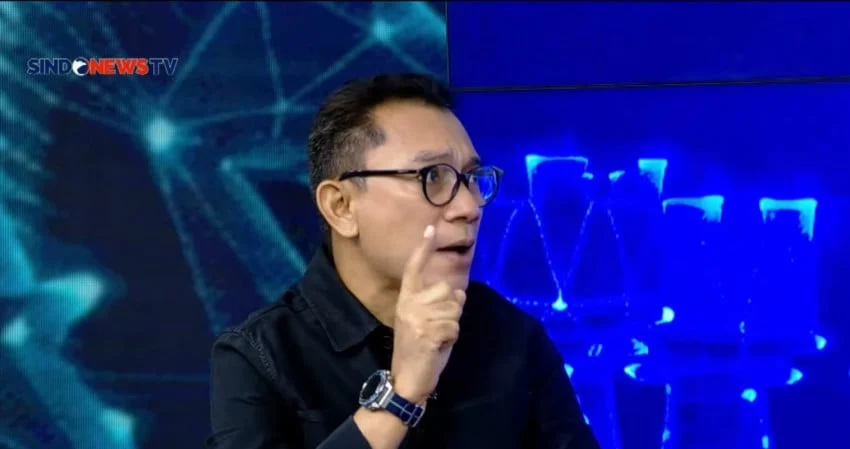
JAKARTA — The selection of a vice-presidential candidate for the Republic of Indonesia requires profound strategic foresight, absolute political loyalty, and comprehensive alignment with the sitting head of state. This assertion was recently highlighted by Ansy Lema, spokesperson for the Indonesian Democratic Party of Struggle (PDI-P), during a televised political discussion on SindoNews TV’s Arena Politik program. According to Lema, the contemporary political landscape—marked by complex geopolitical developments, domestic security vulnerabilities such as alleged foreign espionage, and the imperative for executive harmony—dictates that the nation’s second-highest office must be occupied by an individual whose dedication to the president is unquestionable.
The discourse surrounding the ideal characteristics of a vice president has gained significant momentum within Indonesia’s political circles. As the administration of President Prabowo Subianto navigates both domestic governance and international diplomacy, the chemistry and operational synergy between the president and the vice president have emerged as critical determinants of state stability. Lema’s remarks underscore a growing consensus among major political factions that the traditional criteria for selecting a running mate—often based purely on transactional regional representation or short-term electoral gains—must evolve to address modern security imperatives and governance efficiency.
The Imperative of Unwavering Loyalty and Security Context
Elaborating on the rationale behind prioritizing loyalty, Lema pointed directly to the delicate security realities facing the Indonesian government. Specifically, he referenced recent security concerns, including incidents of alleged wiretapping and intelligence vulnerabilities targeting President Prabowo Subianto. In an era defined by advanced digital espionage, cyber threats, and intense global competition, the executive branch must operate as an impenetrable, unified front.
"In the current political context, which undeniably involves aspects of espionage and security challenges, loyalty becomes a paramount virtue," Lema stated during the broadcast. He cautioned against any scenario that could give rise to fragmented leadership within the executive branch, utilizing vivid political metaphors to describe potential pitfalls. "There must be no twin suns, let alone an enemy within. Furthermore, we must avoid a situation where a vice president prematurely positions themselves as a political rival for the 2029 general election before the current administration has even settled into its governance cycle."
Lema emphasized that the relationship between the president and the vice president must be characterized by vertical alignment and profound ideological or operational chemistry. A lack of psychological alignment or the existence of hidden political barriers can severely undermine the administration’s efficacy. "This alignment is what drives solidarity, strong synergy, work effectiveness, and overall national stability," he added, reinforcing the notion that executive discord directly impacts the government’s ability to deliver public services and maintain national security.
Perspectives from Political Analysts: The Passive and Consolidative Nature of the Office
While political parties emphasize the necessity of ideological alignment and loyalty, constitutional experts and political observers offer structural insights into the constitutional boundaries of the vice-presidency. Sharing the platform on Arena Politik, executive director of the Indonesia Political Opinion (IPO) Dedi Kurnia Syah provided a constitutional and practical analysis of the office.
Syah noted that under the Indonesian presidential system, the vice-presidency is inherently a supporting and largely passive office in terms of policy formulation and executive authority. Although various stakeholders propose ideal criteria for a running mate—such as possessing strong administrative acumen or serving as a direct bridge to the populace—the ultimate constitutional responsibility of governance rests exclusively with the president.
"Essentially, the vice president in Indonesia holds a passive role," Syah explained. "While there are ideal criteria for who should hold the office, executive responsibility remains entirely with the president. Therefore, it would be most appropriate if the vice president appointed by President Prabowo is a consolidative figure."
Syah elaborated that because all national policies, visions, and missions ultimately originate from and center on the president, the vice president functions primarily as an institutional companion. Under the constitutional framework, the vice president possesses no independent legislative or executive intervention powers, as all definitive decisions are reserved for the head of state. A consolidative figure, therefore, would focus on unifying political forces, strengthening legislative-executive relations, and supporting the president’s agenda without cultivating an independent political base that could challenge executive cohesion.
Broader Implications for National Stability and Governance
The debate over the ideal profile of a vice president touches upon broader questions regarding Indonesia’s political institutionalization. As the world’s third-largest democracy, Indonesia’s governance model relies heavily on the stability of the executive branch to manage a vast archipelago facing diverse socio-economic and security challenges.
Minimizing Frictional Politics
Historical precedents in Indonesian politics have occasionally demonstrated the friction that can occur when a president and vice president harbor divergent political ambitions or ideological orientations. During various past administrations, a lack of chemistry or premature positioning for subsequent presidential elections has led to public policy gridlock, divided cabinets, and diminished administrative performance. By stressing the absence of "twin suns," political figures like Lema are advocating for a disciplined adherence to the constitutional hierarchy, ensuring that the vice president acts as an amplifier of the president’s mandate rather than a competing center of power.
Strengthening State Security and Executive Trust
The mention of foreign wiretapping and intelligence threats highlights the modern vulnerabilities faced by developing nations undergoing rapid technological integration. In an environment where state secrets and high-level policy discussions are susceptible to interception by foreign intelligence agencies, internal trust within the presidential palace is paramount. A vice president fully trusted by the president minimizes the risk of internal security breaches and ensures that sensitive strategic discussions remain insulated from external exploitation.
Economic and Administrative Continuity
Beyond security concerns, the choice of a vice president has profound implications for investor confidence and market stability. Domestic and international markets closely monitor political predictability in Indonesia. A harmonious executive branch signals policy continuity, regulatory certainty, and a reduced likelihood of political instability. Conversely, internal executive rivalry creates market hesitation and bureaucratic inertia.
Conclusion and Future Outlook
As political parties, analysts, and stakeholders continue to debate the ideal qualifications for future executive leadership positions, the consensus increasingly points toward a model of disciplined collaboration. The emphasis placed by PDI-P on absolute loyalty, combined with the structural observations of political analysts regarding the consolidative nature of the office, establishes a rigorous benchmark for future appointments.
Ultimately, navigating the complex intersection of national security, domestic political dynamics, and economic development requires an executive leadership team characterized by absolute trust, clear constitutional boundaries, and a singular focus on national welfare. As Indonesia continues to chart its course on the global stage, the relationship between the president and the vice president will remain a cornerstone of its democratic resilience and administrative success.