Nintendo has officially announced the upcoming rollout of a digital game gifting feature for its flagship hardware ecosystem, encompassing both the original Nintendo Switch and the next-generation Switch 2. Slated to launch on November 16, 2026, this new functionality addresses a long-standing request from the global gaming community, enabling users to purchase and send digital software directly through the Nintendo eShop. For years, Nintendo enthusiasts have been restricted to physical game cartridges, digital gift cards, or external retail download codes when attempting to share games with friends and family members. While the new system introduces much-needed digital flexibility, the Japanese gaming giant has implemented distinct structural limitations that differentiate its approach from competing storefronts such as Valve’s Steam platform.
Main Facts and Core Functionality of the New eShop Feature
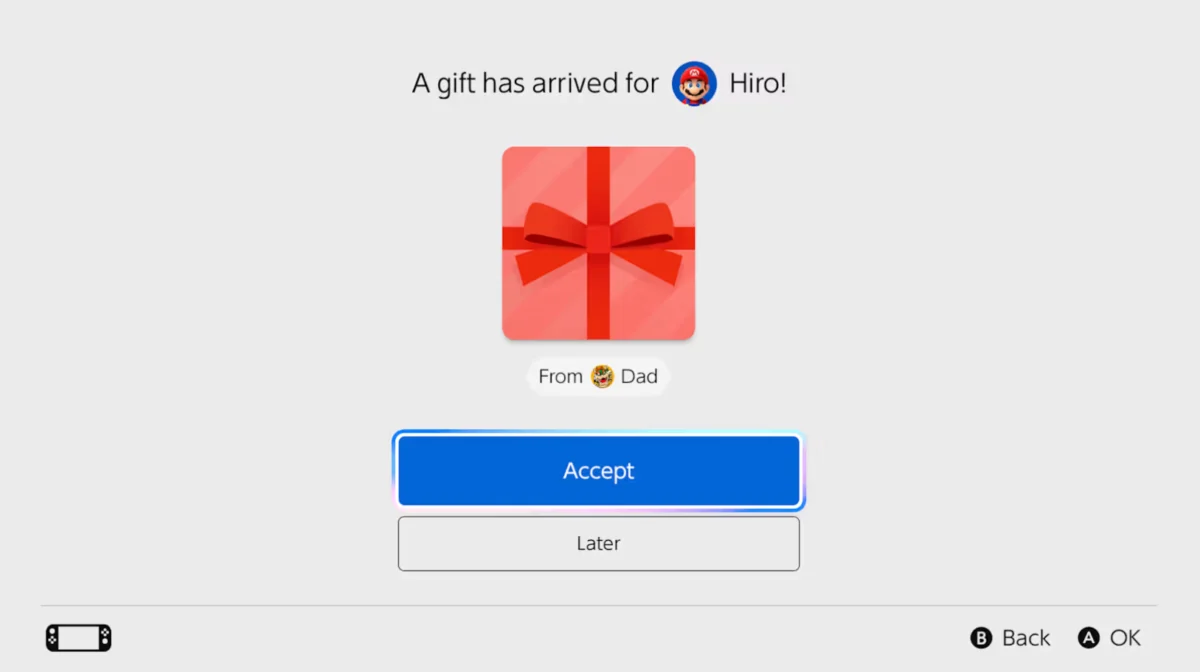
Beginning November 16, 2026, Nintendo Switch and Switch 2 owners will have the administrative capability to buy digital games, downloadable content (DLC), and software expansion packs as gifts for other users within the digital storefront. Rather than relying on physical shipping logistics or complex external code generation, the transaction occurs entirely within the console interface.
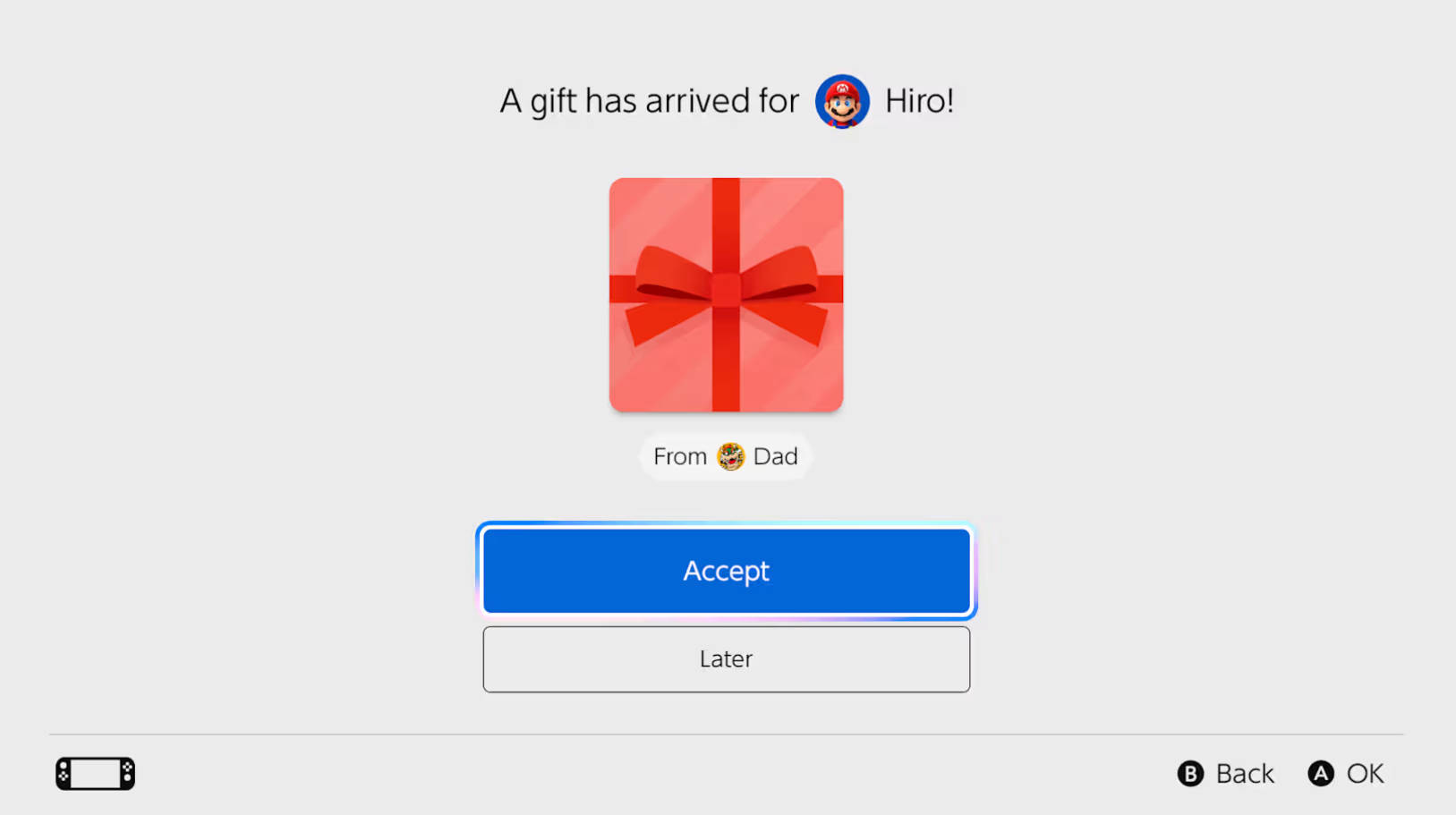
To initiate a gift, a user navigates to the desired title on the Nintendo eShop, selects the newly added "Give as a Gift" option, and designates the recipient. As a personalized touch, the system allows the sender to select a digital wrapping style before completing the payment via standard eShop balance or linked credit and debit methods. Upon successful processing, the digital software is delivered directly to the recipient’s console HOME Menu, prompting an automatic notification that the game is ready for download.
However, unlike open-market digital distribution platforms where users can gift items to anyone on a general friend list, Nintendo has bound this feature strictly to the Nintendo Account Family Grouping system. Under current guidelines, a single Family Group can accommodate a maximum of eight individual accounts. Consequently, players cannot send digital games to acquaintances outside of their designated Family Group, preserving a closed-loop ecosystem that aligns with Nintendo’s historically protective stance on digital rights management (DRM) and account security.

Chronology and Background Context of Nintendo’s Digital Infrastructure
The introduction of digital gifting marks a significant evolutionary step for Nintendo’s network infrastructure, which has historically lagged behind competitors in digital consumer-to-consumer features. Since the launch of the original Nintendo Switch in March 2017, the eShop has operated primarily on direct-to-owner purchasing models. Consumers wishing to buy games for others had to purchase physical media or buy prepaid currency codes from third-party retailers.
The timeline leading up to this feature release reflects a gradual modernization of Nintendo’s backend services, particularly with the transition into the hardware lifecycle of the Switch 2. Alongside the gifting announcement, Nintendo deployed system firmware version 23.5.0. While this firmware update was primarily designed to patch security exploits and mitigate jailbreaking vulnerabilities on the Switch 2 hardware, it also laid the foundational software architecture required to support peer-to-peer asset transfers and license allocations within Family Groups.
Industry analysts note that as digital-only console editions become more prevalent and physical retail shelf space shrinks, implementing a native gifting mechanism became an operational necessity for Nintendo to maintain competitive parity in the modern video game marketplace.
Detailed Constraints and Operational Restrictions
Despite the convenience offered by the new system, Nintendo has outlined several stringent operational constraints designed to prevent misuse, fraudulent transactions, and unauthorized account access.

First, user account status dictates participation rights. Accounts categorized as "Supervised Accounts"—typically managed under parental controls—possess the ability to receive digital gifts but are barred from purchasing and sending them to others. This restriction prevents minors from inadvertently spending family funds or sending unauthorized software purchases.
Second, Nintendo has instituted anti-fraud rate-limiting protocols. While the exact numerical thresholds have not been publicly disclosed in the initial documentation, the company confirmed that it will cap the volume of digital gifts a single account can purchase within a specific timeframe. This measure mirrors anti-money laundering and card-testing protections utilized by broader e-commerce networks.
Finally, product eligibility varies across the catalog. Not every title hosted on the Nintendo eShop will automatically qualify for digital gifting. Third-party publishers retain the right to opt their software out of the gifting program, meaning certain titles may still require traditional direct purchases or alternative acquisition methods.
Comparative Analysis: Nintendo eShop vs. Steam Gifting Architecture
When evaluated against established digital distribution giants like Valve’s Steam, Nintendo’s gifting system is notably more conservative. Steam allows users to gift any game in the catalog to any user on their friends list, provided they reside in compatible regional pricing zones. The transaction is frictionless, unbounded by household or family-group hierarchies.
In contrast, Nintendo’s reliance on the Family Group framework reflects its corporate philosophy centered around family-friendly gaming environments and controlled digital footprints. By restricting gifting to pre-established groups of up to eight members, Nintendo minimizes the risks associated with gray-market key resale, unauthorized commercial key trading, and credit card chargeback scams that have historically plagued open gifting systems on PC platforms.
While this closed ecosystem successfully safeguards the platform’s economy, it limits the spontaneity of gifting games to casual acquaintances, long-distance friends, or online community members who do not share a formal Family Group designation.
Broader Industry Implications and Market Impact
The implementation of digital gifting on the Switch and Switch 2 is projected to yield measurable impacts on software sales, particularly during peak holiday shopping seasons and promotional sales events. By removing the barrier of physical shipping and eliminating the friction of purchasing external retail codes, digital gifting is expected to increase impulse software purchases among family members and close peer groups.
Furthermore, the integration of DLC and expansion packs into the gifting ecosystem provides a streamlined monetization avenue for publishers. Families and friends can now easily gift season passes, major expansions, or content bundles to players who already own the base game, fostering higher engagement rates within live-service and expansion-heavy titles.
As the industry moves closer to the November 16, 2026 launch date, consumer reception remains largely positive despite the structural limitations. Industry observers will be monitoring how third-party publishers adopt the feature and whether Nintendo eventually relaxes its Family Group exclusivity requirements to accommodate broader social networking features on future iterations of its network infrastructure.