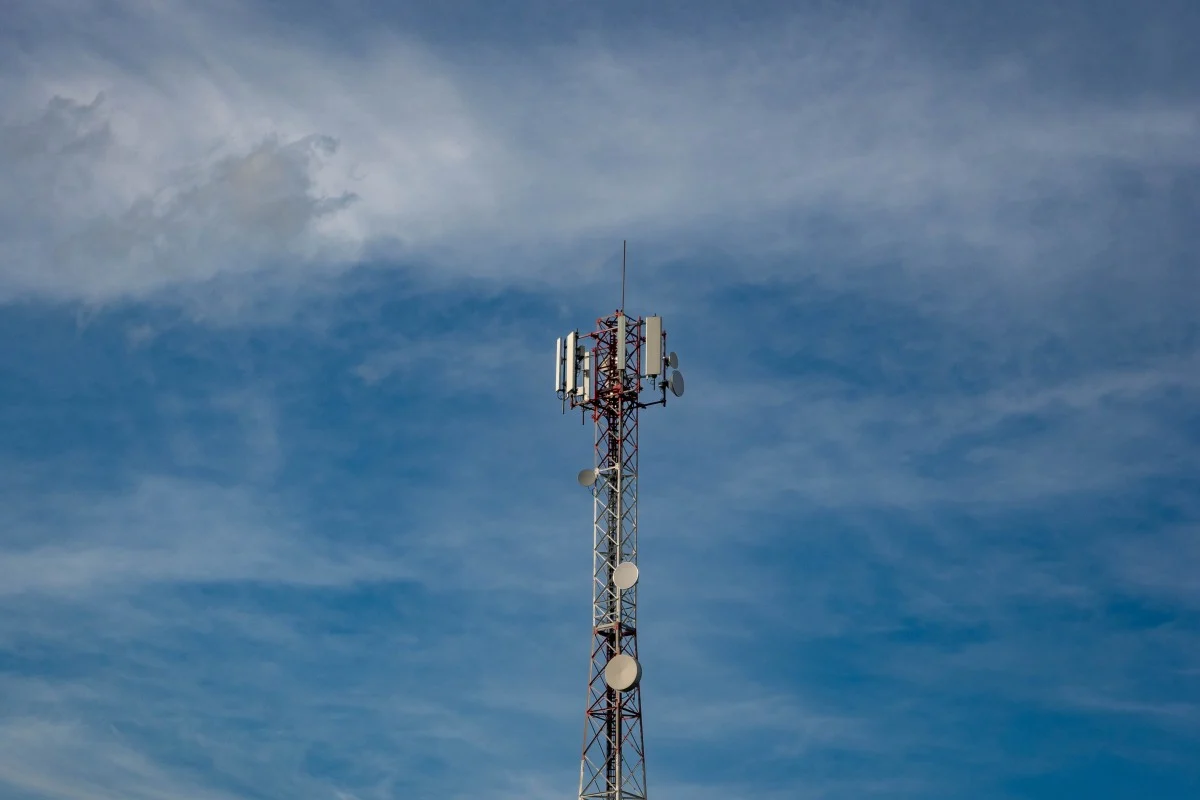
The landscape of global telecommunications is undergoing a profound structural shift as the industry transitions from standard fifth-generation (5G) networks toward a more sophisticated and capable iteration known as 5G-Advanced, frequently dubbed 5.5G. Far from being a completely new generational standard like the anticipated 6G, 5G-Advanced represents a vital evolutionary bridge designed to address the burgeoning limitations of initial 5G rollouts. By integrating advanced artificial intelligence, machine learning, and massive enhancements in data throughput, this new standard aims to redefine industrial automation, immersive consumer media, and network efficiency on a global scale. As telecommunications operators around the world—including early adopters in Southeast Asia—begin testing and deploying these upgrades, industry stakeholders are closely monitoring how 5G-Advanced will shape the future of digital infrastructure.
Origins and Chronology: From 3GPP Release 18 to 5G-Advanced
The formal journey of 5G-Advanced began under the auspices of the 3rd Generation Partnership Project (3GPP), the international body responsible for developing telecommunications specifications. The technical framework for 5G-Advanced was officially introduced via 3GPP Release 18, a milestone that marked a shift from merely expanding basic mobile broadband coverage to optimizing network intelligence and supporting specialized vertical industries.
While the initial deployment of 5G—widely rolled out between 2019 and 2021—focused primarily on achieving high-speed mobile internet and low-latency communications for consumer smartphones, Release 18 sought to rectify persistent gaps in energy efficiency, uplink capacity, and device-to-device communication. Building upon the groundwork laid in Release 18, the ongoing development through 3GPP Release 19 continues to refine these specifications. Release 19 introduces deeper artificial intelligence integration and advanced capabilities for spatial computing, ensuring that the network architecture can scale dynamically as demands from enterprise and consumer sectors multiply. This multi-phase evolution acts as a strategic stepping stone, laying the technical foundation required for the eventual commercialization of 6G networks expected in the next decade.
Technical Capabilities: Data Speeds, Efficiency, and Architecture
At the core of 5G-Advanced are sweeping performance enhancements that push the boundaries of wireless data transmission. While standard 5G networks typically deliver download speeds ranging from several hundred megabits per second to a few gigabits per second under ideal conditions, 5G-Advanced has demonstrated the capability to shatter the 10 Gbps barrier in controlled testing environments.
Collaborative trials conducted by major infrastructure vendors and telecom operators—such as Ericsson, Telstra, and MediaTek—have successfully recorded commercial standalone (SA) 5G speeds reaching 9.4 Gbps, with laboratory tests consistently surpassing the 10 Gbps threshold. However, industry analysts emphasize that achieving these ultra-high speeds requires a sophisticated aggregation of high-band spectrums, advanced antenna arrays, and carrier aggregation techniques, meaning they will not automatically translate to baseline consumer experiences without targeted infrastructure investments.

Beyond raw speed, 5G-Advanced introduces transformative improvements in network capacity, traffic management, and resource allocation. One of the most critical engineering challenges solved by the 5G-Advanced standard is the optimization of the uplink—the transmission of data from a user device back to the network. Traditional 5G networks were heavily optimized for downlink-heavy traffic, such as video streaming and web browsing. Conversely, 5G-Advanced significantly boosts uplink capabilities, a vital requirement for real-time cloud computing, industrial IoT data uploading, and massive sensor networks.
The Role of Artificial Intelligence and Machine Learning
A defining characteristic of 5G-Advanced is its native integration of Artificial Intelligence (AI) and Machine Learning (ML) directly into the wireless network architecture. Unlike previous generations where AI was utilized primarily in backend business operations or customer service applications, 5G-Advanced embeds intelligence at the radio access network (RAN) layer.
This native AI functionality empowers telecom operators to automate complex network management tasks in real-time. Machine learning algorithms continuously analyze traffic patterns, predict congestion points, and dynamically reallocate spectrum resources to maintain optimal connection quality for high-priority users. Furthermore, AI-driven automation plays a pivotal role in energy conservation. By intelligently putting base stations and idle network components into low-power sleep modes during periods of low traffic, operators can significantly curb power consumption—a critical objective for telecommunications companies aiming to meet global sustainability and carbon-reduction targets.
Expanding Use Cases: Extended Reality, IoT, and Precision Positioning
The technical enhancements of 5G-Advanced are intentionally designed to support a vast ecosystem of emerging technologies that demand more than just fast web browsing. Chief among these is Extended Reality (XR), which encompasses augmented reality (AR), virtual reality (VR), and mixed reality (MR) applications. XR devices demand ultra-low latency paired with massive data bandwidth to prevent motion sickness and render seamless, high-resolution holographic environments. 5G-Advanced provides the exact deterministic latency and throughput stability required to make untethered, cloud-rendered XR headsets commercially viable on a mass scale.
In addition to consumer-facing entertainment, 5G-Advanced accelerates the rollout of Industrial IoT (IIoT) and smart manufacturing automation. Factories utilizing automated guided vehicles (AGVs), robotic assembly lines, and real-time machine vision systems require absolute reliability and zero packet loss. The robust architecture of 5G-Advanced ensures mission-critical reliability for these industrial environments.
Moreover, the standard introduces advanced positioning and location-tracking technologies. By leveraging cellular signals with centimeter-level accuracy, 5G-Advanced enables precise indoor navigation, asset tracking in sprawling logistics hubs, and enhanced emergency response capabilities without relying heavily on traditional GPS satellite signals, which often fail indoors or in dense urban canyons.

Global Implementation and Early Adoption in Southeast Asia
As standardization matures, network operators worldwide are actively transitioning from legacy 5G infrastructures to 5G-Advanced-ready architectures. In Southeast Asia, telecommunications providers are positioning themselves at the forefront of this regional technological upgrade.
In Indonesia, major telecom operators have initiated strategic trials and commercial implementations to evaluate the viability of 5G-Advanced. Industry leaders such as XL Axiata have begun introducing commercial propositions aimed at high-demand users under advanced service umbrellas, while Telkomsel has engaged in collaborative technical trials with global network infrastructure giants like ZTE and Ericsson to test high-band spectrum aggregation and AI-driven network slicing.
Despite these proactive steps by operators, experts caution that widespread consumer adoption of 5G-Advanced will not happen overnight. Transitioning to these speeds and features requires two primary catalysts: substantial capital expenditure by operators to upgrade core network hardware and base stations, and the widespread availability of compatible consumer hardware. Only smartphones and mobile broadband devices equipped with modern modems and software stacks explicitly supporting 3GPP Release 18 features will be capable of fully harnessing 5G-Advanced capabilities.
Broader Economic Implications and Industry Analysis
The economic implications of the 5G-Advanced rollout extend far beyond consumer telecom markets, serving as a critical catalyst for the digital transformation of enterprise sectors. By bridging the gap between current 5G deployments and future 6G networks, 5G-Advanced offers businesses a stable, long-term framework for digital investment.
From an operational perspective, the automation facilitated by integrated machine learning significantly reduces operational expenditures (OPEX) for telecom operators, offsetting the heavy capital expenditures (CAPEX) required for infrastructure upgrades. For vertical markets—such as healthcare, logistics, automotive, and manufacturing—the reliability, enhanced security protocols, and precision capabilities of 5G-Advanced provide the foundational infrastructure necessary to implement autonomous systems and smart-city initiatives securely.
Conclusion
5G-Advanced marks a pivotal chapter in the ongoing evolution of global wireless communications. By moving beyond simple speed increases and focusing on network intelligence, energy efficiency, uplink capacity, and support for immersive technologies like XR and advanced IoT, the standard successfully redefines what a cellular network can achieve. While deployment timelines vary by region and depend heavily on regulatory support, spectrum allocation, and device readiness, early implementations by pioneering operators signal that the transition to 5G-Advanced is well underway. As the ecosystem continues to mature through successive 3GPP releases, 5G-Advanced will undoubtedly serve as the indispensable backbone for the next generation of digital innovation.