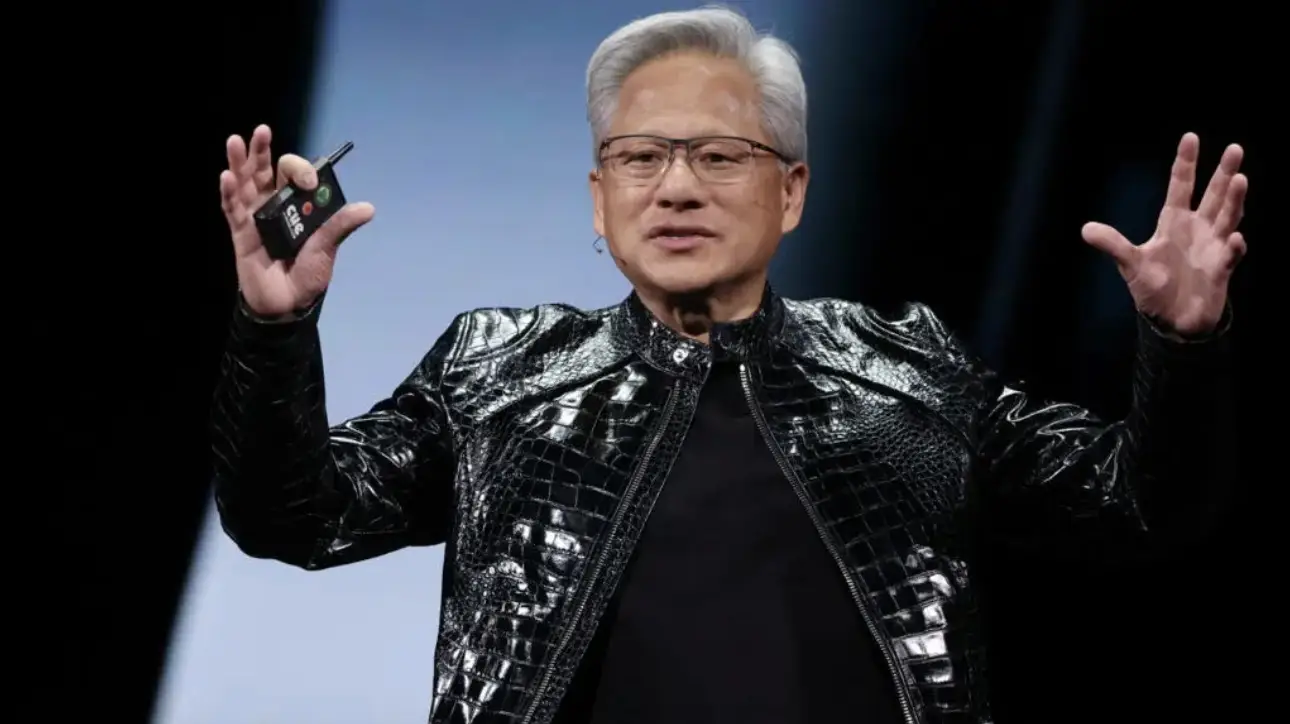
Jensen Huang has officially stepped down as the Chief Executive Officer of NVIDIA, bringing a historic 33-year tenure to an abrupt and dramatic close. The semiconductor giant announced the sweeping leadership transition, confirming that Huang is relinquishing not only his role as CEO but also his positions as President and member of the Board of Directors. The departure takes immediate effect, sending shockwaves through the global technology sector where Huang had long been revered as a visionary architect of the artificial intelligence boom.
To steer the company through this turbulent period, NVIDIA’s Board of Directors has appointed Colette Kress, the company’s veteran Chief Financial Officer, as interim CEO. Additionally, Harvey C. Jones, a board member since 1993, has been appointed as NVIDIA’s first-ever Chairman of the Board. While a formal search committee has been initiated to evaluate both internal and external candidates for a permanent successor, the sudden exit of one of the tech industry’s longest-serving and most influential leaders marks the end of an era for the Silicon Valley titan.
A Sudden Departure and the Rise of Colette Kress
The announcement on November 12, 2026, caught global financial markets and the technology community off guard. NVIDIA, currently valued among the most valuable publicly traded corporations in the world due to its dominance in AI hardware, moved swiftly to stabilize investor confidence by naming Kress to the interim post.
Kress is hardly a newcomer to the inner workings of high-stakes corporate technology. Having joined NVIDIA in September 2013, she brings nearly 25 years of extensive financial and operational leadership experience, which includes critical senior stints at technology heavyweights Cisco and Microsoft. During her tenure as CFO, Kress was widely credited with helping navigate NVIDIA’s meteoric financial ascent, particularly during the unprecedented demand cycle for generative AI chips.
Stepping into her expanded responsibilities, Kress will continue to oversee financial operations while simultaneously managing the day-to-day executive duties of the company until a permanent CEO is selected.
“The strength of NVIDIA has always been rooted in the exceptional people who make up this company,” Kress stated following her appointment. “Alongside our world-class leadership team, I am fully committed to building upon the incredible foundation that Jensen has established over the past 33 years. We remain focused on advancing our position as the undisputed leader in accelerated computing and artificial intelligence, while continuing to serve our customers, developers, partners, and shareholders with unwavering dedication.”
The Catalyst: Personal Controversy and National Security Probes
Although NVIDIA’s official communications framed the leadership change as a planned or immediate transition, the exit follows weeks of mounting pressure stemming from a severe personal and geopolitical controversy involving Huang.
The crisis came to light when investigations revealed that Huang had engaged in a personal relationship with Alice Huang, a businesswoman formerly associated with Megaspeed International, a Singapore-based firm. Megaspeed has recently fallen under intense scrutiny by United States regulatory and law enforcement authorities over allegations that it facilitated the unauthorized diversion of advanced NVIDIA artificial intelligence chips to China, thereby circumventing strict U.S. export controls designed to curb Beijing’s technological advancement in military and strategic computing.
Compounding the commercial compliance issues, United States intelligence agencies reportedly began investigating whether Alice Huang maintained ties to Chinese intelligence networks. While these explosive allegations have not been publicly proven in a court of law, and the Chinese government has formally denied any involvement in intelligence operations targeting corporate executives, the mere intersection of a foundational tech CEO, potential export violations, and foreign intelligence scrutiny transformed the matter into a national security issue of the highest order.
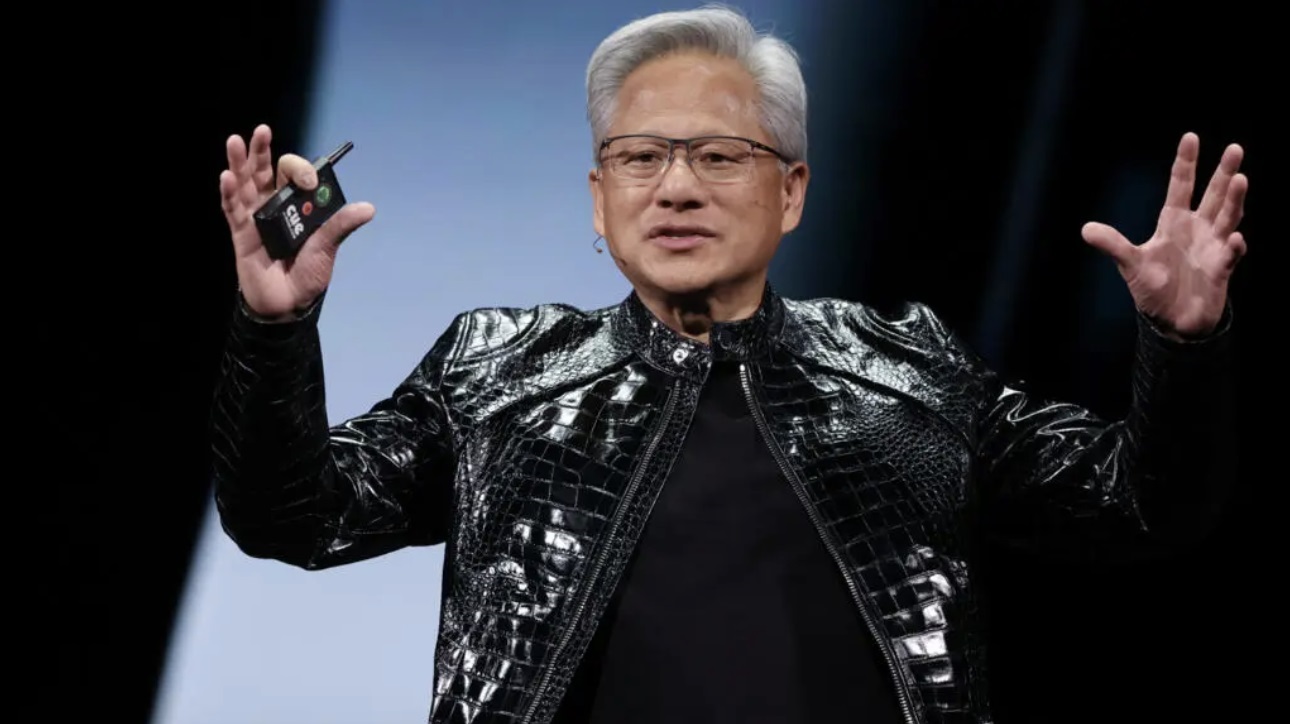
Recognizing the gravity of the situation, NVIDIA’s Board of Directors formed an independent committee to investigate potential security vulnerabilities and foreign intelligence operations directed at the company’s executive leadership. The pressure intensified further when reports surfaced regarding other potential entanglements involving corporate executives.
Faced with a burgeoning crisis that threatened to engulf the company’s regulatory standing and public reputation, Huang addressed NVIDIA employees directly on November 8, 2026. In an internal message, he acknowledged the personal relationship, apologized to his wife, family, and employees, and set the stage for his eventual departure just days later.
Chronology of Events
The unfolding of events that led to Jensen Huang’s resignation highlights the rapid escalation from a private personal matter to a high-level corporate governance crisis:
- Early November 2026: Investigative reports surface regarding Jensen Huang’s relationship with Alice Huang and her former employer, Megaspeed International, linking the firm to alleged circumvention of U.S. AI chip export controls to China.
- November 8, 2026: Jensen Huang sends a memorandum to NVIDIA employees acknowledging a personal relationship outside of his marriage and issuing a formal apology to his family and staff.
- Early November 2026: NVIDIA’s Board of Directors establishes an independent committee to launch a formal investigation into potential foreign intelligence targeting and related compliance concerns.
- November 12, 2026: NVIDIA officially announces that Jensen Huang has resigned from his roles as CEO, President, and member of the Board of Directors, effective immediately. CFO Colette Kress is appointed interim CEO, and Harvey C. Jones is named Chairman of the Board.
Industry Legacy and Financial Footprint
To fully understand the weight of Huang’s departure, one must look at the monumental trajectory of NVIDIA under his stewardship. Co-founded by Huang in 1993 alongside Chris Malachowsky and Curtis Priem, NVIDIA began as a niche graphics card manufacturer focused primarily on 3D gaming.
Under Huang’s relentless engineering-driven vision, the company pioneered the Graphics Processing Unit (GPU) in 1999 with the launch of the GeForce 256. Years later, Huang made what many initially considered a risky and expensive bet: developing CUDA, a parallel computing platform that allowed GPUs to be programmed for general-purpose computing far beyond gaming. That foundational gamble transformed NVIDIA into the absolute bedrock of the modern artificial intelligence revolution. When the generative AI boom exploded in the early 2020s, powered by massive language models like OpenAI’s ChatGPT, NVIDIA’s hardware became the most sought-after commodity in the global tech economy, propelling the company’s market capitalization into the multi-trillion-dollar stratosphere.
Broader Market Implications and Strategic Outlook
The sudden removal of a visionary founder like Jensen Huang presents profound strategic, psychological, and regulatory implications for NVIDIA and the broader semiconductor industry.
From a market perspective, investor anxiety is palpable. Founder-led technology companies often trade at a premium because the identity of the enterprise is inextricably linked to the founder’s intuition and risk appetite. While Colette Kress brings steady financial governance and deep institutional knowledge to the executive suite, the absence of Huang leaves a massive void in technological foresight and high-level ecosystem management.
Geopolitically, the timing of the transition coincides with an era of intense technological nationalism. U.S.–China trade tensions regarding semiconductors are at an all-time high, and Washington has steadily tightened export controls on advanced processors. The independent committee’s investigation into chip diversion pathways and potential foreign influence will likely face intense scrutiny from the U.S. Department of Commerce, the Department of Justice, and congressional oversight committees.
For NVIDIA, the immediate priority under Kress’s interim leadership will be twofold: maintaining uninterrupted operational momentum in the cutthroat AI infrastructure market while cooperating fully with regulatory authorities to insulate the company from ongoing legal fallout. As the board embarks on its global search for a permanent successor, the company must prove that its foundational culture of innovation and engineering excellence can endure independently of the legendary leader who built it from a California diner three decades ago.