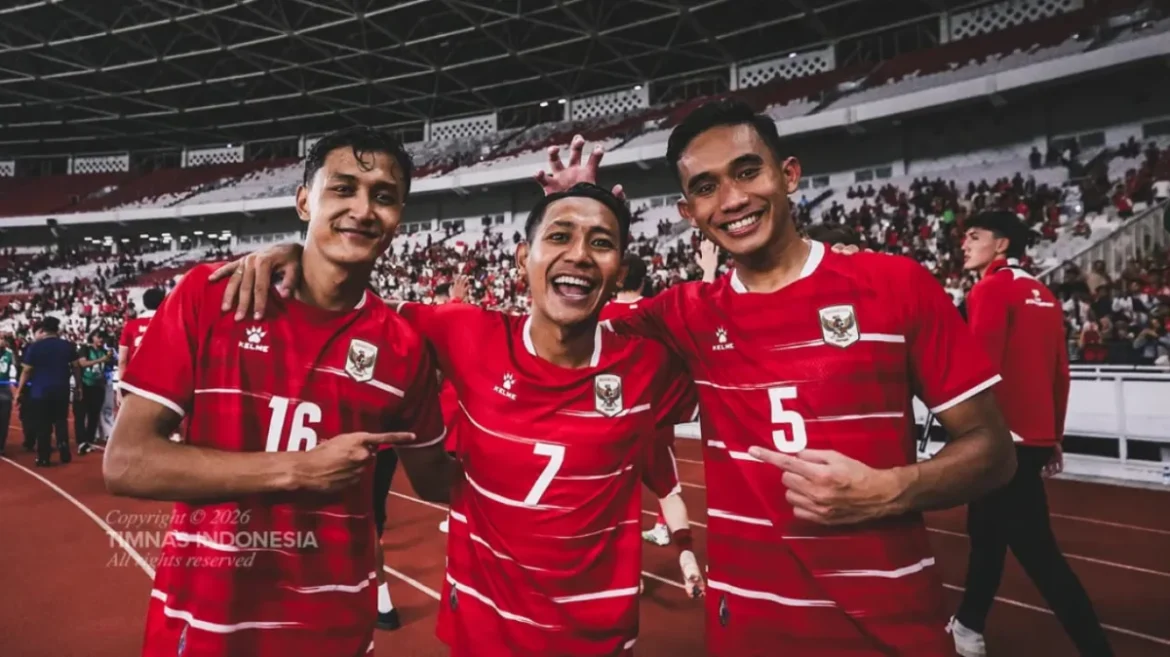
The anticipation surrounding one of Southeast Asia’s most historic and fiercely contested football rivalries has reached a fever pitch as Malaysia and Indonesia prepare to lock horns in the second fixture of Group A, Division 1, in the ongoing FIFA ASEAN Cup 2026. Scheduled for Monday evening, September 28, 2026, at the iconic Gelora Bung Karno Main Stadium (SUGBK) in Jakarta, the encounter promises high drama, tactical chess matches, and an electrifying atmosphere driven by tens of thousands of passionate supporters.
Malaysia enters this high-stakes fixture under the guidance of interim head coach Tan Cheng Hoe, who has spent the days leading up to the match publicly addressing his squad’s tactical vulnerabilities. Following a comprehensive review of Indonesia’s opening performance, the experienced tactician has explicitly instructed his defensive unit to elevate their concentration levels to the absolute maximum. The warning comes directly on the heels of Indonesia’s clinical 2-0 victory over regional rivals Singapore, a match that showcased the burgeoning potency of the Garuda squad under the tactical direction of head coach John Herdman.
For Malaysia, colloquially known as the Harimau Malaya, the objective in Jakarta is not merely to survive the onslaught of the home team, but to carve out a positive result that cements their early dominance in the group standings. Malaysia currently sits atop Group A with three points and a superior goal difference, having dispatched Bangladesh 3-0 in their opening match. Indonesia, also boasting three points after their convincing win against Singapore, sits closely behind, setting the stage for a classic table-topping showdown that could heavily dictate the trajectory of the group stage.
The Historical and Regional Context of the FIFA ASEAN Cup 2026
The FIFA ASEAN Cup 2026 represents a watershed moment for football in Southeast Asia, structured under expanded formats and heightened global visibility. As part of FIFA’s broader initiatives to foster competitive regional structures, Division 1 of the tournament features the absolute elite of AFF member nations, battling not only for regional supremacy but for crucial ranking points that carry weight on the international stage.
Matches between Indonesia and Malaysia—often colloquially dubbed the Nusantara Derby—transcend standard group-stage fixtures. Historically, encounters between these two footballing giants are characterized by intense physical battles, tactical caution blended with explosive moments of brilliance, and immense psychological pressure stemming from decades of fierce sporting rivalry. The stakes are amplified further by the current tournament standings, where a victory for either side would virtually guarantee a strong foot-hold in the race for the knockout rounds.
Analyzing Indonesia’s Offense: The Threat of Herdman’s Garuda
Tan Cheng Hoe’s preoccupation with Indonesia’s attacking prowess is rooted in empirical observation. During their opening match against Singapore, Indonesia displayed a fluid, highly adaptable attacking system that consistently dismantled the opposition’s defensive block. Head coach John Herdman, known for his meticulous tactical setups and ability to maximize player versatility, has successfully infused the Garuda squad with a modern, high-intensity pressing style.
The focal points of Indonesia’s attack are multi-faceted, relying heavily on European-based talent and domestic dynamism. In the match against Singapore, the breakthrough goals came courtesy of Ragnar Oratmangoen and Ole Romeny. Oratmangoen’s positional intelligence, combined with Romeny’s clinical finishing and physical presence inside the penalty box, gave Singaporean defenders fits throughout the ninety minutes.
Beyond Oratmangoen and Romeny, the Indonesian roster boasts considerable depth in wide areas, featuring players capable of exploiting transitional moments through searing pace and exceptional one-on-one dribbling ability. It is this capacity to turn defense into offense within seconds that has kept Tan Cheng Hoe awake at night. In media statements reported by regional sports daily The Star, the 57-year-old coach emphasized that even a momentary lapse in spatial awareness could prove catastrophic against the hosts.
"The defense must focus 100 percent. We cannot afford to be complacent, whether we are in possession or defending against a transition," Tan stated firmly during a tactical briefing ahead of the squad’s final training session in Jakarta.
Tactical Dilemma: Balancing Defense and Ambition
While defensive discipline remains the primary pillar of Malaysia’s game plan, Tan has been careful to caution his players against retreating into a purely passive, defensive shell. The Harimau Malaya arrive in Jakarta with a healthy injection of confidence following their 3-0 thrashing of Bangladesh in their tournament opener. That match demonstrated Malaysia’s ability to control the tempo of a game, circulate possession with authority, and capitalize on set-piece opportunities.
However, Tan is well aware that Bangladesh presented a vastly different stylistic challenge compared to the high-tempo, physically imposing Indonesian side. Against Herdman’s men, Malaysia must strike a delicate equilibrium. Over-committing bodies forward could invite devastating counter-attacks orchestrated by Indonesia’s midfield engine, while sitting too deep for the entirety of the match would inevitably invite relentless pressure, increasing the statistical probability of defensive errors under the cauldron-like atmosphere of the SUGBK.
The tactical blueprint for Malaysia likely involves maintaining a compact, low-to-medium defensive block, denying space between the midfield and defensive lines where players like Oratmangoen prefer to operate. Simultaneously, the wide midfielders and full-backs must be prepared to burst forward into vacant spaces whenever possession is successfully regained, utilizing quick vertical transitions to test an Indonesian defense that has yet to be thoroughly examined under sustained pressure.
The Atmosphere and Psychological Warfare at SUGBK
Playing at the Gelora Bung Karno Main Stadium presents one of the most formidable psychological challenges in Asian football. With a capacity exceeding 77,000 spectators, the stadium is expected to be a sea of red and white, generating a wall of sound that can easily overwhelm visiting players who fail to manage their emotional composure.
For Tan Cheng Hoe, managing the psychological aspect of the match is just as critical as executing tactical instructions. The interim coach has urged his players to treat the noise not as a source of intimidation, but as background energy, keeping their collective focus anchored strictly on match organization, tactical discipline, and communication on the pitch.
"The players understand the weight of this fixture," a team insider noted. "There is pressure, of course, because of the history between the two countries. But the coaching staff has worked hard to channel that energy into concentration rather than anxiety."
Implications for Group A Dynamics
As the second matchday of Group A unfolds, the ramifications of the Indonesia-Malaysia clash will resonate throughout the rest of the division. A victory for Indonesia would propel them to six points, solidifying their status as the group favorites and placing immense pressure on the remaining fixtures. Conversely, a win for Malaysia would temporarily secure their grip on the top spot, showcasing the tactical acumen of Tan Cheng Hoe and reinforcing the resilience of the Harimau Malaya on hostile soil. A draw, while potentially satisfying for the visitors, would leave the group delicately balanced, keeping all contending nations mathematically active heading into the mid-point of the tournament.
Ultimately, the fixture at the SUGBK is more than a simple three-point contest; it is a litmus test of tactical maturity, emotional resilience, and developmental progress for both national programs within the evolving landscape of ASEAN football. As the referee’s whistle blows on Monday night, the theories, warnings, and tactical preparations will dissolve into the raw, unpredictable reality of ninety minutes on the pitch.