Persib Bandung is set to face a formidable challenge as the Indonesian powerhouse kicks off its campaign in Group E of the AFC Champions League Two (ACL Two) 2026/2027 season. The opening fixture brings the Indonesian champions to the Seoul World Cup Stadium in South Korea, where they will lock horns with K League 1 giants FC Seoul on Wednesday, September 16, 2026. For the Bandung-based club, navigating this away fixture requires meticulous tactical preparation, given the rich history, dominant domestic form, and tactical pedigree of their opponents.
While Persib Bandung enters the international arena with high ambitions to make a significant impact on the continental stage, FC Seoul represents a massive hurdle. Known widely by their moniker, the "Dark Red Warriors," the South Korean side boasts a storied legacy, elite infrastructure, and a fierce winning mentality. To better understand the magnitude of this encounter, a closer look at four crucial facts surrounding FC Seoul provides essential context for football analysts and supporters alike.
Domestic Dominance and Championship Pedigree
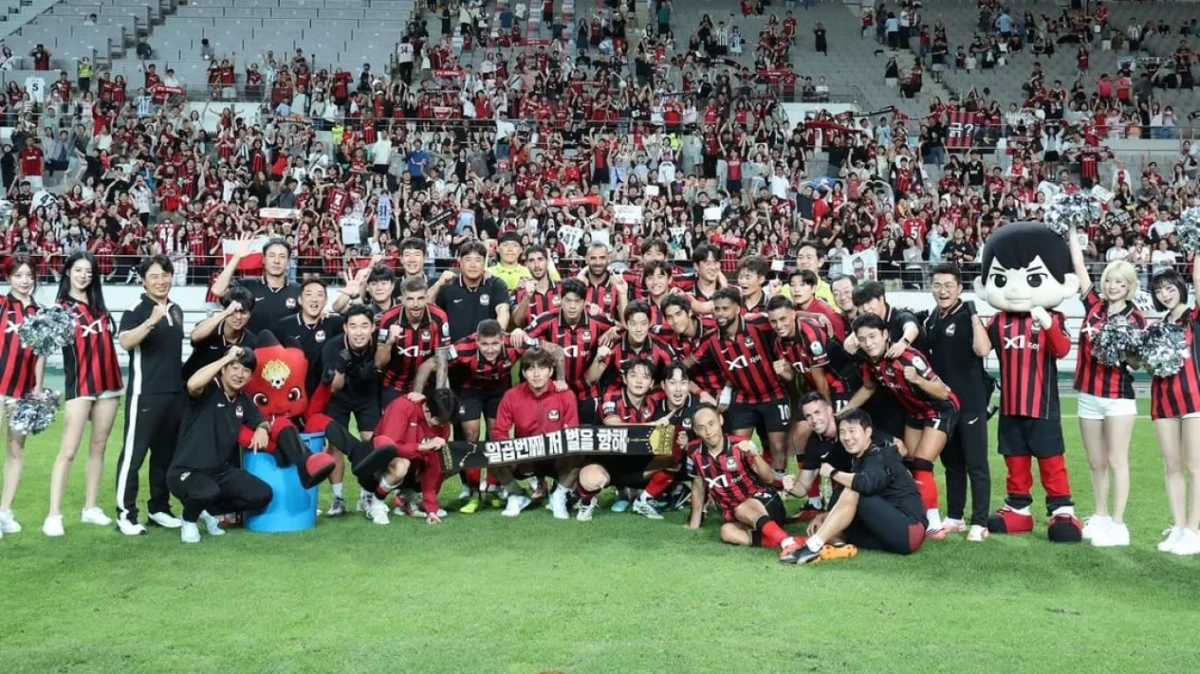
FC Seoul stands firmly as one of the most successful and prestigious clubs in the history of South Korean professional football. The club has captured the coveted K League 1 title on six separate occasions, establishing a culture of excellence and a winning tradition that permeates every level of the organization. Their dominance is not merely historical; it is vividly reflected in the current 2026 domestic campaign.
Under the astute tactical guidance of head coach Kim Gi-dong, FC Seoul has displayed relentless consistency throughout the season. Entering this continental fixture, the Dark Red Warriors sit comfortably at the summit of the K League 1 standings. Their dominance is further emphasized by a commanding 15-point lead over their closest pursuers, Ulsan HD. This massive cushion at the top of the domestic league table positions them as overwhelming favorites to secure yet another K League 1 crown. For Persib Bandung, facing a side operating at the absolute peak of domestic confidence presents a daunting test of defensive resilience and tactical discipline.
Iconic Venue with a World Cup Legacy
The stage for Wednesday’s encounter adds another layer of historic significance to the fixture. Persib Bandung will experience the privilege and pressure of playing inside one of Asia’s most iconic football arenas—the Seoul World Cup Stadium. Originally constructed to host matches during the historic 2002 FIFA World Cup co-hosted by South Korea and Japan, the venue is steeped in footballing lore.
Boasting a massive seating capacity exceeding 66,000 spectators, the Seoul World Cup Stadium is renowned for generating an intense, electrifying atmosphere when packed with passionate home supporters. The state-of-the-art facility serves not only as the permanent home ground for FC Seoul but also as a fortress where visiting teams traditionally struggle to find success. For the traveling squad from Indonesia, adapting rapidly to the atmospheric pressure, pitch dimensions, and physical scale of this legendary stadium will be a critical factor in executing their game plan.
Tactical Rotation and Youth Integration
Despite boasting a star-studded roster capable of dominating domestic proceedings, FC Seoul has signaled a strategic shift regarding their squad selection for this opening ACL Two fixture. Head coach Kim Gi-dong has strongly hinted at implementing squad rotation, paving the way for second-string players and exciting young talents to feature against the Indonesian visitors.
This tactical decision has been largely influenced by an unforgiving fixture congestion. Prior to hosting Persib, FC Seoul endured a punishing schedule, highlighted by a brutal, high-intensity domestic clash against Jeonbuk Hyundai Motors. The physical toll of that match has prompted the coaching staff to manage player workloads carefully. Consequently, promising youngsters developed through the club’s prestigious Osan High School academy, alongside squad members hungry for regular minutes, are expected to receive rare starting opportunities. However, football analysts caution that this rotation should not be mistaken for vulnerability; the depth of talent within the FC Seoul youth and reserve ranks remains exceptionally high, capable of executing the tactical demands of the coaching staff with seamless precision.
High-Intensity Playing Style and Transitional Threat
Beyond squad personnel and historical accolades, the tactical identity of FC Seoul presents distinct challenges that Persib Bandung’s technical staff must counter. The South Korean side is universally recognized for a distinct brand of football rooted in physical robustness, aggressive high-pressing, and lightning-fast transitions from defense to attack.
Kim Gi-dong’s tactical philosophy demands exceptional stamina, positional discipline, and swift ball movement. When out of possession, FC Seoul applies suffocating pressure high up the pitch to force opponents into errors. The moment they win back possession, the team transitions into an attacking wave with remarkable speed, utilizing dynamic wingers and powerful central midfielders to exploit spaces behind the opponent’s defensive line. This relentless physical and tactical intensity will serve as the ultimate test for Persib’s defensive block and midfield mettle.
Chronology and Background of the Group E Fixture
The journey to the Seoul World Cup Stadium is the culmination of months of strategic planning and domestic success for Persib Bandung. Having secured qualification through their performances in the Indonesian domestic league, the club entered the group stages of the AFC Champions League Two with aspirations of advancing deep into the continental tournament. The draw placed Persib in Group E alongside regional heavyants, transforming every match into a high-stakes battle for progression.
Preparation for the match began weeks in advance, with the coaching staff analyzing match footage of FC Seoul’s domestic campaign. Traveling to South Korea days before the fixture, Persib focused on acclimatizing to the local climate, adjusting to the time zone, and fine-tuning tactical formations designed to absorb pressure and exploit potential spaces left by the opponent’s aggressive pressing structure. Meanwhile, FC Seoul’s preparations unfolded amidst a chaotic domestic schedule, balancing their title charge in the K League 1 with the logistical and physical demands of continental football.
Implications and Broader Impact on Indonesian Football
The fixture carries profound implications extending far beyond the immediate group standings. For Persib Bandung, competing against an elite East Asian club like FC Seoul serves as a vital benchmark for the current state of Indonesian club football on the international stage. Success, or even a competitive performance, validates the progress made by the club and raises the coefficient standing of Indonesian representatives in Asian competitions.
Furthermore, matches of this magnitude provide invaluable exposure and developmental experience for the players involved. Facing opponents accustomed to the physical intensity and tactical sophistication of the K League 1 exposes Indonesian players to the demands of elite-level international competition, lessons that can be channeled back into the national football ecosystem.
As the referee prepares to blow the opening whistle at the Seoul World Cup Stadium, the spotlight focuses squarely on how Persib Bandung will weather the storm. Armed with thorough tactical awareness of FC Seoul’s physical prowess, transitional speed, and squad rotation strategies, the Indonesian side steps onto the pitch looking to make a definitive statement in the opening chapter of their continental journey.