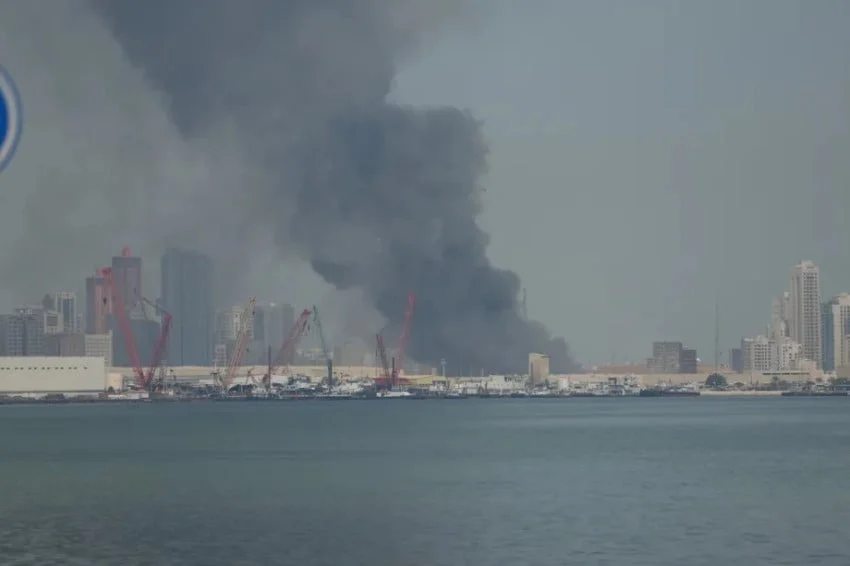
A sweeping series of military operations launched by Iranian forces has resulted in an estimated $184 million, or approximately Rp3.3 trillion, in physical and operational damages to United States diplomatic and military installations across the Persian Gulf region. According to a newly released report by the Office of the Inspector General (OIG) at the Pentagon, these damages represent the tangible fiscal fallout from a wider regional conflict that ignited in late February 2026. The findings underscore the intensity of the Iranian response to coordinated military actions undertaken by the United States and Israel, marking a significant escalation in a volatile geopolitical theater.
Scope and Geographic Distribution of Damages
The OIG report provides a granular breakdown of the destruction, which encompasses a wide array of infrastructure ranging from hardened military bunkers to standard diplomatic outposts. The affected nations include Iraq, Kuwait, Saudi Arabia, and the United Arab Emirates (UAE).
Iraq has been identified as the epicenter of the destruction. The report highlights that the U.S. mission in Iraq bore the brunt of the Iranian military response, sustaining damages exceeding $157 million. This figure accounts for the bulk of the total regional loss. Beyond the financial cost, the report notes that the U.S. presence in Iraq was subjected to a relentless campaign, enduring more than 600 distinct attacks by Iranian-backed or Iranian-direct forces during the reporting period.
In contrast, other regional allies saw smaller, though still significant, losses. Kuwait sustained damages valued at approximately $14 million, while Saudi Arabia reported losses totaling $11.5 million. The United Arab Emirates, while also a target of the regional firestorm, reported the lowest figure among the four, with damages to U.S. facilities estimated at $125,000. These figures, while substantial in a fiscal sense, are widely interpreted by defense analysts as indicators of the strategic vulnerabilities exposed during the height of the February offensive.
Chronology of the 2026 Escalation
The conflict, which serves as the backdrop for these figures, trace its roots to the late February 2026 military pivot. On February 28, 2026, the situation reached a critical juncture when Iranian forces launched a coordinated missile and drone strike targeting the headquarters of the U.S. Navy’s 5th Fleet in Manama, Bahrain.
This strike was explicitly characterized by Tehran as a retaliatory measure following a series of joint U.S.-Israeli operations that had targeted Iranian interests earlier in the month. The February 28 incident sent shockwaves through global energy markets and triggered immediate diplomatic emergency sessions. The OIG report serves as the first comprehensive accounting of the physical impact since the hostilities commenced, offering a rare glimpse into the resilience and vulnerability of American forward-deployed assets.
The chronology of events suggests a "tit-for-tat" escalation pattern. Following the initial engagement in late February, Iranian forces maintained a high operational tempo, utilizing long-range precision munitions and asymmetric warfare tactics to pressure U.S. logistical nodes. The intensity of these strikes varied significantly by location, suggesting that Iranian targeting was strategic, focusing heavily on installations with the highest concentration of U.S. personnel and command-and-control capabilities.
Analysis of the Inspector General’s Findings
The Pentagon’s Inspector General report is designed primarily to provide congressional oversight and ensure the accountability of military spending. However, the document also serves as a sobering assessment of the effectiveness of regional air defense systems.
Military analysts observing the report note that while $184 million is a considerable sum for facility repair, the damage could have been far more severe had U.S. and allied integrated air and missile defense (IAMD) systems not been active. The survival of critical personnel and the operational continuity of the 5th Fleet suggest that defense layers—such as the Patriot and THAAD batteries deployed throughout the Gulf—successfully intercepted a significant percentage of incoming projectiles.
However, the sheer volume of attacks—specifically the 600-plus strikes in Iraq—highlights a "attrition-based" strategy employed by Iranian forces. By overwhelming defensive screens with low-cost, high-volume drone and rocket attacks, Iran has managed to force the United States into a cycle of constant repair and logistical strain. This strategy, often referred to as "gray zone" warfare, seeks to erode the political and financial will of the adversary without necessarily engaging in a full-scale conventional war that could lead to total state collapse.
Official Responses and Diplomatic Fallout
While the Pentagon has remained tight-lipped regarding specific tactical responses to the report, a spokesperson for the Department of Defense stated that the U.S. remains "fully committed to the security of its personnel and the integrity of its regional infrastructure." The White House has consistently maintained that all retaliatory actions taken by the U.S. are conducted in accordance with international law and the inherent right to self-defense.
Conversely, officials in Tehran have characterized the destruction as a "necessary response to foreign aggression," framing the attacks as a defense of national sovereignty. The Iranian narrative suggests that the presence of U.S. military facilities in the Gulf is a destabilizing force, and that the financial losses reported by the Pentagon are a direct consequence of the United States’ "interventionist policies" in the Middle East.
Regional governments, caught in the middle of this escalating friction, have expressed varying degrees of concern. Many Gulf Cooperation Council (GCC) members have called for immediate de-escalation, fearing that their own territories are being transformed into a battlefield for a conflict between two global powers. The economic implications are also a primary concern, as the uncertainty surrounding the security of the Persian Gulf threatens to disrupt oil and gas shipping lanes, which are vital to the global economy.
Strategic Implications for U.S. Foreign Policy
The findings in the OIG report are expected to fuel a heated debate in Washington regarding the future of the U.S. military footprint in the Middle East. Lawmakers on both sides of the aisle are likely to demand answers regarding why, despite years of investment in regional security, U.S. facilities remain so susceptible to sustained bombardment.
There are three primary implications that policymakers are currently weighing:
- The Cost of Forward Presence: The $184 million repair bill is a tangible cost, but it does not account for the indirect costs, such as increased combat pay, hazard pay for civilian contractors, and the diversion of military assets from other global theaters, such as the Indo-Pacific or Europe.
- Technological Adaptation: The success of Iranian drone and missile strikes in penetrating certain defensive perimeters indicates a need for a technological shift. There is growing pressure to accelerate the deployment of directed-energy weapons (lasers and high-power microwaves) which are more cost-effective at neutralizing the drone swarms currently being utilized against U.S. assets.
- Regional Alliances: The reliance on bases in host nations like Kuwait and the UAE requires a delicate diplomatic balancing act. As the cost of hosting U.S. forces rises—both in terms of security risks and political pressure from neighbors—the U.S. may need to redefine its basing strategy to ensure long-term sustainability.
Conclusion
The release of the Pentagon’s report provides a definitive, if alarming, account of the current state of affairs in the Persian Gulf. With $3.3 trillion (Rp) in damages sustained across four nations, the incident is not merely a logistical issue but a profound geopolitical signal. As the conflict between the United States and Iran continues to evolve, the ability to protect critical infrastructure will remain a top priority for military planners. Whether this report leads to a hardening of U.S. defensive postures or a strategic reassessment of the American presence in the Middle East remains to be seen. What is clear, however, is that the era of "low-cost" presence in the Gulf has come to an end, replaced by a reality defined by high-intensity competition and the constant threat of sophisticated, asymmetrical attack.