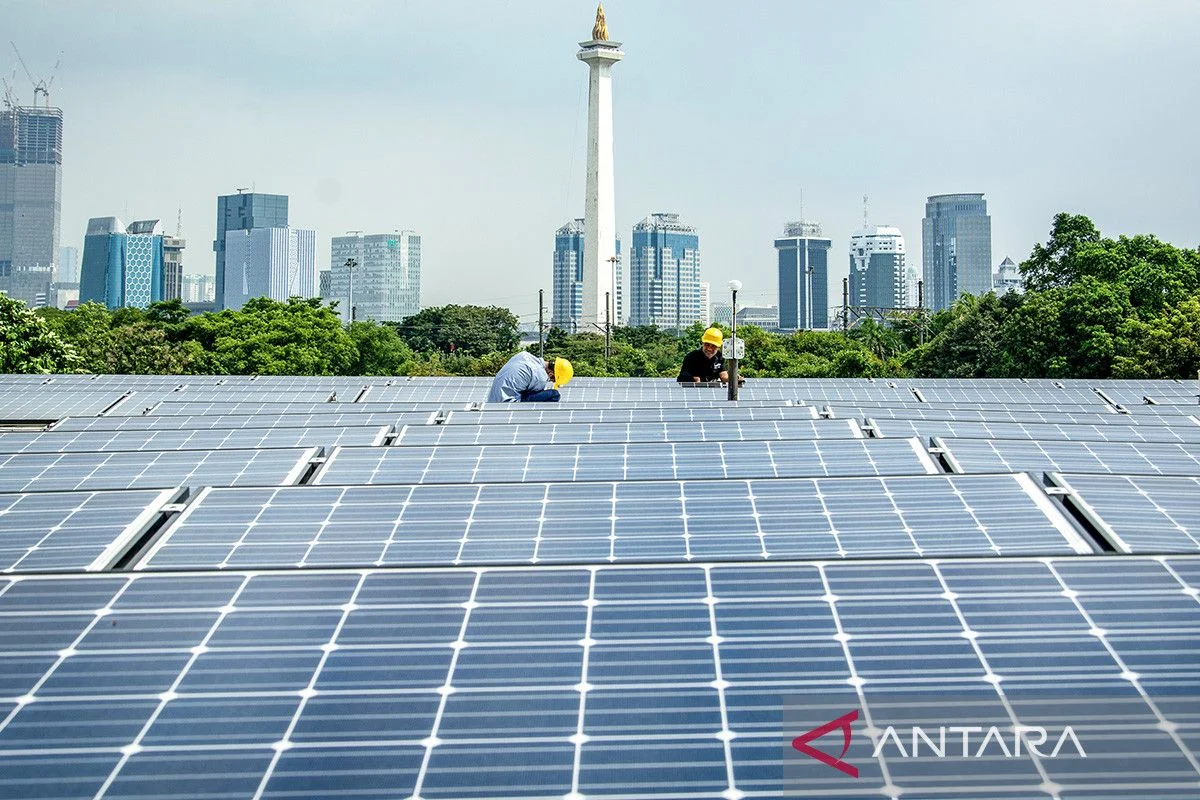
The Indonesian government has officially embarked on a transformative journey to reshape its national energy landscape, setting an ambitious target to develop 100 gigawatts (GW) of solar power capacity within a three-year timeframe. This strategic move, championed by President Prabowo Subianto, marks a significant departure from fossil-fuel dependency and positions the nation as a emerging leader in the Southeast Asian renewable energy sector. The initiative was inaugurated on August 25, 2026, with the commencement of 14 solar photovoltaic (PV) power plants spread across six key provinces, boasting a combined initial capacity of 5.3 GW.
This policy shift is not merely an environmental imperative but a calculated economic strategy designed to bolster national fiscal health, generate high-skilled employment, and fulfill international carbon reduction commitments. As Indonesia navigates the complexities of this transition, the government is actively seeking international synergy, with a particular focus on deepening energy cooperation with South Korea, a global powerhouse in green technology and industrial innovation.
The Strategic Blueprint of the 100 GW Ambition
The core objective of the 100 GW program is to create a robust and resilient energy infrastructure capable of sustaining Indonesia’s growing industrial base. By diversifying the energy mix, the government aims to reduce the heavy burden on the state budget caused by electricity subsidies. According to Minister of Energy and Mineral Resources (ESDM) Bahlil Lahadalia, the program represents a massive investment commitment totaling approximately 73 billion US dollars—equivalent to over Rp1,140 trillion.
The financial rationale is compelling: by optimizing solar energy, the government projects an annual reduction in electricity subsidies amounting to Rp73.9 trillion. These savings are earmarked for reallocation into other developmental sectors, including education, healthcare, and infrastructure, thereby creating a multiplier effect on the national economy.
However, the scale of this project introduces significant logistical and technical challenges. To reach the 100 GW milestone by 2029, Indonesia must rapidly scale its capacity for energy storage, modernize its national grid to handle intermittent renewable inputs, and develop a domestic manufacturing ecosystem for solar panels and components. Without these supporting elements, the massive influx of solar capacity risks destabilizing the existing electrical grid, which was traditionally built for centralized, base-load fossil fuel plants.
Strengthening International Ties: The Indonesia-Korea Partnership
Recognizing the need for sophisticated technical expertise and industrial scalability, the Indonesian government has identified South Korea as a pivotal partner. The potential for collaboration extends far beyond simple solar panel installation. It encompasses a holistic approach to energy systems, including battery storage technology, small modular nuclear reactors, green hydrogen production, and carbon capture and storage (CCS) initiatives.
The partnership is anchored in the shared vision of decarbonization. South Korea, having successfully navigated its own transition from a manufacturing-heavy economy to a high-tech green hub, possesses the supply chain depth that Indonesia currently seeks to replicate. For South Korea, partnering with Indonesia offers a vast market for its renewable energy solutions and a strategic foothold in the ASEAN energy market.
During recent discussions held under the auspices of the Indonesian Next Generation Journalist Network on Korea—a collaborative effort by the Foreign Policy Community of Indonesia (FPCI) and the Korea Foundation—experts highlighted that the success of this bilateral cooperation hinges on moving beyond Memoranda of Understanding (MoUs). Deon Arinaldo, Director of the Energy System Transformation Program at the Institute for Essential Services Reform (IESR), emphasized the necessity of five specific cooperation agendas. These include technological knowledge transfers, joint venture manufacturing facilities, capacity building for local engineers, standardized regulatory frameworks for green investment, and collaborative research on grid integration technologies.
Chronology of the Energy Transition
The launch of the 14 solar projects in August 2026 represents the "Phase One" implementation of a broader national energy roadmap. The timeline for this transition is aggressive:
- Q3 2026: Official launch of the first 5.3 GW capacity. Procurement processes for the next phase of tenders begin, focusing on utility-scale floating solar projects in reservoirs and offshore sites.
- 2027: Expected ramp-up of domestic manufacturing requirements (TKDN) for solar components. The government plans to incentivize local manufacturing hubs to reduce reliance on imported photovoltaic cells.
- 2028: Integration of advanced energy storage systems (ESS) into the main Java-Bali grid to address the intermittent nature of solar power.
- 2029: Targeted completion of the 100 GW total capacity. By this year, the government anticipates a significant decline in the national carbon intensity of the power sector.
Addressing Technical and Structural Hurdles
One of the most critical aspects of the 100 GW goal is the challenge of grid readiness. Indonesia’s archipelago geography makes the creation of a unified, "smart" national grid exceptionally difficult. Traditional grids are designed for stable, predictable power from coal plants. Solar energy, which fluctuates based on weather patterns and time of day, requires a "flexible" grid architecture.
The Ministry of ESDM is currently working with the state-owned utility company, PT PLN, to upgrade transmission lines and implement artificial intelligence-driven grid management systems. Furthermore, the role of energy storage cannot be overstated. Without high-capacity lithium-ion or solid-state battery banks, the utility of the 100 GW target would be severely diminished during peak evening hours when solar generation drops to zero.
The involvement of South Korean firms, known for their prowess in battery chemistry and grid-scale storage, is expected to provide the technological bridge required to overcome these structural constraints.
Economic and Environmental Implications
The environmental impact of this program is significant. By displacing coal-fired power plants, Indonesia is projected to significantly lower its greenhouse gas emissions, bringing the country closer to its "Net Zero Emissions 2060" commitment. Beyond carbon metrics, the shift to solar will also reduce air pollution in densely populated areas, leading to improved public health outcomes.
Economically, the project serves as a catalyst for industrialization. The creation of a "Green Industrial Park" ecosystem is already underway, where solar energy serves as the primary power source for value-added mineral processing. This is a crucial pivot; Indonesia is moving away from exporting raw commodities and toward processing them domestically using clean energy, which increases the total value captured within the country.
However, analysts caution that the success of these plans depends heavily on the consistency of the regulatory environment. Investors require long-term certainty regarding power purchase agreements (PPAs), land acquisition laws, and the stability of the tariff structure. The government’s willingness to address these legal and administrative bottlenecks will determine whether the 73 billion USD investment goal is fully realized or remains an optimistic projection.
A New Era for Regional Energy Leadership
The ambitious nature of the 100 GW solar initiative places Indonesia at the forefront of the regional energy debate. As other ASEAN nations grapple with similar challenges—balancing rapid economic growth with the urgent need for decarbonization—Indonesia’s success or failure will likely set a precedent for the region.
If successfully executed, the program will transform Indonesia from a carbon-intensive emerging market into a green investment destination. It will also foster a unique model of South-South cooperation, where a developing nation leverages high-tech partnerships to leapfrog traditional stages of energy development.
The challenge now, as noted by observers and policymakers alike, is to translate these lofty agreements into concrete, on-the-ground programs that deliver tangible benefits to the citizenry. It requires a sustained commitment from all stakeholders: the government must ensure transparency and policy consistency, the private sector must bring innovation and capital, and international partners like South Korea must provide the technical foundation that turns ambition into kilowatt-hours.
In conclusion, the 100 GW solar power program is a defining moment for Indonesia. It reflects a nation that is no longer content to follow the traditional fossil-fuel trajectory of its predecessors but is instead choosing to chart a path toward a sustainable, tech-driven future. The next three years will be the litmus test for this ambition, serving as a critical window for infrastructure development, policy reform, and the solidification of international alliances that will dictate the country’s energy security for decades to come.