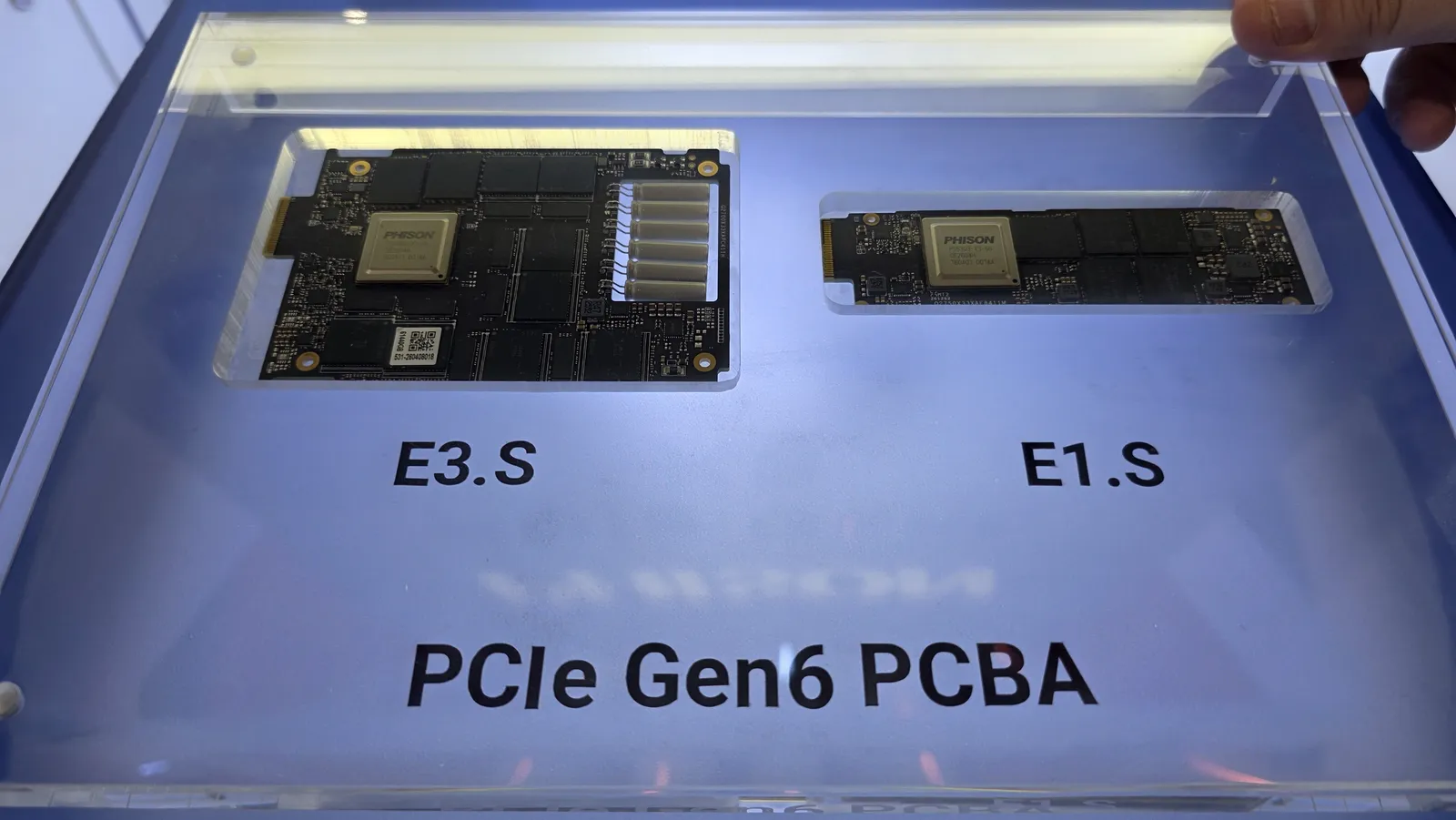
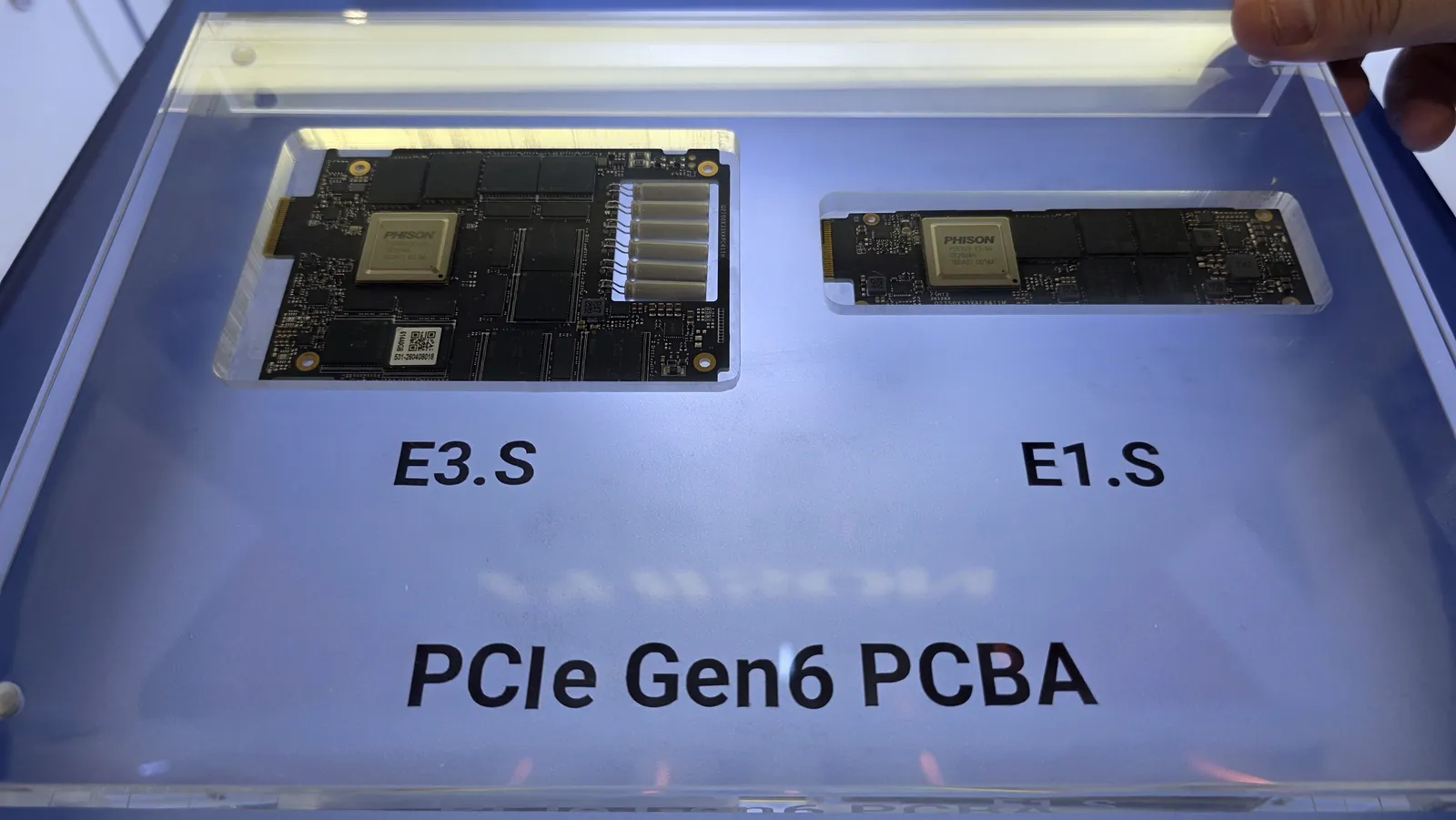
In a significant technological leap aimed at reshaping enterprise data centers and artificial intelligence infrastructure, Phison Electronics has unveiled two pioneering enterprise Solid State Drive (SSD) architectures. Among these innovations, the standout model integrates a dedicated Neural Processing Unit (NPU) alongside 64 GB of onboard memory directly onto the storage drive. This advanced design enables the execution of intensive AI workloads and large language models straight from the storage layer, promising to drastically alleviate computational bottlenecks that have long challenged modern server environments.
Revolutionizing Enterprise Storage and AI Workloads
The rapid expansion of artificial intelligence and machine learning applications has placed unprecedented strain on traditional data center architectures. Typically, executing workloads powered by frameworks like PyTorch, vLLM, OpenVINO, or llama.cpp requires massive datasets to be continuously shuttled back and forth between storage media, system memory, and the central processing unit (CPU) or graphics processing unit (GPU). This constant data transit introduces latency and consumes substantial system resources.
Phison’s new AI-centric SSD architecture seeks to eliminate this inefficiency by bringing compute capabilities directly to the data. By embedding an NPU and a robust 64 GB memory pool—operating at bandwidths up to 130 GB/s—the drive can process complex AI operations internally. Under this paradigm, the storage device performs preliminary analysis and localized processing, transmitting only the final, actionable results back to the host server. According to initial performance claims released by Phison, this localized approach can reduce unnecessary data movement between the storage subsystem and the primary server architecture by up to 100-fold for specific enterprise workloads.
While the exact nature of the integrated NPU’s capabilities continues to be evaluated by industry analysts, Phison has indicated a computing performance rating of 36,800 DMIPS for the accompanying CPU core architecture within the drive. Specific details regarding the exact memory technology utilized and the precise TOPS (Tera Operations Per Second) metrics of the NPU have not yet been fully disclosed. However, the compatibility with standard, widely adopted AI software ecosystems suggests a concerted effort to ensure seamless integration into existing software pipelines without demanding proprietary overhauls from enterprise developers.
The Mixed Media Architecture: Combining Speed and Density
Alongside its AI-focused storage solution, Phison introduced a second innovative enterprise design known as Mixed Media. This architecture addresses the persistent enterprise dilemma of balancing high-speed write endurance with cost-effective, high-density storage capacity within a constrained physical footprint.
The Mixed Media design ingeniously merges pseudo-SLC (pSLC) flash memory and Quad-Level Cell (QLC) NAND flash onto a single SSD controlled by a unified 16-channel controller. In this configuration, the pSLC portion delivers exceptional speed and superior write endurance, making it ideal for high-frequency transactional data or temporary staging. Simultaneously, the QLC portion provides massive storage capacity for long-term data archiving and less volatile datasets.
Crucially, the controller manages these two distinct media types as separate, partitioned storage pools within the same physical device. This intelligent internal management allows enterprise systems to dynamically route incoming data to the appropriate media tier based on operational requirements. By integrating both cache and high-capacity storage into a single hardware footprint, the Mixed Media design effectively eliminates the necessity for dedicated, standalone caching SSDs. This consolidation saves valuable drive bays within dense server racks and reduces overall power consumption. Furthermore, Phison has engineered the Mixed Media SSD to operate natively over standard NVMe interfaces, ensuring that enterprise host systems can deploy the technology without requiring specialized proprietary software or drivers.
Background and Technological Context
The announcement of these dual enterprise architectures arrives at a critical juncture for the semiconductor and storage industries. For years, the physical separation of compute and storage has been recognized as the "Von Neumann bottleneck" of modern computing systems—a limitation that becomes exponentially more pronounced in the era of generative AI and petabyte-scale data analytics.
As enterprise data sets expand into the tens and hundreds of terabytes, traditional input/output (I/O) channels routinely saturate, leaving expensive accelerators like GPUs waiting idly for data delivery. Industry leaders have increasingly pursued near-storage and in-storage computing concepts to bypass traditional bus limitations. Phison’s latest developments represent a mature commercialization step toward addressing these architectural bottlenecks at the hardware controller level.
The integration of robust RAM buffers—such as the 64 GB pool featured in the AI-focused drive—signals a blurring line between traditional system memory (DRAM) and non-volatile storage. By equipping storage drives with local processing power and substantial memory capacity, manufacturers are effectively transforming SSDs from passive repositories into active, intelligent nodes within the broader enterprise network.
Broader Implications and Future Outlook
While Phison’s new enterprise SSD designs remain in active development and have not yet entered commercial production, their eventual market introduction carries profound implications for the data center industry.
For cloud service providers, enterprise data centers, and organizations deploying large-scale AI infrastructure, the adoption of in-storage AI processing could yield substantial operational efficiencies. By offloading localized inference, data filtering, and model staging tasks directly to the storage tier, data centers can maximize the utilization of their high-end CPUs and GPUs, reallocating primary computing resources to more demanding training and deployment tasks. Additionally, the reduction in data transit across internal server buses translates directly to lower thermal output and reduced electrical power consumption—critical metrics for modern sustainable data center management.
Similarly, the Mixed Media architecture offers a compelling economic and spatial proposition for enterprises struggling with hardware density limitations. By collapsing high-end caching performance and massive QLC capacity into a single standard NVMe form factor, organizations can increase storage density per rack unit without compromising on performance or write endurance.
As Phison progresses through the final stages of development, validation, and ecosystem testing, industry observers will be watching closely for concrete performance benchmarks, commercial pricing models, and official release timelines. If these architectures successfully transition from engineering previews to reliable commercial products, they could fundamentally redefine the hardware hierarchy of enterprise data centers, establishing a new standard where storage drives actively participate in computational intelligence rather than merely holding data at rest.