Infrastructure Readiness and Strategic Planning
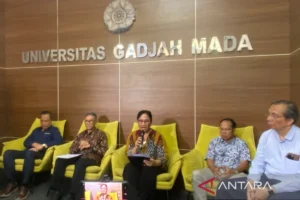
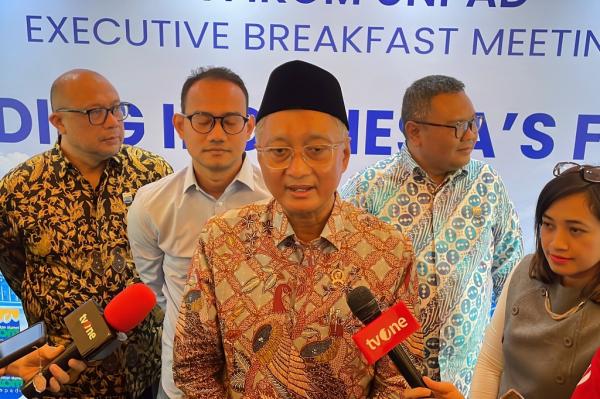
The Ministry of Public Works (Kementerian PU) has confirmed that both the national arterial road network and the toll road system are being finalized for the upcoming Nataru (Natal dan Tahun Baru) 2026/2027 window. During a press briefing in Jakarta on Thursday, November 19, 2026, Minister Hanggodo emphasized that while toll roads are generally optimized for four-wheeled vehicles, the national road network requires a distinct approach due to its heavy reliance on two-wheeled transport.
"Our objective is to ensure that our infrastructure is inherently safer for the diverse types of road users we see during the holiday exodus," Minister Hanggodo stated. He noted that the ministry is building upon the success of previous years, refining maintenance schedules and safety installations to create a more resilient transport corridor. The primary focus for this year is to transform the national routes into "motorcycle-friendly" corridors, recognizing that these roads serve as the primary artery for low-cost holiday travel.
Enhancing Road Safety Through Illumination and Infrastructure
A critical component of the Ministry’s safety strategy involves a significant upgrade in visibility. Recognizing that many long-distance travelers opt to ride at night to avoid the heat or peak traffic hours, the Ministry of Public Works is currently conducting audits to identify "dark spots"—stretches of highway lacking adequate street lighting.
The installation of additional high-intensity LED street lighting is underway at identified high-risk zones, intersections, and sharp curves. Beyond lighting, the ministry is prioritizing the deployment of "rest areas" specifically tailored to motorcycle users. Unlike standard toll road rest areas, these makeshift or permanent points of relief provide riders with space to rest, hydrate, and conduct basic mechanical checks, which is essential for reducing fatigue-related accidents.
Context: The Scale of the Holiday Migration
The urgency of these measures is supported by recent projections from the Ministry of Transportation (Kemenhub). Data indicates that approximately 127 million people—roughly 44 percent of Indonesia’s total population—are expected to engage in domestic travel during the 2026/2027 year-end period. This massive mobility surge puts unprecedented pressure on national transport infrastructure, ranging from land routes to sea and air transit.
The ripple effects of this mass movement extend to all modes of transport. For instance, recent inspections in the Riau Islands resulted in the grounding of two passenger vessels due to safety non-compliance. This regulatory action underscores the government’s broader "zero-tolerance" policy regarding safety standards during the peak holiday season. By ensuring that infrastructure (roads) and public transport (ships) meet stringent criteria, the government aims to keep accident rates at a historic low.
The Vulnerability of Two-Wheeled Travelers
Statistical data from previous years has consistently shown that motorcyclists are disproportionately involved in traffic accidents during holiday periods. Factors contributing to this include extreme weather conditions, road surface degradation, and the physical exhaustion associated with long-distance motorcycle riding.
By explicitly designing national road improvements for two-wheeled users, the Ministry of Public Works is addressing a socio-economic reality: for millions of Indonesian families, the motorcycle remains the most accessible mode of transport for returning to their hometowns. The Ministry’s initiative is not merely about road repair; it is a tactical intervention to protect the most vulnerable road users. Efforts include the implementation of clearer road markings, improved drainage to prevent hydroplaning during the rainy season, and the deployment of emergency response teams at strategic intervals along primary transit routes.
Chronology of Preparation
The preparation phase for the 2026/2027 Nataru period began in late October, with the Ministry of Public Works conducting technical inspections of primary corridors in Java, Sumatra, and Kalimantan.

- Late October 2026: Initial assessments of road conditions and pavement integrity were completed.
- Early November 2026: Coordination meetings were held with the Ministry of Transportation and the Indonesian National Police to synchronize traffic management and safety protocols.
- Mid-November 2026: Public announcements regarding the prioritization of motorcycle safety were made, and implementation of lighting upgrades began.
- December 2026 (Upcoming): The official launch of integrated command centers to monitor real-time traffic flow and respond to incidents.
Broader Economic and Social Implications
The ability of the government to facilitate a safe holiday transit period has significant economic and social implications. Efficient transport infrastructure supports the "mudik" tradition, which is vital for the social cohesion of the nation. Conversely, high accident rates lead to significant economic losses, not only in terms of healthcare costs and property damage but also in the disruption of regional economic activities during the holiday window.
Furthermore, the integration of technology—such as real-time traffic monitoring and public reporting apps—has allowed the ministry to respond more effectively to congestion. By decentralizing the oversight of road conditions, the Ministry of Public Works is working to ensure that localized traffic jams do not evolve into national gridlock.
Official Stance and Stakeholder Coordination
The Ministry of Public Works is operating in close cooperation with the Ministry of Transportation and the National Police’s Traffic Corps (Korlantas Polri). While the Ministry of Public Works focuses on the physical state of the road, the police manage traffic flow, and the Ministry of Transportation oversees the logistics of public transit.
Minister Hanggodo highlighted that this inter-ministerial synergy is essential for a seamless travel experience. "We are not working in a vacuum," he explained. "Our infrastructure efforts are the backbone, but success depends on the collective adherence to safety regulations by all travelers."
Future Outlook and Policy Sustainability
Looking ahead, the Ministry of Public Works aims to institutionalize these safety measures beyond the seasonal holiday spikes. The ongoing maintenance of lighting and the designation of motorcycle-accessible rest areas are intended to become permanent features of the national road safety strategy.

As the 2026/2027 holiday season nears, the focus remains on execution. With the expected 127 million travelers, the margin for error is slim. The government’s proactive stance in identifying risks and implementing targeted infrastructure improvements represents a significant step toward modernizing Indonesian travel safety.
In conclusion, the strategies set forth by Minister Dody Hanggodo demonstrate a balanced approach to infrastructure management. By recognizing the unique needs of motorcycle commuters and proactively addressing road safety through lighting and rest facilities, the Ministry of Public Works is attempting to ensure that the year-end festivities remain a time of celebration rather than tragedy. As travelers prepare for their journeys, the success of these measures will be closely watched by policy analysts and the public alike, serving as a benchmark for future holiday mobility management in Indonesia.