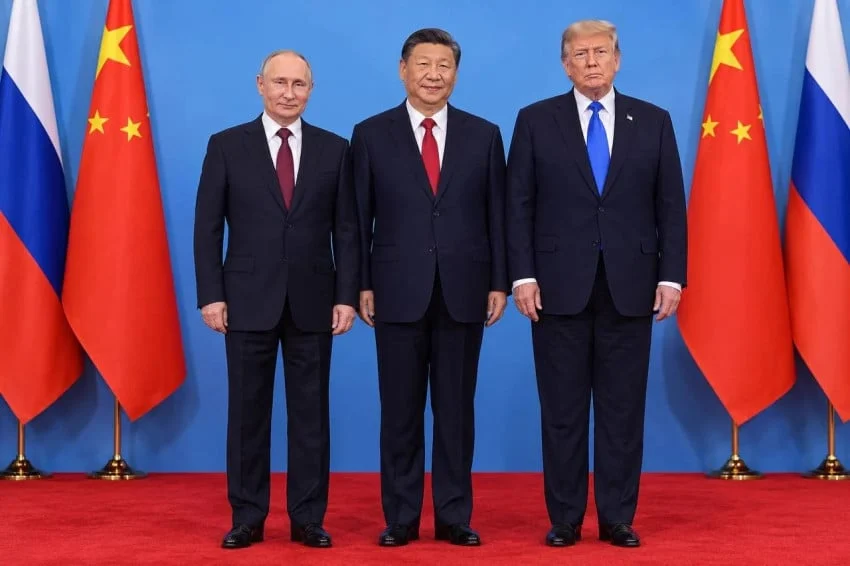
The geopolitical architecture of the twenty-first century may have entered a definitive new era following an unprecedented gathering in southern China, where the leaders of the United States, China, and Russia convened for a high-stakes trilateral summit. Held on the sidelines of the Asia-Pacific Economic Cooperation (APEC) meetings in Shenzhen, the approximately 90-minute discussion inside a secluded lakeside villa has ignited intense global debate among diplomats, scholars, and security analysts. While official communiqués emphasized strategic stability and nuclear non-proliferation, international observers are increasingly reckoning with the profound implications of what many perceive as the solidification of an informal "G3" world order—a reality where the trajectory of global governance, economic security, and strategic deterrence is concentrated within the hands of three nuclear superpowers.
This landmark convergence highlights a dramatic evolution in international relations. For decades, the post-Cold War framework was analyzed through the lens of American unipolarity, followed by a protracted transition toward a fractured multipolar system characterized by rising regional powers and deepening ideological divides. However, the Shenzhen summit demonstrated that when the world’s foremost military, technological, and energy heavyweights sit at the same table, the foundational rules of international diplomacy are fundamentally rewritten. The meeting culminated in the signing of the "Toward Peace Declaration," a concise yet sweeping four-point document addressing nuclear risk reduction, United Nations reform, global energy supply chains, and sovereign immunity for state officials.
To fully understand the weight of this development, it is essential to examine the chronological progression that led to this historic diplomatic milestone, the structural realities of the newly emerging global hierarchy, and the potential consequences for international law, regional security, and the future of multilateral institutions.
Chronology of the Shenzhen Breakthrough: A Diplomatic Timeline
The trilateral encounter in Shenzhen was not an isolated diplomatic accident, but rather the culmination of months of intense bilateral maneuvering and calculated overtures. The sequence of events leading up to the historic gathering underscores the shifting dynamics of great power competition and cooperation:
August 2025: U.S. and Russian Channels Re-engage
Following years of severe diplomatic frostiness stemming from the protracted conflict in Eastern Europe, Washington and Moscow initiated quiet backchannel communications. These efforts culminated in a preliminary face-to-face dialogue, setting the stage for higher-level engagement later in the year.
Early November 2025: Preparatory Bilateral Engagements
In the days leading up to the APEC summit, diplomatic preparations accelerated. U.S. President Donald Trump held a closed-door meeting with Russian President Vladimir Putin lasting roughly 40 minutes. During this encounter, which marked their first formal in-person talks since August 2025, the U.S. leader notably referred to the Russian president as "my friend," signaling a pragmatic thaw in bilateral rhetoric. Concurrently, President Trump engaged in a separate bilateral session with Chinese President Xi Jinping—their third official meeting of the calendar year—focusing heavily on trade parity, technological supply chains, and macroeconomic stabilization.
The Day Prior to the Summit: The Beijing-Moscow Axis
Demonstrating the complex matrix of alliances and strategic partnerships underpinning the trilateral format, Presidents Xi and Putin held an extensive bilateral discussion a day prior to the trilateral talks. This meeting reinforced the "no-limits" strategic coordination between Beijing and Moscow, providing the foundation for a unified stance on several key global governance issues before bringing Washington into the fold.
The Shenzhen Trilateral Summit
On Thursday, inside the secure enclave of Kylin Villa in Shenzhen, Presidents Xi Jinping, Donald Trump, and Vladimir Putin convened for their historic 90-minute trilateral session. The meeting bypassed traditional multilateral frameworks, opting instead for a closed-door summit format designed to address core strategic friction points directly among the supreme decision-makers of the three nuclear superpowers.
The Four-Point "Toward Peace Declaration"
The formal output of the Shenzhen summit—the four-point Toward Peace Declaration—serves as a blueprint for how the world’s three dominant powers intend to manage systemic risks and coordinate global policy moving forward. Despite the absence of resolutions for several active geopolitical flashpoints, the declaration establishes consensus on foundational areas of strategic concern:
-
Nuclear Risk Reduction and Strategic Stability
Reaffirming a doctrine reminiscent of Cold War-era détente, the three leaders explicitly reiterated the foundational maxim that "a nuclear war cannot be won and must never be fought." Given the deterioration of legacy arms control treaties, including the suspension of the New START framework in previous years, this high-level reaffirmation provides a critical psychological and strategic buffer against accidental escalation. -
Pushback Against International Jurisprudence
In a surprising alignment of interests, the declaration launched a sharp critique of what the leaders termed "overreach of jurisdiction" by international legal bodies, specifically targeting the International Criminal Court (ICC). The inclusion of this point reflects shared concerns among Washington, Beijing, and Moscow regarding the sovereignty of state actors and the potential use of international law as a political instrument against major powers that are not formal signatories to the Rome Statute. -
Energy Security and Petroleum Production
The declaration committed the three nations to coordinating efforts to boost the production of refined petroleum products "in the interest of all nations." This pragmatically framed energy pact aims to stabilize volatile global energy markets, temper inflationary pressures caused by prolonged supply chain disruptions, and ensure predictable energy flows for both industrialized economies and the Global South. -
Institutional Reform of the United Nations
The leaders addressed the structural stagnation of the United Nations, signaling a shared desire to reform the institution to better reflect contemporary geopolitical realities. While specific mechanisms remain undefined, the consensus highlights a mutual recognition that post-WWII multilateral frameworks require recalibration to accommodate the interests of the current constellation of great powers.
Conspicuously absent from the four-point declaration were any direct references to the ongoing war in Ukraine or the escalating strategic confrontation between the United States and Iran. Analysts suggest this omission was deliberate, serving to prevent irreconcilable disagreements over regional sovereignty and territorial integrity from derailing the broader consensus on systemic stability.
Beijing as the Networked Stabilizer: Structural Dynamics of Asymmetric Multipolarity
The decision to host the trilateral summit in China was far from symbolic; it reflected hard economic and diplomatic realities. According to Jianlu Bi, a senior researcher at the foreign policy think tank Foreign Policy in Focus, the Shenzhen meeting cements Beijing’s unique position as the central node in contemporary great power politics.
"At this juncture, neither the United States nor Russia could realistically host the other for a bilateral or trilateral format on domestic soil," Bi noted in an interview following the summit. "It is China’s economic weight, diplomatic leverage, and available neutral-yet-influential infrastructure that made this gathering possible."
Scholars have increasingly described the emerging international system not as a traditional bipolar or unipolar construct, but as a state of "asymmetric multipolarity." Within this paradigm, global power is distinctly decentralized yet interdependent:
- The United States maintains unmatched global military projection capabilities, technological innovation ecosystems, and financial system centrality through the dominance of the U.S. dollar.
- China commands the critical nodes of global manufacturing, industrial capacity, and high-tech supply chains, positioning itself as the indispensable engine of international trade.
- Russia wields enduring geopolitical leverage, cyber capabilities, and dominance over strategic energy and commodity markets, having successfully weathered extensive Western economic sanctions.
In this tripartite ecosystem, Beijing operates not as the leader of a traditional ideological alliance, but rather as a "networked stabiliser." By maintaining high-level, functional working channels with both Washington and Moskow simultaneously, China leverages its economic gravity to mediate systemic friction points while safeguarding its own core national interests.
Furthermore, analysts point out that Beijing’s deliberate exclusion of the Ukraine conflict from the Shenzhen declaration was a calculated maneuver. By avoiding negotiations over third-party territorial disputes, China insulated the trilateral framework from collapse, ensuring that cooperation on overarching global stability—such as nuclear deterrence and energy markets—could proceed unhindered.
Global Repercussions and International Reactions
The emergence of an informal "G3" dynamic has triggered varied reactions across the international community, eliciting both cautious optimism and deep-seated anxiety among secondary powers and traditional alliance structures.
Concerns Within Traditional Alliance Networks
For traditional allies of the United States, particularly within the European Union and parts of the Indo-Pacific, the optics of a closed-door trilateral summit between Washington, Beijing, and Moskow evoke historical anxieties reminiscent of great power spheres of influence—drawing uneasy comparisons to modern interpretations of the Yalta Conference. European diplomats have privately expressed concern that overarching security architectures could be negotiated by the superpowers over the heads of regional stakeholders, potentially undercutting European security guarantees and sovereign autonomy.
Similarly, nations in the Global South are evaluating the implications of a consolidated great-power directorship. While stable energy supplies and reduced risks of nuclear conflict are universally welcomed, developing economies remain wary of a system where global rules are dictated exclusively by a triumvirate of nuclear-armed giants, potentially marginalizing the voice of multilateral bodies like the UN General Assembly.
Market and Economic Implications
Global financial markets responded to the Shenzhen summit with cautious stabilization. The commitment to increase refined petroleum production provided immediate psychological relief to commodity traders grappling with persistent inflationary pressures and geopolitical supply risks. Furthermore, signals of pragmatic economic engagement between Washington and Beijing alleviated fears of an immediate, catastrophic economic decoupling, reassuring multinational corporations dependent on stable cross-border supply chains.
Strategic Outlook: A New Concert of Powers?
As the international community digests the outcomes of the Shenzhen summit, foreign policy experts are divided on whether this meeting represents a fleeting tactical truce or the institutional birth of a permanent twentieth-century-style Concert of Powers.
The structural realities of modern interdependence suggest that unilateral hegemony has given way to a precarious balance among three distinct pillars. Whether this informal trilateralism can endure structural frictions, ideological animosities, and competing regional ambitions will depend entirely on the willingness of Washington, Beijing, and Moskow to institutionalize their dialogue without disenfranchising the rest of the world. For now, the future of global stability rests heavily on the delicate equilibrium maintained at the negotiating tables of southern China, where three leaders hold the keys to the planetary status quo.