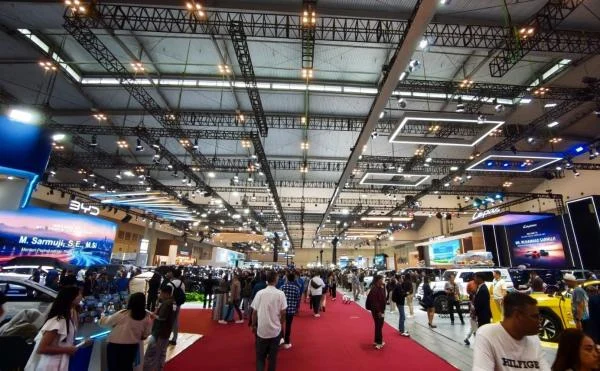
The Indonesian government has issued a strategic directive to Chinese automotive manufacturers currently operating within the country, calling for a decisive shift in their business models. Officials are pushing these companies to move beyond mere vehicle assembly and focus on substantive investments in local manufacturing facilities and the integration of domestic component suppliers. This policy shift is designed to deepen the structure of the national automotive industry, stimulate high-value job creation, and solidify Indonesia’s position as a regional hub for automotive production rather than just a lucrative destination for finished product sales.
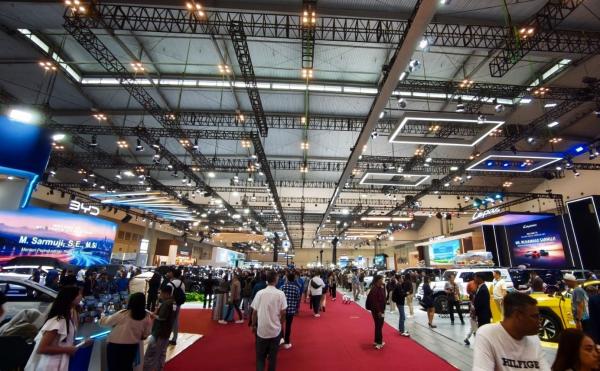
The directive was emphasized by Setia Diarta, the Director General of the Metal, Machinery, Transportation Equipment, and Electronics (ILMATE) division at the Ministry of Industry, during the Gaikindo Auto Week (GAW) held in Jakarta on November 20, 2026. Diarta, who is widely known as Tata, articulated the government’s vision for a more integrated industrial ecosystem, noting that the long-term sustainability of the automotive sector depends on transitioning from "completely knocked down" (CKD) assembly operations to localized manufacturing that utilizes a significant percentage of Indonesian-made components.
The Evolution of the Indonesian Automotive Landscape
For decades, Indonesia’s automotive sector was dominated by Japanese manufacturers, who built an extensive supply chain network across the archipelago. However, the last five years have seen an aggressive expansion by Chinese automotive giants, particularly in the electric vehicle (EV) and internal combustion engine (ICE) segments. While these new entrants have successfully captured market share through competitive pricing and advanced features, the Ministry of Industry remains concerned that their local footprint is too shallow.
The current model utilized by many new entrants focuses on importing parts and conducting minimal assembly within Indonesia. While this generates some employment, it does not foster the transfer of technology or the development of a Tier-2 and Tier-3 local supplier base. The government’s recent stance is a signal that the "honeymoon period" for new market entrants is nearing its end, and the expectation for local content requirements—often referred to as TKDN (Tingkat Komponen Dalam Negeri)—will become increasingly stringent.
Chronology of Investment and Regulatory Shifts
The relationship between the Indonesian government and foreign automotive investors has been marked by a series of regulatory adjustments aimed at incentivizing local production:
- 2023: The government launched an aggressive EV incentive program, offering tax breaks and VAT reductions for vehicles that achieve a specific threshold of local content.
- Early 2025: Several Chinese manufacturers announced plans to increase their assembly capacity in response to the growing demand for affordable mid-range vehicles.
- Mid-2026: The Ministry of Industry began formalizing discussions with stakeholders regarding the "Deepening of Industrial Structure," focusing on the localization of critical components such as EV batteries and powertrain systems.
- November 2026: At the Gaikindo Auto Week, officials explicitly linked future regulatory support and market access to the depth of local investment, marking a shift from passive observation to active enforcement of industrial policy.
The Economic Imperative: Why Local Manufacturing Matters
The push for full-scale manufacturing is rooted in the government’s broader goal of industrial downstreaming. By forcing manufacturers to build factories and integrate local suppliers, the government hopes to create a multiplier effect. For every job created in a final assembly plant, approximately four to five jobs are typically created in the component supply chain.
Moreover, the transition to full-scale manufacturing is essential for Indonesia to leverage its vast nickel reserves. As the world pivots toward electric mobility, Indonesia aims to be a key player in the battery supply chain. If foreign automakers only assemble cars without investing in the underlying industrial infrastructure, the country risks being a mere consumption market rather than an industrial powerhouse.
The Role of Market Demand and Economic Realism
Despite the government’s firm stance, officials like Setia Diarta acknowledge the complexities of the global automotive market. Diarta noted that while the state is setting the trajectory, the speed of implementation must remain tethered to market reality.
"We are pushing for investments that go beyond simple assembly, but we must also be realistic in how we view market absorption," Diarta stated. "Ultimately, all production decisions are driven by demand. When that demand grows, the manufacturers will be incentivized to scale up their operations, localize their supply chains, and build full-fledged manufacturing plants."

This admission highlights the delicate balance the government must maintain. If regulations are too rigid, manufacturers may slow their expansion; if they are too loose, the country fails to develop a self-sustaining industrial base. Consequently, the government is currently analyzing the growth of consumer demand to time the implementation of higher localization requirements.
Implications for Chinese Automakers
For companies like Wuling, BYD, Chery, and others that have entered the Indonesian market, the government’s message carries significant operational implications:
- Supply Chain Localization: Manufacturers will likely be required to source more parts from local vendors, which may necessitate helping these vendors achieve international quality standards.
- Increased Capital Expenditure (CAPEX): Companies will need to move capital away from marketing and showroom expansion toward land acquisition, machinery, and facility construction.
- Research and Development (R&D): The government is increasingly interested in seeing regional R&D centers, where local engineers can participate in vehicle customization and development for the Southeast Asian market.
Competitive Dynamics and the Future of the Sector
The automotive sector in Indonesia is currently in a state of flux. The rise of Chinese competitors has forced legacy players—primarily Japanese brands—to rethink their own local production strategies. The government’s move to push for full-scale manufacturing serves as an equalizer. By forcing all players to commit to the local ecosystem, the playing field becomes more balanced, and the long-term competitiveness of the "Made in Indonesia" brand is enhanced.
Furthermore, as the Indonesian middle class continues to grow, the demand for vehicles is projected to rise exponentially. If manufacturers can lower costs through localized manufacturing rather than relying on imported, taxed components, they will be better positioned to capture this expanding consumer base.
Broader Impact on the National Economy
The success of this policy will have far-reaching consequences for Indonesia’s macroeconomic indicators. Beyond the immediate impact on the manufacturing sector, a robust automotive industry contributes significantly to:

- Export Potential: If Indonesia becomes a full-scale manufacturing hub, it can export vehicles to neighboring ASEAN countries and beyond, improving the nation’s balance of trade.
- Technological Skill Transfer: Increased manufacturing activity will necessitate a more skilled workforce, prompting investments in vocational training and higher education in engineering.
- Infrastructure Development: The growth of manufacturing clusters often drives improvements in logistics, power supply, and transportation infrastructure, providing benefits that extend beyond the automotive sector.
Conclusion: A Strategic Pivot
The Indonesian government’s directive to Chinese automakers is a clear signal that the nation is evolving from an entry-level market to a mature industrial hub. By focusing on the integration of the entire supply chain, the Ministry of Industry is attempting to ensure that the rapid influx of foreign investment leaves a permanent, positive mark on the national economy.
As the industry looks toward the next decade, the success of this strategy will be measured by the presence of localized R&D, the depth of domestic component usage, and the ability of manufacturers to transition from assembly line occupants to full-scale industrial partners. For now, the government remains committed to a collaborative approach, balancing the need for industrial deepening with the pragmatic necessity of responding to market demand. The coming years will be critical as manufacturers decide how to align their global strategies with the specific, and increasingly sophisticated, requirements of the Indonesian market.