In a historic milestone for international trade relations, the Republic of Indonesia and the European Union (EU) formally executed the Indonesia-European Union Comprehensive Economic Partnership Agreement (IEU-CEPA) on Saturday, November 21, 2026. This monumental agreement marks the culmination of years of rigorous diplomatic negotiations, signaling a new era of economic integration between Southeast Asia’s largest economy and the vast European single market. The pact is designed to drastically reduce trade barriers, harmonize regulatory standards, and catalyze sustainable economic growth across a wide spectrum of industries.
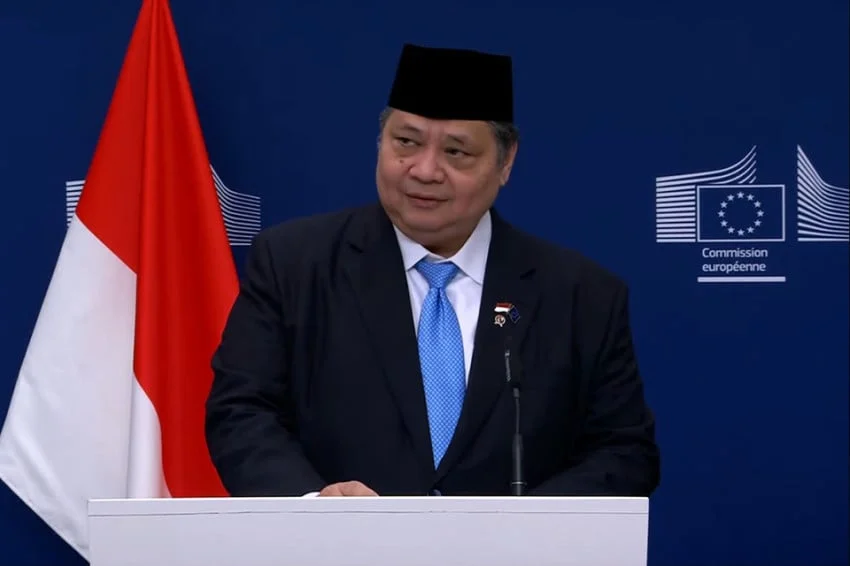
Under the terms of the agreement, the trade relationship between the two parties will undergo a structural transformation. Minister for Economic Affairs Airlangga Hartarto confirmed that 90.4% of tariff lines for Indonesian products will drop to zero percent immediately upon the agreement’s implementation. This immediate liberalization is expected to provide a significant competitive advantage to Indonesian exporters, effectively lowering the cost of goods for European consumers while simultaneously boosting the volume of Indonesian exports to the European bloc.
The Road to Signing: A Chronology of Negotiations
The journey toward the IEU-CEPA was characterized by persistent diplomatic engagement. Negotiations were officially launched in July 2016, following exploratory discussions that began in 2011. For over a decade, both parties navigated complex challenges, including disputes over sustainable palm oil production, environmental regulations, and domestic labor standards.
The negotiation process spanned several rounds of talks held in both Brussels and Jakarta. Key milestones included:
- 2016–2018: Initial rounds focused on establishing the scope of the agreement, covering trade in goods, services, and investment.
- 2019–2022: Progress was marked by intense deliberations regarding the EU’s Deforestation Regulation (EUDR) and its potential impact on Indonesian agricultural exports.
- 2023–2025: Finalization of technical details, including rules of origin, intellectual property rights, and dispute settlement mechanisms.
- November 2026: Formal signing ceremony, solidifying the legal framework for the partnership.
The successful signing represents a strategic pivot for Indonesia, as the country seeks to diversify its export markets beyond its traditional reliance on the Chinese and ASEAN markets. For the European Union, the agreement secures a gateway to the rapidly expanding Indonesian market, which offers immense potential in green energy and digital services.
Tariff Structures and Market Access
A central component of the IEU-CEPA is the phased reduction of trade barriers. While the vast majority of goods will see immediate tariff elimination, a remaining 8.37% of tariff lines are slated for gradual liberalization. Minister Airlangga Hartarto explained that these tariffs would be phased out over a period ranging from three to 15 years. Alternatively, some sensitive products will be managed through a tariff-rate quota (TRQ) scheme, ensuring that domestic industries have adequate time to adapt to increased competition.
The immediate removal of tariffs on key Indonesian commodities is poised to provide an instant boost to the nation’s export revenue. Specifically, the agreement prioritizes sectors with high employment capacity, known as labor-intensive industries. These include:
- Agricultural Commodities: Palm oil and its derivative products, which have been a point of contention, now have a clearer regulatory pathway into the European market.
- Manufacturing: Textiles, garments, fabrics, and accessories are set for immediate tariff-free status.
- Footwear: Leather shoes, sports shoes, sneakers, and sandals will benefit from the immediate zero-tariff policy, allowing Indonesian manufacturers to better compete with suppliers from Vietnam and China.
Strategic Economic Implications and Investment
Beyond simple tariff reduction, the IEU-CEPA is a comprehensive partnership that addresses modern economic challenges. The agreement encompasses provisions for digital trade and e-commerce, which are increasingly vital for small and medium-sized enterprises (SMEs) looking to reach international customers. Furthermore, the pact introduces mechanisms to facilitate the movement of professionals and the provision of services, fostering closer cooperation between European and Indonesian businesses.
The agreement is also expected to act as a magnet for foreign direct investment (FDI). With the institutional stability provided by the IEU-CEPA, European firms are likely to increase their footprint in Indonesia, particularly in high-growth sectors. Indonesia’s push toward industrial downstreaming, particularly in the critical minerals and electric vehicle (EV) supply chain, aligns perfectly with the European Union’s ambition to secure green energy transitions and reduce reliance on single-source supply chains.
"We anticipate a surge in investment in sectors such as electric vehicles, renewable energy, and high-tech electronics," Minister Hartarto noted. "This agreement provides the necessary legal certainty and regulatory framework to encourage European capital to flow into our sustainable development initiatives."
Analytical Perspective: Challenges and Opportunities
While the IEU-CEPA is hailed as a victory for trade liberalization, economic analysts caution that the agreement comes with significant responsibilities. The "Comprehensive" nature of the deal implies that Indonesia must adhere to stringent EU standards regarding labor rights, environmental protections, and sustainability reporting.
For Indonesian businesses, the challenge lies in scaling up operations to meet the rigorous quality and compliance standards required by the European market. Failure to meet these standards—particularly regarding environmental sustainability—could lead to non-tariff barriers that negate the benefits of zero tariffs.
Conversely, the EU faces internal pressure from various agricultural lobbies that may view the influx of Indonesian agricultural products as a threat to domestic producers. However, the use of tariff-rate quotas is intended to mitigate these concerns, ensuring a balanced market environment that protects sensitive domestic sectors while promoting overall trade efficiency.
Broader Impact on the Global Trade Landscape
The signing of the IEU-CEPA occurs at a time of global economic fragmentation. With many nations turning toward protectionist policies, the Indonesia-EU partnership serves as a strong signal of commitment to multilateralism and open trade. By integrating two major economies, the agreement creates a robust trade corridor that enhances the resilience of both regions against supply chain disruptions.
Furthermore, the agreement serves as a blueprint for future trade negotiations between the EU and other ASEAN nations. If the IEU-CEPA succeeds in fostering sustainable economic development in Indonesia, it could pave the way for a broader EU-ASEAN regional trade framework, significantly altering the global economic map.
Future Outlook
The implementation phase of the IEU-CEPA will be closely monitored by both the Indonesian business community and international observers. The government of Indonesia has signaled its intent to launch a series of workshops and capacity-building programs to help domestic SMEs navigate the nuances of the European market.
As the agreement takes effect, the focus will shift toward the practical application of the trade rules and the resolution of any teething issues that may arise during the initial transition period. Both Jakarta and Brussels have expressed a strong commitment to the long-term success of the partnership, viewing it not just as a commercial arrangement, but as a foundational pillar for future geopolitical and economic cooperation.
In summary, the IEU-CEPA is a transformative event that redefines the economic trajectory of Indonesia. By opening doors to the world’s largest single market, Indonesia has positioned itself as a key player in the global supply chain, ready to leverage its natural resources and manufacturing capabilities to foster inclusive and sustainable growth. The years ahead will determine the efficacy of this partnership, but for now, the signing stands as a testament to the power of diplomacy and the shared vision of a more interconnected global economy.