
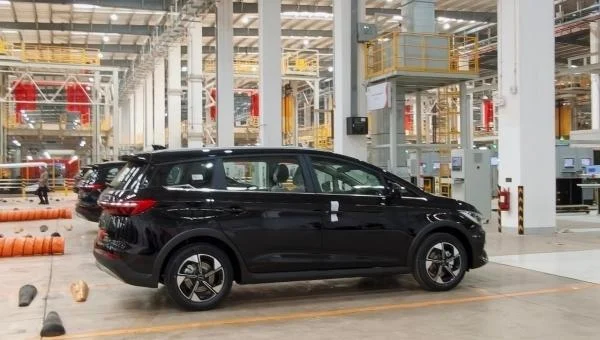
The landscape of the American automotive industry is currently navigating a complex intersection of national security concerns, trade protectionism, and the global transition toward electric vehicles (EVs). While Washington has maintained a stringent posture against Chinese-manufactured vehicles and their associated technologies, recent discourse suggests a potential, albeit narrow, pathway for Chinese automakers to access the United States market. This opportunity is contingent upon a fundamental shift in strategy: moving away from direct imports toward establishing domestic production facilities that generate substantial employment for the American workforce.
This pivot in perspective, highlighted by the rhetoric of key political figures including Donald Trump, reflects an pragmatic approach to industrial policy. By prioritizing the creation of domestic manufacturing jobs over outright exclusion, policymakers are exploring whether the "Made in the USA" label could serve as a bridge for Chinese firms to bypass the intense geopolitical friction that currently defines the U.S.-China economic relationship.
The Current Regulatory Climate and Trade Barriers
For the present moment, Chinese automakers remain effectively locked out of the U.S. market. This exclusion is not merely a product of market forces but is the result of a deliberate, multi-layered regulatory framework. The Biden-Harris administration, alongside bipartisan support in Congress, has moved aggressively to limit the presence of Chinese technology in the American automotive supply chain.
Central to these restrictions are concerns regarding "connected vehicles." Modern cars are essentially rolling computers, equipped with sensors, cameras, and software that collect vast amounts of data. The U.S. government has expressed grave concerns that vehicles integrated with Chinese or Russian software and hardware could pose significant risks to national security, potentially allowing foreign entities to monitor critical infrastructure or harvest sensitive location data of American citizens.
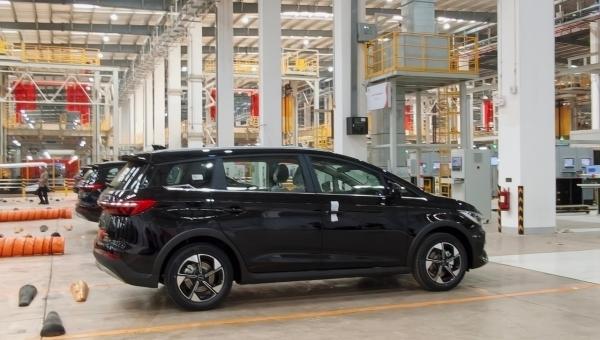
In addition to software and hardware bans, the tariff regime remains a formidable obstacle. Existing tariffs, combined with potential new legislative measures—such as those debated by the Senate committee earlier this year—are designed to make the importation of Chinese-made vehicles economically unviable. These measures serve as a defensive shield for the domestic U.S. auto industry, which is currently undergoing its own expensive and challenging transition from internal combustion engines to battery-electric platforms.
A Strategic Pivot: The Case for Localization
The concept of allowing Chinese firms to operate on U.S. soil is reminiscent of the strategy employed by Japanese and German automakers in the 1980s and 1990s. During that era, companies like Toyota, Honda, and BMW faced intense pressure from U.S. lawmakers to reduce the trade deficit. Their solution was to build massive assembly plants in states like Kentucky, Ohio, and South Carolina.
Proponents of this approach argue that if a Chinese automaker were to invest billions of dollars to build a factory in the U.S., the economic benefits—specifically job creation, tax revenue, and integration into the local supply chain—could outweigh the security risks. This would effectively transform a Chinese entity into a domestic employer, subject to U.S. labor laws, environmental regulations, and corporate oversight.
Former President Donald Trump has signaled openness to this model, emphasizing that the primary objective of his economic policy is the revitalization of American manufacturing. By incentivizing Chinese companies to relocate their production lines to the U.S., the administration could theoretically achieve the goal of lowering vehicle costs for consumers while simultaneously bolstering the domestic industrial base.
Chronology of Escalating Tensions and Policy Shifts
The trajectory of U.S.-China automotive relations has been marked by a rapid escalation of protective measures:

- 2018: The initiation of the trade war saw the implementation of Section 301 tariffs on a wide range of Chinese goods, including automobiles and automotive components.
- 2021-2022: The focus shifted toward the EV supply chain, with the passage of the Inflation Reduction Act (IRA). The IRA effectively restricted federal tax credits for EVs that contained components sourced from "foreign entities of concern," primarily targeting China.
- 2023: Bipartisan concern in the U.S. Congress grew regarding the potential for Chinese automakers to export EVs from secondary locations, such as Mexico, to circumvent U.S. tariffs.
- 2024: The U.S. Department of Commerce began formal investigations into the risks posed by Chinese software and hardware in connected vehicles, signaling a move toward a total ban on such technology in cars sold in the U.S.
- July 2024: A Senate committee moved to tighten existing rules further, proposing legislation that would create even stricter barriers for Chinese automotive imports, regardless of their origin country, if they are controlled by Chinese parent companies.
Economic Implications and Industry Analysis
The implications of this policy shift are significant for both global automakers and the American consumer. Currently, Chinese manufacturers possess a distinct competitive advantage in the EV market, characterized by vertical integration, lower battery production costs, and a faster pace of innovation. If these companies were allowed to manufacture in the U.S., they would immediately challenge legacy automakers like General Motors, Ford, and Stellantis.
However, the "localization" strategy is fraught with political and technical hurdles. First, there is the issue of trust. Security agencies remain wary of the intellectual property and data vulnerabilities inherent in Chinese-designed vehicles. Ensuring that a Chinese-owned plant in the U.S. is "clean" of backdoors and surveillance software would require unprecedented levels of oversight and transparency.
Second, the domestic auto industry is concerned about the impact of low-cost competition. Even if Chinese firms build in the U.S., their manufacturing efficiencies could allow them to undercut domestic prices, potentially leading to market share erosion for American companies that are already struggling with the high costs of electrification.
From an economic standpoint, the influx of foreign direct investment (FDI) into the automotive sector is generally viewed as a positive. It stimulates the local economy, supports a massive ecosystem of parts suppliers, and encourages the development of a skilled labor force. However, analysts warn that this could lead to a bifurcation of the market, where Chinese-owned plants operate under different cost structures than their American counterparts.
Looking Ahead: The Challenges of Implementation
For a Chinese automaker to successfully enter the U.S. market via local manufacturing, they would need to navigate a complex regulatory maze. This includes:

- Strict Compliance Protocols: Establishing rigorous cybersecurity audits and data sovereignty agreements to satisfy U.S. national security requirements.
- Labor Relations: Navigating the powerful influence of labor unions, such as the United Auto Workers (UAW), which have historically been skeptical of non-unionized foreign automakers operating in the U.S.
- Supply Chain Transparency: Proving that the components used in the U.S.-built vehicles are not sourced from prohibited regions or entities, as mandated by the Uyghur Forced Labor Prevention Act and other trade statutes.
Ultimately, the debate over Chinese automotive investment in the U.S. is not just about cars; it is a microcosm of the broader struggle for technological and economic supremacy in the 21st century. While the door is technically ajar, the threshold for entry remains exceptionally high.
As the 2026 political landscape evolves, the intersection of national security and economic opportunity will remain a critical point of friction. Policymakers must weigh the immediate benefits of job creation against the long-term strategic risks of deep integration with a primary economic competitor. For now, the automotive industry continues to operate in a state of watchful anticipation, waiting to see if the rhetoric of "investment-for-market-access" will translate into a concrete policy framework or if the current barriers will only continue to harden.
The future of the U.S. automotive market will likely be defined by these difficult choices, as the nation attempts to balance its need for affordable, innovative transportation with the uncompromising requirements of national security. Whether Chinese manufacturers decide to take the risk of investing in the U.S. remains to be seen, but the offer—or the challenge—has clearly been placed on the table.
