The Indonesian Communist Party (Partai Komunis Indonesia, or PKI) stands as one of the most polarizing and influential political entities in modern Southeast Asian history. Before its catastrophic dissolution and formal designation as an illegal organization in 1966, the PKI evolved from a modest colonial-era leftist movement into a massive political apparatus capable of commanding millions of votes. The trajectory of the party—spanning the colonial inception of the 20th century, the national revolution, the parliamentary resurgence of the 1950s, the Guided Democracy era, and the violent upheaval of the 1965–1966 transition—remains a critical subject of historical study, judicial record, and human rights discourse.
Understanding the trajectory of the PKI requires a comprehensive look at documented facts, state decrees, and evolving historical interpretations. Archives housed by the National Archives of the Republic of Indonesia (ANRI), alongside international collections from nations such as the United States and Japan, continue to offer layered perspectives on a turbulent chapter that reshaped the geopolitical landscape of Indonesia.
The Genesis of Indonesian Communism: From Colonial Resistance to the 1948 Madiun Affair
The roots of the communist movement in the Indonesian archipelago trace back to 1914, with the establishment of the Indische Sociaal-Democratische Vereeniging (ISDV) under the guidance of Dutch social democrat Henk Sneevliet. As the organization sought to radicalize the anti-colonial struggle, it underwent a series of transformations. By 1920, it transitioned into the Perserikatan Komunis di Hindia, shortly thereafter adopting the name Partai Komunis Indonesia (PKI).
Operating under the repressive surveillance of the Dutch East Indies colonial government, the party pursued an aggressive anti-imperialist strategy. This culminated in the abortive 1926 uprisings against colonial authorities across parts of Java and West Sumatra. The rebellion was swiftly crushed, leading to mass arrests, exiles to Boven Digoel, and severe suppression that forced the party underground for the remainder of the colonial period.
Following Indonesia’s declaration of independence in 1945, the PKI reemerged onto the national stage, eager to shape the newly born republic. However, intense ideological frictions within the nationalist and leftist factions triggered a catastrophic internal crisis in 1948. On September 18, 1948, the Madiun Affair erupted, pitting elements of the PKI and the People’s Democratic Front (Front Demokrasi Rakyat, or FDR) against the republican government led by President Sukarno and Vice President Mohammad Hatta.
According to the History Encyclopedia of the Indonesian Ministry of Culture, the Madiun Affair represented the climax of hostilities between the central government and the radical left wing, marked by the brief proclamation of a "Soviet Republic of Indonesia" in Madiun. The republican military, under General Soedirman and other loyal commanders, suppressed the revolt within months. Key leftist leaders were executed or imprisoned, temporarily neutralizing the PKI as a major institutional threat while cementing deep-seated distrust among the military and religious factions.
Parliamentary Resurgence and the 1955 Elections
Despite the decimation of its leadership in 1948, the PKI engineered a remarkable organizational recovery during the early 1950s. Under the pragmatic and dynamic leadership of D.N. Aidit, along with young cadres such as Njoto, M.H. Lukman, and Sudisman, the party pivoted toward legal, mass-based politics. Rather than focusing solely on armed struggle, the PKI embedded itself within the daily economic and social struggles of ordinary Indonesians.
The party built vast, highly disciplined auxiliary organizations representing peasants (BTI), workers (SOBSI), youth (Pemuda Rakyat), women (Gerwani), and cultural workers (Lekra). This strategy bore fruit during Indonesia’s first nationwide democratic elections in 1955.
Data from the General Elections Commission (KPU) highlights the startling electoral rise of the PKI. In the election for the House of Representatives (DPR), the PKI secured 6,179,914 votes, translating to 16.36 percent of the national vote and yielding 39 seats. This performance placed the party fourth nationally, trailing only the Indonesian National Party (PNI), Masyumi, and Nahdlatul Ulama (NU). Furthermore, in the elections for the Constituent Assembly (Konstituante), the PKI captured approximately 6.23 million votes, securing 80 seats. These figures demonstrated that the PKI had successfully transformed itself into an indispensable pillar of Indonesia’s parliamentary democracy.
The PKI Under Guided Democracy and the Nasakom Coalition
Following President Sukarno’s issuance of the Presidential Decree on July 5, 1959, Indonesia transitioned from parliamentary democracy to "Guided Democracy." This political shift concentrated executive authority in the hands of President Sukarno while intensifying a delicate three-way balancing act between the military (particularly the Indonesian Army), the nationalist bloc, and the PKI.
To maintain equilibrium, Sukarno championed the sociopolitical concept of Nasakom—an acronym uniting Nationalism (Nasionalisme), Religion (Agama), and Communism (Komunisme). Embracing this framework, the PKI aligned itself closely with Sukarno’s anti-imperialist foreign policy, supporting campaigns such as the liberation of West Irian and the Konfrontasi against Malaysia.
By the early 1960s, the PKI’s influence reached unprecedented heights. Its membership reportedly swelled into the millions, making it the largest communist party outside of the Soviet Union and the People’s Republic of China. However, this expansion heightened existential anxieties within the military command and Islamic organizations. Tensions escalated over land reform policies (Aksi Sepihak), ideological indoctrination in schools and bureaucracy, and the PKI’s controversial proposal to arm a "Fifth Force" consisting of peasants and workers alongside the official branches of the Indonesian Armed Forces.
The 1965 Crisis: The 30 September Movement (G30S)
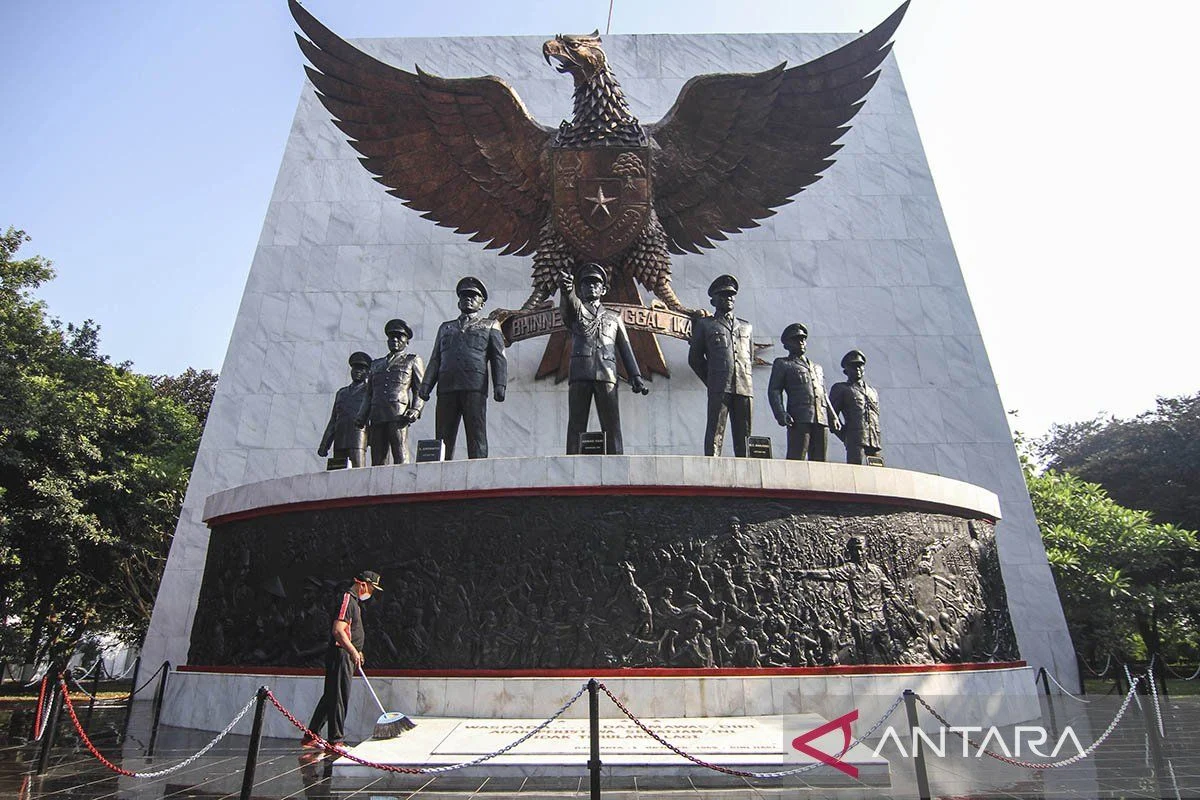
The fragile political equilibrium shattered overnight between September 30 and October 1, 1965. A military faction identifying itself as the 30 September Movement (Gerakan 30 September, or G30S), led by Lt. Col. Untung of the Tjakrabirawa presidential guard, abducted and murdered six top Army generals and one officer, dumping their bodies at Lubang Buaya on the southern outskirts of Jakarta.
The exact nature of the PKI’s institutional involvement in G30S remains one of the most heavily debated subjects in modern historiography. The official narrative constructed during the New Order regime maintained that the PKI was the sole mastermind behind the coup attempt, portraying it as a treacherous betrayal of the state. Conversely, subsequent historical research, declassified diplomatic cables, and scholarly analyses have posited various interpretations, suggesting complex intersections involving internal military factions, intelligence agencies, and opportunistic political maneuvering.
The National Commission on Human Rights (Komnas HAM) notes that the assassination of the generals served as the catalyst for a nationwide sociopolitical catastrophe. As Major General Soeharto stepped forward to assume operational control of the military, the institutional apparatus of the PKI and its affiliated mass organizations were systematically dismantled.
Collapse, Anti-Communist Violence, and State Ban
In the wake of the failed movement, Indonesia descended into a period of profound mass violence. Between late 1965 and 1966, an anti-communist purge swept across Java, Bali, Sumatra, and other islands. Hundreds of thousands of individuals accused of being members, sympathizers, or associates of the PKI—alongside ethnic Chinese and alleged leftists—were killed, detained without trial, or subjected to forced displacement, torture, and systemic discrimination.
According to investigations by Komnas HAM, these events constituted gross human rights violations. The repercussions extended far beyond active party cadres, devastating families, communities, and generations of citizens who found themselves branded by association under the sweeping apparatus of state security.
The political eclipse of the PKI was formalized on March 12, 1966, when Major General Soeharto—acting under the authority of the Supersemar (Presidential Order of March 11)—issued a presidential decision formally dissolving the PKI and outlawing its mass organizations. This executive action was subsequently ratified and elevated into permanent constitutional law through Provisional People’s Consultative Assembly (MPRS) Decree No. XXV/MPRS/1966, enacted on July 5, 1966.
The decree explicitly banned the PKI throughout the entire territory of the Republic of Indonesia and criminalized any activities aimed at propagating or developing the teachings of communism, Marxism, and Leninism. This legal framework remains embedded within the Indonesian legal system to this day, though contemporary legal implementation continues to intersect with ongoing dialogues regarding human rights, historical transparency, and constitutional democracy.
Long-Term Implications and Contemporary Historiography
The eradication of the PKI marked the death knell of parliamentary and leftist radical politics in Indonesia, paving the way for the establishment of President Soeharto’s authoritarian New Order regime, which endured for over three decades until its collapse in 1998. The trauma of 1965 deeply shaped the national consciousness, establishing a rigid anti-communist orthodoxy that dominated state ideology, education, and security policy for generations.
More than six decades after the watershed events of 1965, the history of the PKI remains an active field of scholarly inquiry and public debate. Archival initiatives, such as the release of curated source materials by the National Archives of the Republic of Indonesia (ANRI) drawing from domestic and international repositories, reflect a growing institutional recognition of the need for empirical, multi-source historical documentation.
Ultimately, the history of the Partai Komunis Indonesia cannot be reduced solely to its violent demise. It represents a complex, multi-layered historical trajectory—from its early 20th-century anti-colonial origins and the tragedy of Madiun to its stunning democratic resurgence in the 1950s and its catastrophic collapse in the fires of 1965. As historians continue to parse through declassified archives and oral testimonies, the legacy of the PKI serves as a stark reminder of the fragile intersections between ideology, state power, democratic governance, and human rights in the building of the Indonesian nation.