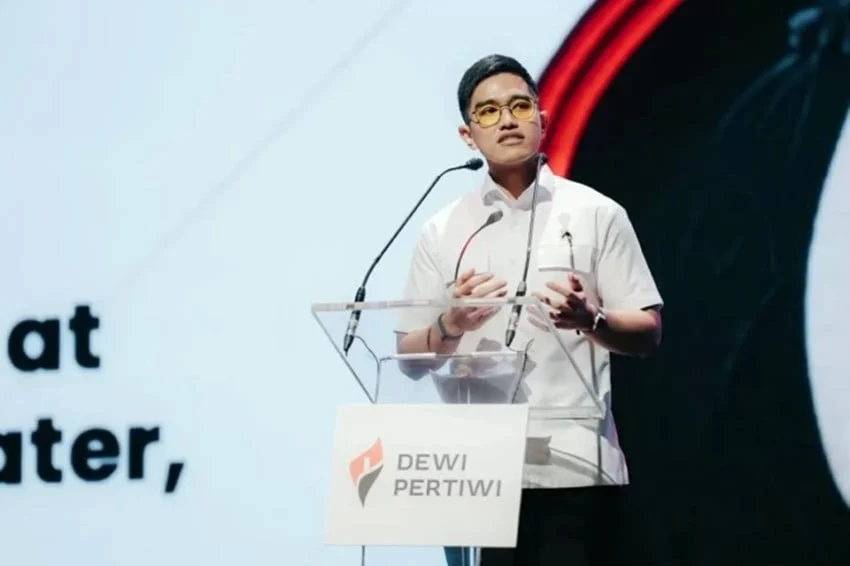
Jakarta — In a significant political development reflecting the intersection of party politics and executive governance in Indonesia, the Chairman of the Central Executive Board (DPP) of the Indonesian Solidarity Party (PSI), Kaesang Pangarep, officially announced the acceptance of resignation letters from three prominent party figures. The departing officials—Raja Juli Antoni, Giring Ganesha, and Isyana Bagoes Oka—have stepped down from their respective high-ranking structural positions within the party. This organizational shift comes as all three individuals navigate demanding responsibilities following their appointments to ministerial and deputy ministerial posts within the Red Merah Putih Cabinet under the administration of President Prabowo Subianto.
The announcement, delivered by Kaesang Pangarep on Monday, November 9, 2026, marks a pivotal moment for PSI as the party adapts to the national responsibilities shouldered by its core leadership. The departure of these foundational figures from active party management underscores a deliberate strategy by PSI to prioritize state governance and national service over partisan obligations, setting a clear precedent for how political organizations balance executive power with internal party administration.
Main Facts of the Resignation
The formal relinquishment of party titles involves three of PSI’s most recognizable faces, each of whom has played a formative role in shaping the party’s trajectory over the past decade. Raja Juli Antoni stepped down from his critical role as Secretary-General of the DPP PSI, a position he held through multiple electoral cycles and leadership transitions. Concurrently, Giring Ganesha resigned from his leadership duties within the party structure, and Isyana Bagoes Oka relinquished her position as Deputy General Chairperson of the DPP PSI.
At the time of their resignations from the party leadership, all three individuals were actively serving in prominent executive positions within the national government. Raja Juli Antoni holds the vital portfolio of Minister of Forestry, overseeing the nation’s vast environmental resources, conservation efforts, and forestry policies. Giring Ganesha serves as the Deputy Minister of Culture, tasked with supporting the preservation and promotion of Indonesia’s diverse cultural heritage. Meanwhile, Isyana Bagoes Oka holds the office of Deputy Minister of Population and Family Development, where she assists in executing national strategies concerning demographic management and family welfare.
In his official statement addressing the resignations, Kaesang Pangarep emphasized that the decision was made with the broader interests of the Indonesian state in mind. The PSI leadership asserted that the demands of running major government ministries and agencies require undivided attention, making structural separation from party management a necessary and principled choice.
Chronology and Context of PSI Leadership Evolution
To understand the weight of these departures, it is necessary to examine the chronological evolution of PSI and the ascension of these figures within both the party and the national government. Founded in 2014, PSI positioned itself as a modern, youth-centric political vehicle focused on transparency, anti-corruption, and progressive governance. Throughout its growth, Raja Juli Antoni, Giring Ganesha, and Isyana Bagoes Oka served as the administrative and public-facing pillars of the organization.
Raja Juli Antoni was among the founding members of the party, serving as its Secretary-General for years and guiding its bureaucratic and electoral strategies through the 2019 and 2024 general elections. Giring Ganesha, a former musician who transitioned into politics, previously served as the Acting General Chairman of PSI before Kaesang Pangarep assumed the chairmanship in late 2023. Giring became a prominent voice for youth mobilization and national campaigning. Isyana Bagoes Oka, a former journalist, helped build the party’s public relations and organizational network, eventually rising to become the Deputy General Chairperson under Kaesang’s leadership.
The trajectory shifted dramatically following the 2024 general elections and the subsequent formation of the Red Merah Putih Cabinet. As President Prabowo Subianto constructed his administration, key figures from supporting political coalitions were tapped for executive roles. Raja Juli Antoni, who previously served in the Ministry of Agrarian Affairs and Spatial Planning/National Land Agency during the previous administration, was elevated to Minister of Forestry. Giring Ganesha and Isyana Bagoes Oka were brought into the executive branch as deputy ministers, cementing PSI’s integration into the national government apparatus.
As these cabinet members assumed heavy ministerial workloads throughout 2024, 2025, and into late 2026, managing concurrent executive responsibilities and top-tier party leadership roles became increasingly untenable. The formal resignation letters submitted in November 2026 represent the culmination of this transition, officially formalizing the separation between their party offices and their state duties.
Supporting Data and Governance Implications
The decision of high-ranking political figures to step down from party structures upon entering the cabinet touches upon ongoing debates surrounding neutrality, conflict of interest, and effective governance in Indonesia. While Indonesian law does not explicitly prohibit cabinet ministers from holding executive positions within political parties, ethical considerations and practical demands often necessitate a division of labor.
According to political observers and governance watchdogs, managing a national ministry—particularly complex portfolios such as Forestry, Culture, or Population and Family Development—demands a 24-hour commitment. The Ministry of Forestry oversees millions of hectares of land amidst pressing global challenges related to climate change, deforestation, and carbon governance. Similarly, the newly established Ministry of Culture and the Ministry of Population and Family Development require foundational institution-building and rigorous policy implementation.
Data from the Cabinet Secretariat indicates that ministers and deputy ministers in the Red Merah Putih Cabinet are subjected to strict performance evaluations and key performance indicators (KPIs) aimed at accelerating national development goals. By relinquishing their party posts, Raja Juli Antoni, Giring Ganesha, and Isyana Bagoes Oka have aligned themselves with the expectation that state service must remain insulated from immediate partisan distractions.
Official Responses and Statements
During his press briefing in Jakarta, Kaesang Pangarep elaborated on the philosophical stance underpinning the acceptance of the resignations. He reiterated that the collective mission of national development supersedes factional loyalties.
"The DPP PSI has received the resignation letters of Brother Raja Juli Antoni, Isyana Bagoes Oka, and Giring Ganesha," Kaesang stated. "We hold the view that the duties of service to the state stand far above the interests of any faction or party."
Kaesang further stressed that the party’s leadership views this transition not as a loss, but as a fulfillment of PSI’s ultimate mission: producing competent leaders capable of steering the nation forward. He extended official gratitude on behalf of the entire party membership for the years of tireless dedication, foundational sacrifice, and structural contributions made by the three departing leaders.
"We also pray that the three of them can become increasingly focused on carrying out their state duties and providing the best service to the people of Indonesia," Kaesang added.
While specific replacements for the vacant secretary-general and deputy chairperson positions have not yet been formally announced, internal party mechanisms are expected to convene extraordinary meetings or consultative sessions to restructure the DPP PSI. This will ensure institutional continuity as the party prepares for upcoming regional elections and lays the groundwork for the next legislative cycle.
Broader Impact and Analysis of PSI’s Strategic Realignment
The formal departure of Raja Juli Antoni, Giring Ganesha, and Isyana Bagoes Oka from PSI’s internal structure carries several distinct implications for the party’s future and the broader Indonesian political landscape.
First, this move allows PSI to project an image of institutional maturity. By encouraging its top ministers to fully dedicate themselves to their state portfolios, the party avoids criticism regarding potential conflicts of interest or divided loyalties between party advancement and public service. It demonstrates to the electorate that PSI prioritizes national governance outcomes over partisan monopolization of power.
Second, the restructuring creates a generational and operational opening within PSI. With senior founders and administrators stepping back from daily party management, younger or mid-level cadres are presented with opportunities to ascend into leadership roles. This aligns with PSI’s original branding as a party of renewal and fresh political talent. Kaesang Pangarep, who took the helm to revitalize the party, now faces the task of cultivating a new layer of leadership capable of maintaining PSI’s national relevance without relying exclusively on its founding vanguard.
Third, the alignment with the Red Merah Putih Cabinet solidifies PSI’s position as a loyal and integrated member of the governing coalition. By embedding key figures in crucial developmental and administrative ministries, the party ensures that its core policy perspectives—particularly regarding youth empowerment, environmental sustainability, and administrative transparency—can be advocated from within the heart of the executive branch.
Conclusion
The formal acceptance of the resignations of Raja Juli Antoni, Giring Ganesha, and Isyana Bagoes Oka by PSI General Chairman Kaesang Pangarep marks the end of an era in the party’s internal administration and the beginning of a new chapter focused on state-centric dedication. As these three leaders turn their full attention to the complex demands of the Ministry of Forestry, the Ministry of Culture, and the Ministry of Population and Family Development, PSI transitions into an organizational phase characterized by generational renewal and a renewed emphasis on public service over partisan routine. The handling of this transition will serve as a bellwether for how modern Indonesian political parties balance executive governance with internal party democracy in the years ahead.