The telecommunications landscape has shifted dramatically over the past several years, moving beyond traditional fiber-optic infrastructures to embrace high-speed wireless alternatives. At the center of this evolution is Customer Premises Equipment, specifically designed for fifth-generation cellular networks. As telecom operators worldwide expand their coverage footprints, 5G CPE has emerged as an essential hardware solution for bridging the gap between cellular transmission towers and end-user local area networks. By converting mobile broadband signals into robust Wi-Fi and Ethernet connections, these devices redefine how households and enterprises access high-speed internet without the constraints of physical wireline installations.
Executive Overview and Definition of 5G CPE
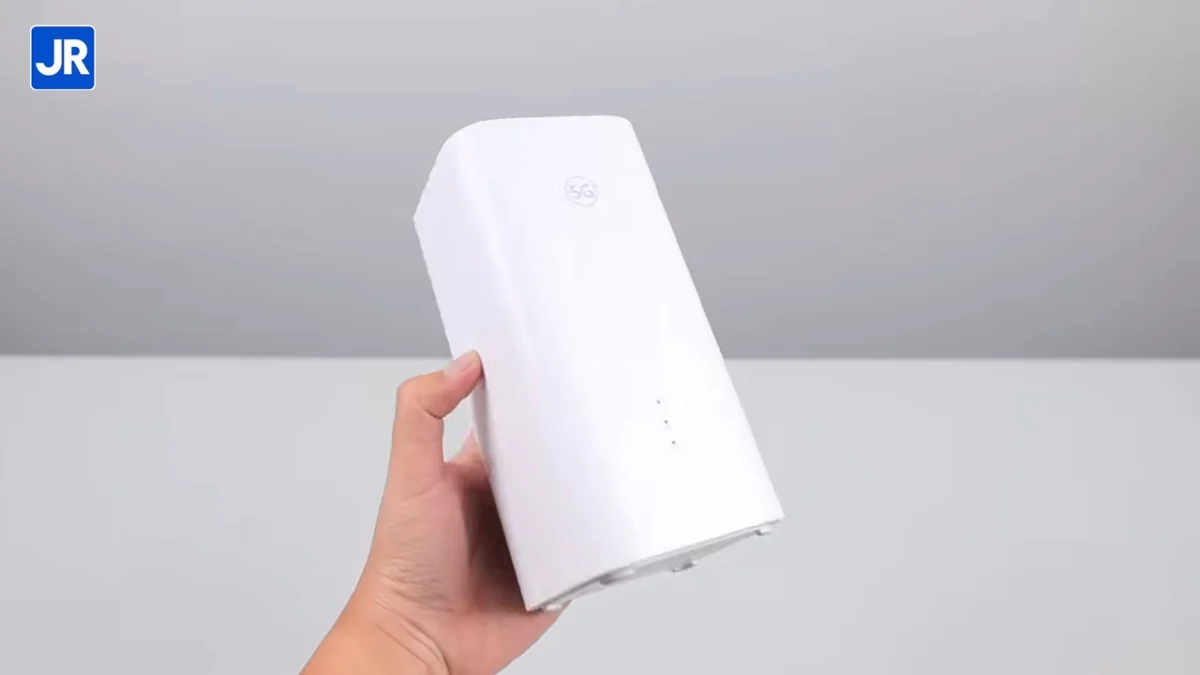
Customer Premises Equipment, universally abbreviated as CPE, refers to any terminal and associated equipment located at a subscriber’s premises rather than on the provider’s network side. In the context of modern telecommunications, a 5G CPE is an advanced hardware integration of a cellular modem and a wireless router.
The primary function of this device is to intercept radio frequency signals transmitted by a cellular operator’s Base Transceiver Station (BTS). Once captured, the integrated modem translates these high-frequency 5G signals into functional digital data packets, which are subsequently broadcast locally. Users can connect standard consumer electronics—including smartphones, personal computers, smart televisions, and Internet of Things (IoT) sensors—to the device via Wi-Fi protocols or physical LAN cables.

Unlike legacy technologies that require technicians to lay fragile glass-fiber cables directly to a building’s interior, 5G CPE relies entirely on the airwaves. This capability allows individuals and businesses to establish high-throughput internet connectivity simply by positioning the hardware in a designated zone with optimal cellular line-of-sight. Consequently, the technology serves as the primary hardware engine driving Fixed Wireless Access (FWA) deployments on a global scale.
Technological Evolution: From Mobile Hotspots to Enterprise-Grade Gateways
To fully comprehend the significance of 5G CPE, it is crucial to analyze its technological lineage. The conceptual ancestor of modern CPE is the basic mobile hotspot or 4G LTE USB dongle. While early iterations were primarily engineered for individual mobility and low-bandwidth browsing, contemporary 5G CPE units are sophisticated, stationary, or semi-stationary networking powerhouses.
The evolution was accelerated by the commercialization of 5G Standalone (SA) networks and the utilization of higher frequency spectrum bands, notably sub-6 GHz and millimeter-wave (mmWave). Early 4G modems struggled to deliver the consistent bandwidth required for multi-user households or corporate offices, frequently bottlenecking under heavy workloads. Modern 5G CPE devices, however, leverage massive Multiple-Input Multiple-Output (MIMO) antenna arrays, advanced beamforming algorithms, and carrier aggregation techniques. These technological enhancements enable hardware manufacturers to achieve multi-gigabit throughput speeds, rivaling or even exceeding traditional broadband connections.
Operational Mechanism: How 5G CPE Translates Cellular Signals
The operational workflow of a 5G CPE device involves a seamless conversion process between cellular radio frequencies and local network packets.

- Signal Reception: The internal or external high-gain antennas of the CPE scan the surrounding environment for operational frequency bands broadcasted by nearby 5G cell towers.
- Demodulation and Processing: The internal baseband processor and modem chipset decode the complex radio frequency waves, translating the modulated signals into usable digital data streams.
- Routing and Distribution: The integrated router component manages network traffic protocols (such as DHCP, NAT, and firewall security) before redistributing the data.
- Local Access: The data is finally broadcast across the premises via advanced Wi-Fi standards—such as Wi-Fi 6 or Wi-Fi 7—or transmitted through physical Gigabit Ethernet ports.
Despite this streamlined workflow, real-world performance remains variable. Telecommunications analysts emphasize that the efficacy of a 5G CPE deployment depends heavily on external environmental factors. Signal propagation is susceptible to physical obstructions such as reinforced concrete walls, dense foliage, and atmospheric conditions. Furthermore, network congestion at the serving BTS and the specific capabilities of the CPE’s internal chipset dictate the ultimate throughput experienced by the end user.
Categorization: Indoor Versus Outdoor CPE Hardware
Deploying 5G CPE successfully requires selecting the appropriate hardware configuration based on architectural and geographical constraints. The market generally categorizes these devices into two primary classifications:
Indoor CPE Units
Indoor CPE devices resemble conventional wireless routers. They are engineered for user-friendly, plug-and-play operation inside residential homes or small commercial offices. Users simply plug the device into a power outlet, insert a compatible Nano-SIM card, and place the unit near a window where cellular reception is strongest. The primary advantage of indoor CPE is convenience; it eliminates the need for professional installation or drilling through exterior walls. However, signal attenuation caused by building materials can significantly degrade performance.
Outdoor CPE Units
Outdoor CPE units are engineered to withstand harsh environmental conditions, featuring weather-resistant casings (often boasting IP65 or IP67 ingress protection ratings). These units are typically mounted on exterior walls, balconies, or rooftops where line-of-sight to the nearest cell tower is unobstructed. By bypassing exterior building walls, outdoor CPE units successfully capture stronger, cleaner signals, yielding higher data rates and lower latency. The trade-off involves a more complex installation process, which frequently requires professional technicians to run Ethernet cables from the outdoor unit to an indoor power-over-ethernet (PoE) injector and router.

Differentiating 5G CPE from Traditional Wi-Fi Routers
A frequent point of confusion among consumers is distinguishing between a standard Wi-Fi router and a 5G CPE device. While both broadcast local wireless networks for multiple devices, their foundational architectures differ fundamentally.
| Feature | Traditional Wi-Fi Router | 5G CPE Device |
|---|---|---|
| Primary Internet Source | Fiber-optic, cable, or DSL modem via Ethernet | Cellular network (5G/4G) via SIM card or embedded eSIM |
| Required Infrastructure | Physical wireline network deployment to the building | Wireless transmission from a nearby cellular tower |
| Mobility | Fixed to the physical wireline termination point | Portable, provided cellular coverage is available |
| Installation Complexity | Requires ISP technician and line activation | Typically plug-and-play (Indoor) or direct mount (Outdoor) |
A standard Wi-Fi router possesses no inherent capability to connect to the internet independently. It relies entirely on a separate modem that terminates a wired broadband line. Conversely, a 5G CPE integrates both the modem and the router into a single unified chassis, utilizing cellular infrastructure to source its internet connectivity.
The Interplay Between 5G CPE and Fixed Wireless Access (FWA)
The market expansion of 5G CPE is intrinsically linked to the rise of Fixed Wireless Access. FWA has rapidly evolved from a niche alternative into a primary growth engine for telecommunications operators globally.
Traditional broadband deployment models present a major economic hurdle for telecom operators: the high capital expenditure (CapEx) required for "last-mile" fiber installation in suburban and rural regions. Laying physical cables across rugged terrain or low-density neighborhoods is economically unviable for many service providers.
5G FWA solves this dilemma by utilizing existing cellular infrastructure to deliver fixed-location broadband services. In this ecosystem, the 5G CPE acts as the mandatory subscriber-side endpoint. By utilizing FWA, operators can monetize their multi-billion-dollar 5G spectrum investments more rapidly while offering consumers a competitive alternative to legacy cable and DSL providers. Industry metrics indicate that fixed wireless subscriptions have seen double-digit year-over-year growth across major markets in North America, Europe, and parts of Asia-Pacific.
Compatibility and Operator Dependency
A common technical inquiry concerns whether a 5G CPE requires a specialized FWA subscription or if it can operate on standard mobile data plans.
Technically, 5G CPE units are flexible hardware platforms compatible with standard cellular networks, provided the device supports the specific frequency bands (such as n78, n41, or mmWave bands) utilized by a given operator. However, commercial realities dictate how these devices are deployed.
Many telecommunications providers lock their CPE hardware to specific network architectures or require specialized FWA data plans designed for high-capacity, stationary usage. Standard mobile smartphone data plans may feature throttling clauses, carrier-imposed device restrictions, or Terms of Service (ToS) prohibitions against router-sharing. Therefore, consumers and enterprise buyers must verify device compatibility, carrier-locking status, and applicable data caps before purchasing hardware independently of an operator bundle.
Market Implications and Economic Impact
The widespread adoption of 5G CPE carries profound implications for the global digital economy. From a macroeconomic perspective, the technology accelerates digital inclusion by bridging the digital divide in underserved geographic regions where fiber infrastructure is economically impractical. Small and medium-sized enterprises (SMEs) benefit significantly, gaining access to high-speed, enterprise-grade connectivity within hours of acquiring hardware, thereby bypassing lengthy waiting periods traditionally associated with commercial fiber provisioning.
Furthermore, competition within the broadband market has intensified. With mobile network operators aggressively marketing FWA bundles anchored by advanced CPE hardware, legacy cable monopolists face unprecedented pricing and performance pressure. This competitive dynamic ultimately benefits consumers through lower subscription costs and improved service quality.
Conclusion and Future Outlook
5G CPE represents a paradigm shift in residential and commercial internet delivery. By seamlessly converting cellular network transmissions into high-performance local Wi-Fi and Ethernet environments, these devices liberate users from the traditional constraints of physical wireline infrastructure. Whether deployed as a simple plug-and-play indoor router or a robust, weather-resistant outdoor unit, 5G CPE remains a cornerstone technology enabling the global expansion of Fixed Wireless Access. As telecommunications infrastructure continues to mature alongside emerging network standards, CPE hardware will undoubtedly play an increasingly critical role in shaping the future of global connectivity.