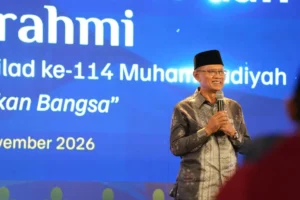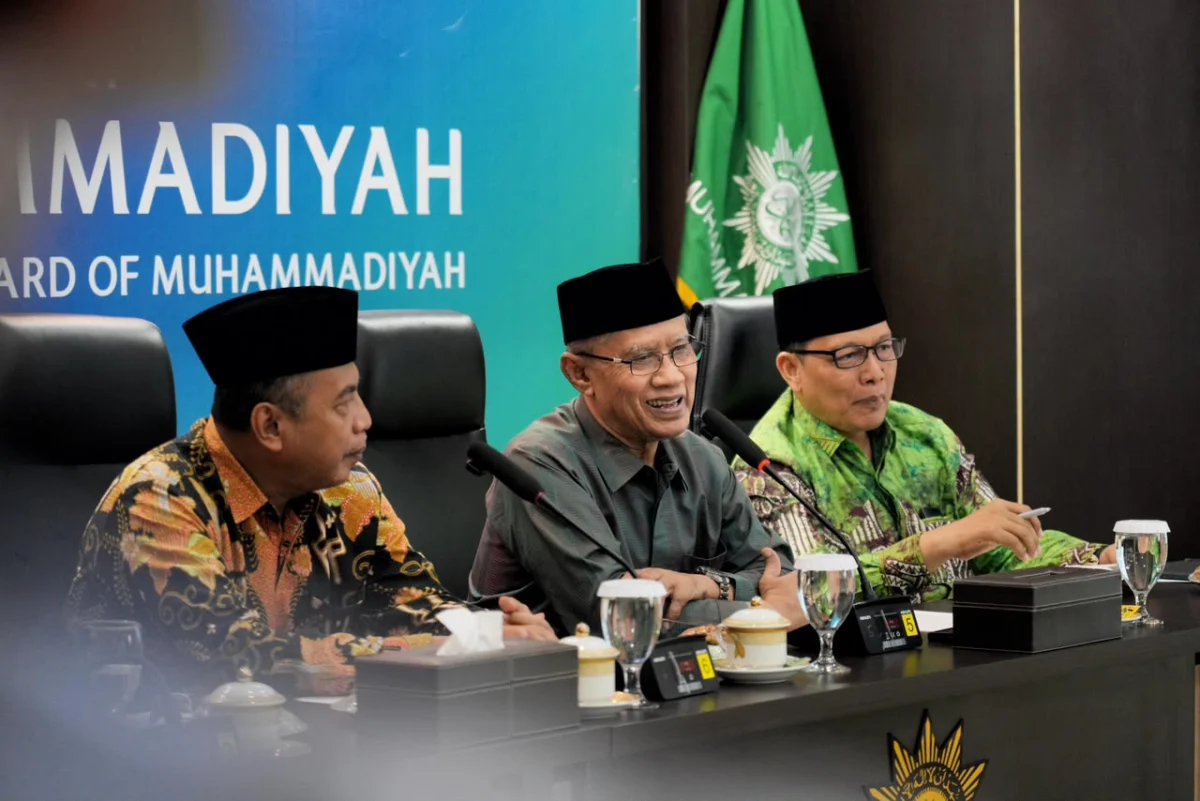
As Indonesia prepares for a period of significant organizational and national reflection, the Central Leadership (Pimpinan Pusat – PP) of Muhammadiyah, one of the country’s largest Islamic socio-religious organizations, has officially released six crucial national messages. This announcement was made during a high-profile press conference held at the PP Muhammadiyah office on Jalan Cik Ditiro, Jakarta, on Monday, November 9. The timing of the declaration is deliberate, serving as a philosophical and moral prelude to the upcoming Tanwir (mid-term national consultation) and the organization’s 114th Milad (anniversary) celebrations, scheduled to take place from November 13 to 15 in Palu, Central Sulawesi.
The grand theme chosen for this year’s milestone is "Together, Unite the Nation" (Bersama Satukan Bangsa). The theme reflects a growing concern among organizational leaders regarding the state of national cohesion, political polarization, and the erosion of social ethics in the digital age. The press conference was led by key figures within the organization’s top tier, including PP Muhammadiyah General Chairperson Haedar Nashir, Secretary Muhammad Sayuti, and central committee members Agus Taufiqurrahman and Agung Danarto. Together, they outlined a comprehensive vision designed to guide the nation’s elite and everyday citizens toward a more resilient, harmonious, and law-abiding society.
Background Context and Significance of the Tanwir and Milad
The Tanwir meeting is the second-highest decision-making forum in Muhammadiyah, second only to the National Congress (Muktamar). It brings together regional and central leaders from across Indonesia’s vast archipelago to address pressing religious, social, and national issues. Holding this year’s gathering in Palu, Central Sulawesi, carries profound symbolic and practical significance, demonstrating the organization’s commitment to inclusive national development and regional engagement, particularly in regions that have undergone historical socio-economic recovery and transformation.
Founded in 1912 by K.H. Ahmad Dahlan in Yogyakarta, Muhammadiyah has historically positioned itself as a reformist movement dedicated to modernizing Islamic education, healthcare, and social welfare in Indonesia. Beyond its foundational role in building schools, hospitals, and orphanages, the organization has consistently acted as a moral compass for the republic. Its interventions during critical junctures of Indonesian history—from the struggle for independence to the consolidation of modern democracy—lend substantial weight to its current appeals for national unity and ethical governance.
The Imperative of Resilient Unity
During the detailed briefing on the six national messages, Haedar Nashir emphasized that while national unity and togetherness have been legally and normatively secured through the nation’s historical founding process and constitutional symbols, contemporary reality demands continuous vigilance. Indonesia’s hard-won independence and state symbols, such as Pancasila and the 1945 Constitution, provide a solid structural framework, but they do not automatically insulate the country from modern internal fractures.
"Togetherness and unity are not only meant to be adaptive, but they must also be resilient against problems and challenges that can erode them from within," Haedar stated to assembled journalists.
He elaborated that modern democratic life naturally opens doors for political competition and the pursuit of individual and group interests. However, when these ambitions are left unchecked by institutional guardrails or personal moral restraint, they pose a direct threat to national cohesiveness. Muhammadiyah’s leadership cautioned that excessive political desires and unbridled competition are primary catalysts for social fragmentation. Consequently, the organization has issued a clarion call to the nation’s political elites, community leaders, and ordinary citizens to recognize their limits and exercise strategic restraint.
"When togetherness and unity are torn, let alone cracked and fractured, knitting them back together is an arduous task," Haedar warned, using a powerful textile metaphor to illustrate the irreversible damage caused by prolonged political and social division. He further advised individuals and political factions who have already dedicated substantial time to political pursuits to recognize when to step back, noting that the political arena is inherently characterized by intersecting and competing interests (cross-cutting of interests). In an environment where political friction is inevitable, knowing when to conclude a political campaign or rivalry is essential for maintaining public peace.
Firm Support for Constitutional Law Enforcement
Addressing the broader political and legal landscape—specifically reflecting the fourth pillar of the six national messages—Haedar expressed Muhammadiyah’s unwavering support for the administration of President Prabowo Subianto. The organization endorsed the government’s mandate to enforce the law strictly and fairly, in accordance with the constitution, against any form of infraction, regardless of who commits them.
Muhammadiyah urged that all ongoing legal proceedings, including complex cases involving institutional wiretapping and high-level corruption, must be processed through the proper, objective, and transparent legal channels. At the same time, Haedar called upon the general public to exercise responsible social control and oversight without continuously fueling public hysteria or media-driven outrage.
"Legal cases must be resolved fairly, objectively, and transparently. But must the uproar remain a perpetual uproar? Because I know sociologically that Indonesian society, once it becomes agitated, finds it very difficult to put an end to the agitation," Haedar observed, highlighting a recurring pattern in Indonesia’s public discourse where sensationalized legal cases often overshadow substantive legal resolutions.
Navigating the Digital Public Square and Social Media Ethics
In an era defined by hyper-connectivity, the third message focused heavily on the digital ecosystem and social media. Muhammadiyah noted that contemporary social interactions are increasingly mediated by digital platforms, which act as double-edged swords. While these platforms democratize access to information, education, and global communication, they also serve as breeding grounds for misinformation, ideological polarization, and rapid dissemination of hatred.
The organization advocates for a concerted effort to cultivate a healthier social media ecosystem. This involves fostering critical thinking among users and proactively producing positive, constructive content that counters digital toxicity.
"In social media, there is indeed a space for positive things. We can look for information, we can look for science, we can look for knowledge, we can interact and communicate easily. But the negative side of it is also that bad things, hatred, and the ‘cooking’ of polarizing issues happen much faster," Haedar explained.
To combat this phenomenon, Muhammadiyah stressed the need for patience, digital literacy, and civic education to help the populace navigate the complexities of online information without succumbing to emotional manipulation or algorithmic outrage.
Re-establishing Social Ethics and Decorum
Complementing its stance on digital media, the leadership underscored the vital necessity of upholding social ethics and public order. True social ethics, according to Muhammadiyah, cannot rely solely on external legal enforcement; rather, it must emanate from an active inner conscience that instinctively understands the boundaries of what is socially appropriate and what is unacceptable.
Building a culture of mutual respect requires long-term societal investment. "It takes patience to build maturity, intelligence, and proper social behavior," Haedar remarked, pointing out that democratic freedoms must be balanced with personal and collective responsibility.
Broader Implications and Analytical Outlook
Political analysts and sociologists observing Muhammadiyah’s pre-Tanwir declaration note that the timing and substance of the six messages reflect the organization’s unique role as a stabilizing force in Indonesian civil society. Following years of intense electoral contestation and lingering socio-political polarization, the call for elite restraint and structural introspection addresses a genuine anxiety regarding national stability.
By anchoring its appeals in a blend of constitutional loyalty, ethical self-regulation, and digital responsibility, Muhammadiyah seeks to move the national conversation away from transactional politics and toward substantive developmental and moral goals. The success of these messages will ultimately depend on how receptively political parties, government institutions, and civil society actors integrate these principles into their daily practices.
Conclusion and Call to Collective Action
In closing the press conference, Haedar Nashir issued a final, direct appeal to Indonesia’s political, economic, and social elites. He reiterated that true patriotism and contribution to the state begin with the internal discipline to control excessive personal and factional ambitions.
"If we, the elites of the nation, can control our excessive political, social, and economic desires, it means we have already contributed significantly to building this country," Haedar concluded.
As Muhammadiyah delegates convene in Palu for the 114th Milad and Tanwir deliberations, these six national messages are expected to serve as the foundational blueprint for organizational policy and national advocacy, guiding the movement’s millions of members toward a more unified and ethically grounded future.