Palangkaraya to Palu: The Strategic Journey of Muhammadiyah National Consolidation
The Muhammadiyah movement is entering a critical phase of organizational consolidation as all 38 Pimpinan Wilayah Muhammadiyah (PWM) from across the Indonesian archipelago officially confirm their participation in the upcoming Tanwir Muhammadiyah 2026. Scheduled to take place from November 13 to November 15, 2026, this high-level national deliberation will be hosted by Universitas Muhammadiyah (Unismuh) Palu, located in Central Sulawesi.
The confirmation of complete attendance from all 38 regional boards underscores the robust structural cohesion of the organization. Tanwir serves as the second-highest
decision-making forum within Muhammadiyah, ranking immediately below the national congress known as Muktamar. It is designed to evaluate ongoing programs, formulate strategic policies, address pressing national issues, and align the vast network of schools, hospitals, social welfare institutions, and economic enterprises under a unified vision.
The decision to convene the 2026 Tanwir in Palu carries profound symbolic and practical significance. For Central Sulawesi, hosting a national event of this magnitude represents a historic milestone. Never before has the region been entrusted with the responsibility of serving as the primary host for a national Tanwir session. Consequently, local organizers, academic institutions, and regional leadership boards have mobilized extensive resources to ensure the event meets the highest standards of logistical efficiency and substantive engagement.
Chronology and Official Preparations: The Road to Palu 2026
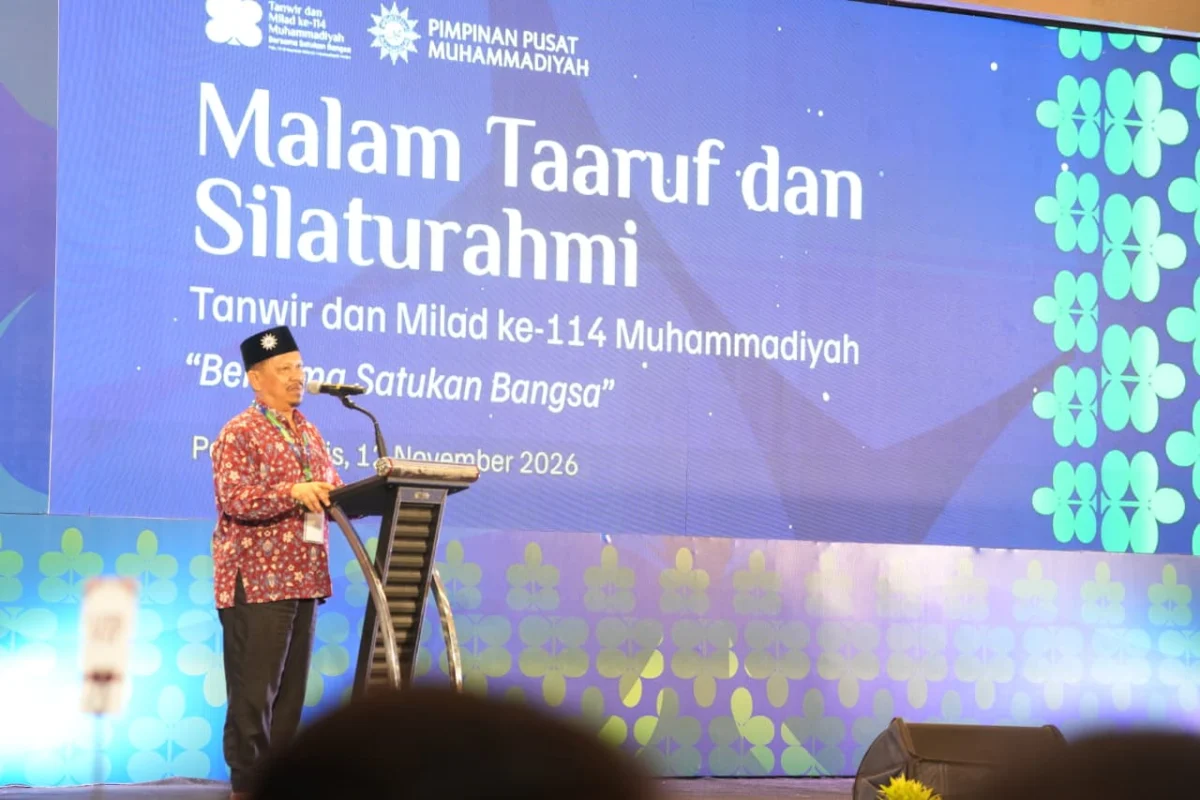
The official preparations for the national gathering gained significant momentum during the Malam Taaruf and Silaturahmi—a welcome and networking dinner held at the Best Western Hotel in Palu. Speaking before delegates, regional stakeholders, and local dignitaries on the evening of November 12, Unismuh Palu Rector Rajindra formally announced that all 38 regional delegations had completed their registration and travel arrangements, ensuring a full quorum for the legislative proceedings.
Rector Rajindra emphasized that hosting the national agenda is a tangible manifestation of the solidarity, strength, and collective spirit that characterizes the Muhammadiyah organization, particularly within the provincial network of Central Sulawesi. The integration of academic infrastructure at Unismuh Palu with regional logistical support has been meticulously planned to accommodate thousands of delegates, observers, and invited guests.
A Historic Milestone for Central Sulawesi
Echoing the rector’s sentiments, the Chairman of PWM Central Sulawesi, Amin Parakkasih, expressed profound gratitude to the Pimpinan Pusat (PP) Muhammadiyah for bestowing this historic mandate upon the province. In his official address, Parakkasih highlighted the unprecedented nature of the assignment, noting that the local chapter is fully prepared to rise to the occasion.
"For the first time in history, Central Sulawesi has been entrusted with the honor of hosting the National Tanwir of Muhammadiyah," Parakkasih stated, capturing the collective pride of the local membership.
Parakkasih articulated a clear vision regarding the long-term impact of the event on the region. He noted that hosting the Tanwir, which coincides with the 114th anniversary (Milad) of Muhammadiyah, must serve as a catalyst for institutional acceleration. The convergence of national leaders and regional delegates in Palu is expected to galvanize the local membership, strengthen the institutional capacity of regional boards, and expand the footprint of community-based outreach programs across Central Sulawesi’s diverse districts.
"We are striving to prove that the trust given by the central leadership to host the Tanwir will act as a vital driving force and inspiration to energize our organizational machinery here in Central Sulawesi," Parakkasih added. He urged all participants to engage in the deliberations with deep concentration, intellectual rigor, and a spirit of cooperative brotherhood.
Presidential Presence and National Significance
Adding to the historical weight of the 2026 gathering is the anticipated presence of the nation’s highest executive authority. Organizers have announced plans for the Tanwir and the 114th Milad commemoration to be officially opened directly by the President of the Republic of Indonesia, Prabowo Subianto.
The involvement of the head of state highlights the strategic role that civil society organizations, particularly large religious and educational movements like Muhammadiyah, play in shaping national policy, fostering social welfare, and maintaining national unity. Discussions during the Tanwir are expected to touch upon critical intersections between government policy and Muhammadiyah’s contributions to national development, education, healthcare, and economic empowerment.
Intellectual and Economic Milestones: Book Launches and Enterprise Unveiling
Beyond the formal legislative debates and structural policy evaluations, the opening phase of the Tanwir Muhammadiyah 2026 featured a rich array of intellectual and commercial unveilings. Demonstrating the movement’s ongoing commitment to academic scholarship, historical preservation, and economic self-reliance, several significant publications and community enterprises were officially launched during the welcoming events.
The literary contributions introduced to the public included:
- Sejarah Muhammadiyah di Sulteng (The History of Muhammadiyah in Central Sulawesi), a comprehensive documentation of the movement’s grassroots origins, struggles, and expansion in the region.
- Suara Anak Kampung untuk Bangsa dan Dunia Berkeadilan (Voices of Village Children for the Nation and a Just World), a compilation reflecting perspectives on social justice and national development from regional viewpoints.
- Muhammadiyah: Organisasi dan Kepemimpinan Pergerakan (Muhammadiyah: Organization and Movement Leadership), an analytical text examining institutional governance and strategic leadership within the modern Islamic movement.
In tandem with these intellectual offerings, the event marked a major step forward in community economic development through the official launch of Mentari Mart—a regional retail cooperative initiative designed to support small-scale local enterprises—and PerumahanMU, a housing initiative aimed at providing accessible residential solutions for organization members and the wider community. These economic rollouts illustrate Muhammadiyah’s holistic approach to development, balancing spiritual values, intellectual growth, and tangible economic empowerment.
Institutional Background of Tanwir within Muhammadiyah
To fully understand the gravity of the Palu gathering, it is necessary to examine the constitutional role of the Tanwir within the organizational architecture of Muhammadiyah. Defined in the association’s bylaws, the Tanwir is a consultative body convened at least once between two successive Muktamar (National Congresses) sessions.
Delegates attending the Tanwir include members of the Pimpinan Pusat Muhammadiyah, representatives from all provincial-level boards (PWM) across Indonesia, and chosen leaders of autonomous organizations operating under the Muhammadiyah umbrella, such as ‘Aisyiyah (women’s wing), Pemuda Muhammadiyah (youth wing), Nasyiatul ‘Aisyiyah (young women), Ikatan Pelajar Muhammadiyah (student organization), and Tapak Suci (martial arts wing).
The primary functions of the Tanwir encompass:
- Evaluating the implementation of strategic programs decided upon during the previous Muktamar.
- Discussing urgent internal and external issues requiring a unified organizational stance.
- Formulating recommendations for government policies concerning education, public health, law, economics, and religious moderation.
- Preparing the foundational agenda for the subsequent national congress.
By gathering in Palu, the 38 PWM delegations will deliberate on pressing contemporary challenges facing Indonesia. These include navigating digital transformation in education, expanding universal healthcare access, addressing environmental sustainability, and strengthening economic resilience at the grassroots level through Islamic cooperative frameworks.
Broader Implications and Analytical Outlook
The convening of Tanwir Muhammadiyah 2026 in Central Sulawesi carries multiple layers of positive socio-economic and political implications for both the region and the broader national landscape.
First, from a regional development perspective, hosting a national convention of this scale brings significant economic stimulation to Palu and surrounding areas. The influx of thousands of delegates, government officials, media personnel, and visitors creates heightened demand for hospitality, transport, culinary, and local handicraft sectors. It also places Central Sulawesi firmly in the national spotlight, showcasing the region’s recovery, stability, and institutional readiness following past regional challenges.
Second, the structural alignment of all 38 regional boards reinforces the decentralized yet highly coordinated nature of Muhammadiyah. In an archipelagic nation marked by vast geographic and cultural diversity, maintaining operational synergy across distant provinces is a formidable task. The mandatory presence and active participation of every PWM in Palu ensure that localized concerns from remote islands and interior regions are integrated directly into national policy deliberations.
Third, the synergy between the central government—exemplified by the planned attendance of President Prabowo Subianto—and a major independent civil society movement like Muhammadiyah signals a collaborative approach to national governance. As Indonesia navigates complex global economic currents and domestic developmental goals, the constructive partnership between the state and civic organizations remains essential for social stability and equitable progress.
Conclusion and Forward Outlook
As delegates settle into the schedules hosted by Unismuh Palu from November 13 to 15, 2026, the expectations resting upon the Tanwir are exceptionally high. The combination of rigorous organizational evaluation, milestone anniversary celebrations, intellectual product releases, and grassroots economic initiatives ensures that the Palu gathering will leave a lasting imprint on the history of the movement.
With the logistical preparations fully secured, all 38 regional leadership boards positioned to contribute, and local hosts ready to deliver an exceptional program, Tanwir Muhammadiyah 2026 stands poised to propel the century-old movement into its next chapter of progressive, inclusive, and nation-building service.