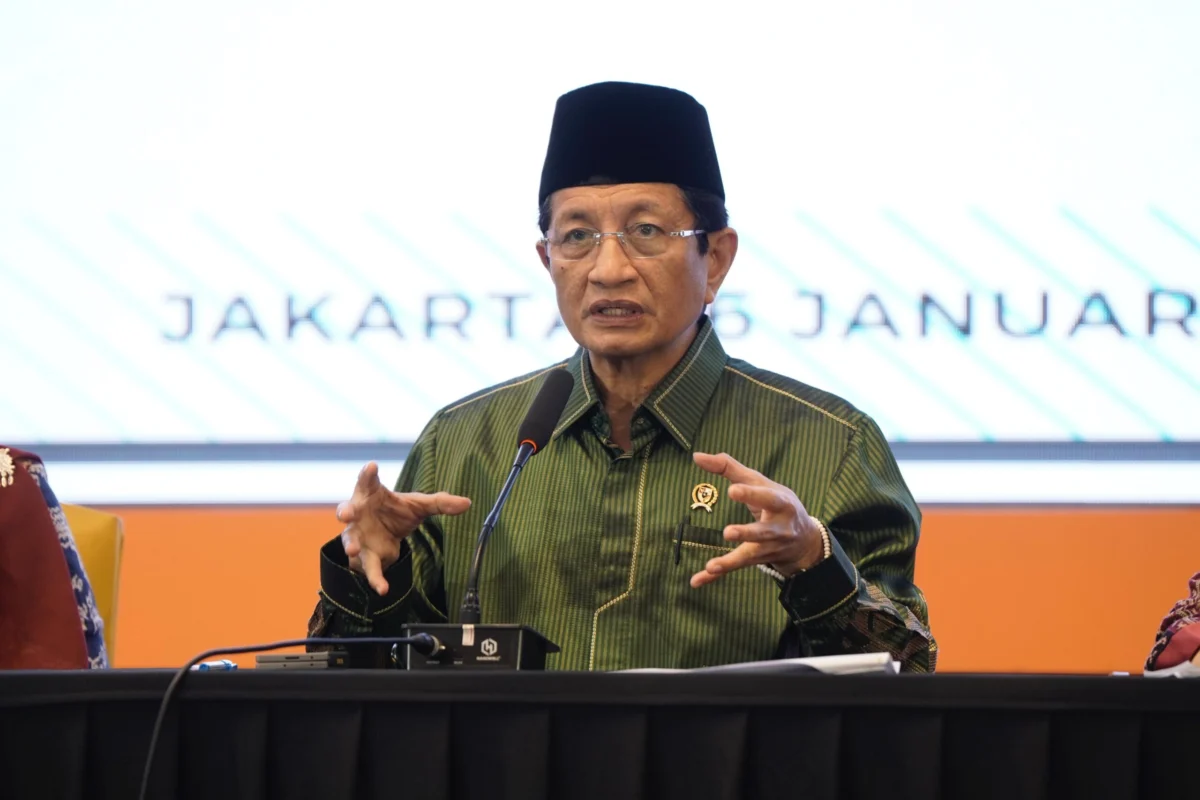
Minister of Religious Affairs of the Republic of Indonesia, Nasaruddin Umar, has officially extended his heartfelt congratulations to the grand Islamic organization Muhammadiyah on the auspicious occasion of its 114th anniversary. In a statement released in Yogyakarta, the Minister lauded the organization for its extraordinary longevity, institutional resilience, and profound, measurable impact on the socio-religious landscape of Indonesia and the global community.
As one of the oldest and most influential reformist Islamic movements in Southeast Asia, Muhammadiyah has continuously steered a course of modernization, educational empowerment, and social welfare since its inception in the early 20th century. Minister Nasaruddin emphasized that reaching 114 years of continuous service is not merely a chronological milestone, but a living testament to the enduring power of sincerity, scientific inquiry, and selflessness.
Core Contributions to the Nation and Humanity
Reflecting on the historical trajectory of the organization, Minister Nasaruddin highlighted how Muhammadiyah has successfully transitioned into its second century of existence. He noted that the movement has consistently demonstrated a progressive theological framework wherein Islam serves not only as a spiritual anchor for individual piety, but also as a dynamic socio-economic and cultural catalyst.
According to the Minister, the organization’s multifaceted undertakings have fundamentally transformed Indonesian society. Through the establishment of thousands of educational institutions ranging from early childhood programs to prestigious universities, advanced healthcare facilities including hospitals and clinics, and widespread social welfare initiatives such as orphanages and disaster relief agencies, Muhammadiyah has operationalized Islamic teachings into tangible public goods.
Furthermore, the Minister underscored the organization’s steadfast commitment to fostering social justice, upholding human dignity, and nurturing universal brotherhood. In a diverse nation like Indonesia, where pluralism is both a foundational identity and an administrative challenge, Muhammadiyah has consistently acted as a stabilizing force, bridging ideological divides and championing an inclusive, moderate interpretation of Islam known as Islam Berkemajuan (Progressive Islam).
The Significance of National Unity Amidst Diversity
Addressing the overarching theme of this year’s anniversary—"Uniting the Nation Together"—Minister Nasaruddin stressed that the concept of national unity extends far beyond mere tolerance of differences. True unity, he argued, requires the active preservation and appreciation of Indonesia’s rich mosaic of cultures, ethnicities, and religious traditions, harnessing this inherent diversity as a primary asset for national development and resilience.
"A truly great nation is not one devoid of differences, but rather one possessing the collective wisdom to transform those very differences into a pathway toward shared progress and mutual dignity," the Minister stated. This philosophy resonates deeply with Indonesia’s national motto, Bhinneka Tunggal Ika (Unity in Diversity), aligning civic nationalism with religious ethics.
The Minister warned against divisive tendencies and identity politics that threaten the social fabric of modern democracies. By framing diversity as a divine blessing rather than a source of conflict, institutions like Muhammadiyah play an indispensable role in maintaining social cohesion and fostering a collaborative national spirit capable of addressing contemporary crises, ranging from economic disparities to global environmental challenges.
Historical Context and Institutional Evolution of Muhammadiyah
To fully appreciate the weight of Minister Nasaruddin’s congratulatory remarks, it is necessary to examine the historical trajectory that brought Muhammadiyah to its 114th anniversary. Founded on November 18, 1912, in the royal city of Yogyakarta by K.H. Ahmad Dahlan—a visionary Islamic scholar and pioneer of modern Indonesian reformism—Muhammadiyah emerged during the Dutch colonial era as a response to the stagnation of traditionalist religious practices, widespread illiteracy, and systemic poverty among the indigenous population.
K.H. Ahmad Dahlan sought to purify Islamic teachings from syncretic practices while simultaneously adopting modern organizational methods, Western-style educational systems, and social welfare delivery models inspired by reformist movements in the Middle East. Named after the Prophet Muhammad, the organization aimed to follow his exemplary character and disseminate his teachings to uplift the ummah.
Key Chronological Milestones in Muhammadiyah’s History:
- 1912 (Foundation): K.H. Ahmad Dahlan establishes Muhammadiyah in Yogyakarta, focusing on religious purification, education, and social reform.
- 1917 (Women’s Wing): The establishment of ‘Aisyiyah, the women’s wing of Muhammadiyah, which became a monumental force in women’s empowerment, education, and healthcare in the Dutch East Indies.
- 1920s–1940s (Expansion): Rapid expansion of the organization’s network of schools, clinics, and orphanages across Java and into the Outer Islands, laying the groundwork for modern civil society infrastructure in Indonesia.
- 1945 (Independence Contribution): Prominent Muhammadiyah figures play pivotal roles in the Indonesian independence movement, drafting the constitution, and establishing national governance frameworks.
- 2000s–Present (Global and Domestic Scaling): Institutional modernization, the establishment of international chapters (PCIM) worldwide, and expanded engagement in disaster management through Muhammadiyah Disaster Management Center (MDMC) and international humanitarian diplomacy.
Broader Implications and Socio-Political Analysis
The endorsement of Muhammadiyah by the Minister of Religious Affairs carries significant socio-political implications in contemporary Indonesia. As the nation navigates complex geopolitical shifts, economic uncertainties, and ideological polarization, the synergy between the state and major civil society organizations remains crucial for maintaining national stability.
Observers note that Muhammadiyah, alongside other major Islamic organizations such as Nahdlatul Ulama (NU), forms the twin pillars of Indonesia’s moderate Islamic civil society. By consistently promoting a middle-path approach (Wasathiyyah), these organizations act as a bulwark against religious extremism and radicalism. Minister Nasaruddin’s public praise underscores the government’s recognition of civil society as an indispensable partner in nation-building, particularly in the sectors of education, public health, and moral leadership.
Furthermore, Muhammadiyah’s approach to modernization offers a compelling model for other developing nations seeking to reconcile traditional religious values with contemporary scientific advancement and democratic governance. The organization’s extensive infrastructure—operating over 170 higher education institutions, hundreds of hospitals, and thousands of schools—demonstrates that faith-based organizations can drive large-scale socio-economic development independently and efficiently.
Looking Toward the Future: The Sun of Enlightenment
In his concluding remarks, Minister Nasaruddin expressed his fervent hope that Muhammadiyah will continue to serve as a "sun of enlightenment" (matahari pencerahan), steadily radiating the values of Progressive Islam and demonstrating that faith is a blessing for the entire universe (rahmatan lil-alamin).
This metaphor of the sun—appropriately echoing the visual symbol within the Muhammadiyah emblem—signifies continuous illumination, warmth, and life-giving energy. As the organization steps further into its second century, it faces new challenges in the digital age, including artificial intelligence ethics, climate change, global economic inequality, and shifting youth demographics.
Analysts suggest that Muhammadiyah’s future relevance will depend on its ability to adapt its foundational ethos of practical theology to these emerging frontiers. Initiatives focusing on digital literacy, green Islam, and economic empowerment for the grassroots indicate that the organization is actively preparing for these modern realities.
"Happy 114th Anniversary to Muhammadiyah; continue your dedicated service to the ummah, the nation, and all of humanity," Minister Nasaruddin concluded, encapsulating the collective aspirations of millions of Indonesians who continue to benefit from the organization’s century-long legacy of compassion, intellect, and civic duty.