The Ministry of Home Affairs has officially reaffirmed its strong commitment to supporting the ambitious national housing initiative spearheaded by the administration of President Prabowo Subianto. Minister of Home Affairs Muhammad Tito Karnavian announced that the government is actively streamlining bureaucratic procedures and implementing targeted regulatory reforms to ensure that low-income families gain unhindered access to affordable, decent housing. This strategic alignment between central governance and regional policy frameworks is designed to remove long-standing administrative bottlenecks that have historically hampered large-scale residential construction for the nation’s vulnerable populations.
Background and Context of the Housing Crisis in Indonesia
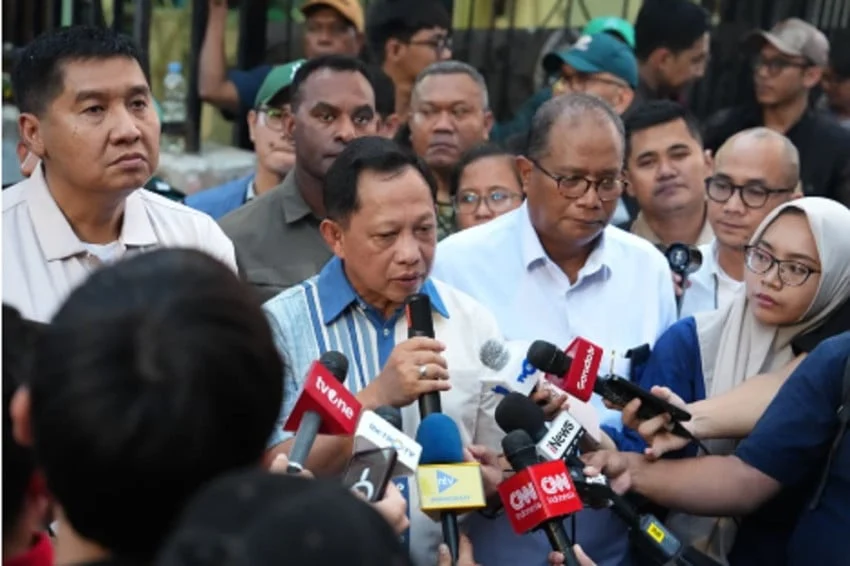
Addressing the media during a community-focused event in Kampung Ambon, Cengkareng, West Jakarta, Minister Tito Karnavian emphasized that housing remains one of the most critical structural challenges confronting Indonesia’s socio-economic development. Reliable demographic and housing data indicate that approximately 30 million families across the archipelago either lack a permanent home entirely or currently reside in substandard conditions that fail to meet basic health and safety standards.
For decades, the sheer scale of the housing backlog has presented a formidable obstacle to poverty alleviation and equitable regional development. Recognizing housing as a fundamental human right and a cornerstone of social welfare, President Prabowo Subianto’s administration elevated the provision of residential properties to a top-tier national priority. To execute this vision with unprecedented focus, the government restructured the bureaucratic apparatus, notably separating the housing portfolio from the legacy Ministry of Public Works and Public Housing (PUPR). This structural division led to the establishment of the dedicated Ministry of Housing and Settlement Areas (PKP). By creating a standalone ministry, the administration aims to concentrate administrative energy, policy formulation, and budgetary resources exclusively on resolving the nation’s severe housing deficit.
Strategic Regulatory Reforms for Low-Income Communities
The Ministry of Home Affairs plays a pivotal role in operationalizing the 3 Million Houses Program, primarily because local governance structures, regional spatial planning, and building permit processes fall under its purview. Minister Tito highlighted that the ministry is actively drafting and refining regulatory frameworks to ease the burden on Masyarakat Berpenghasilan Rendah (MBR), or low-income communities.
Historically, regional red tape—including protracted licensing procedures, overlapping spatial bylaws, and high regional levies—has deterred private developers from investing in affordable housing projects. The Ministry of Home Affairs is countering these systemic inefficiencies by issuing binding directives to local governments to accelerate the approval process for MBR housing developments. These regulatory adjustments include the simplification of building approval documents, the reduction or waiver of regional administrative fees for social housing initiatives, and the integration of affordable housing zones into regional spatial plans (RTRW).
By fostering a collaborative ecosystem between local governments, national ministries, and private real estate developers, the state seeks to create a frictionless environment where the construction of affordable units can proceed rapidly and efficiently. Minister Tito underscored that all state instruments must remain strictly aligned with the president’s pro-people agenda, ensuring that economic growth directly translates into tangible improvements in the daily lives of ordinary citizens.
Chronology of the Initiative and Recent Developments
The momentum behind the 3 Million Houses Program has steadily accelerated since its conceptualization during the early transition phases of the current administration.

In late 2024, following the inauguration of President Prabowo Subianto, initial inter-ministerial coordination meetings were convened to map out the logistical and regulatory requirements needed to achieve the tri-annual target. The restructuring of the Ministry of Housing and Settlement Areas served as the institutional catalyst, laying the groundwork for specialized task forces dedicated to land acquisition, financing schemes, and construction standards.
Throughout 2025, the focus shifted toward identifying land banks across urban and peri-urban areas where the housing backlog is most acute. State-owned enterprises in the construction and financial sectors were mobilized to design accessible mortgage schemes with subsidized interest rates specifically tailored for informal workers and low-wage earners.
By October 2026, the implementation phase transitioned from macro-level planning to grassroots execution. Events such as the combined police public health initiative and community housing renovation project in Kampung Ambon, Cengkareng, served as practical demonstrations of the government’s holistic approach. These localized interventions not only improve immediate living conditions but also test the scalability of community-based urban renewal models that the Ministry of Home Affairs intends to replicate nationwide.
Implications and Broader Economic Impacts
The concerted push to fulfill the 3 Million Houses Program carries profound economic and social implications for Indonesia. From a macroeconomic perspective, the construction sector is a notoriously high-multiplier industry. Scaling up residential development generates a cascading demand for building materials, stimulates local manufacturing, and creates hundreds of thousands of formal and informal jobs across related supply chains.
Furthermore, providing secure and sanitary housing fundamentally transforms public health outcomes. Access to clean water, proper sanitation, and adequate ventilation drastically reduces the incidence of waterborne and respiratory illnesses, which disproportionately affect low-income urban and rural settlements. In the educational sphere, stable housing environments provide children with the necessary conditions to focus on their studies, thereby breaking generational cycles of poverty.
From a governance standpoint, the active involvement of the Ministry of Home Affairs signals a vital shift toward decentralized accountability. By compelling regional heads—governors, regents, and mayors—to prioritize affordable housing within their respective jurisdictions, the central government is ensuring that national welfare policies are not stalled by regional apathy or bureaucratic inertia. Local governments are increasingly viewed not merely as administrative units, but as frontline executors of social equity.
Challenges Ahead and Future Outlook
Despite the optimistic policy trajectory, significant hurdles remain on the path to realizing the full scope of the 3 Million Houses Program. Land acquisition in densely populated urban centers continues to be a contentious and expensive endeavor. Speculative land pricing often drives affordable housing projects to distant peripheries lacking adequate public transportation networks, schools, and employment centers. To mitigate this, the Ministry of Home Affairs is urging local governments to utilize idle state-owned land and optimize regional assets for social housing developments.
Additionally, ensuring the long-term financial sustainability of subsidized mortgages requires vigilant fiscal management. Coordinating closely with financial institutions to prevent default risks while keeping down-payments and monthly installments within the reach of informal sector workers demands innovative financial engineering.
As the administration moves forward, the synergy between the Ministry of Home Affairs, the Ministry of Housing and Settlement Areas, and local governmental bodies will remain the definitive factor in the program’s success. Through sustained regulatory relief, targeted regional oversight, and an unwavering commitment to the nation’s working class, the government aims to transform the fundamental landscape of Indonesian housing, turning the dream of homeownership into a tangible reality for millions of families currently living on the margins of society.