LONDON — In the quiet countryside of Gloucestershire, England, the vigilance of a local farmer averted what counter-terrorism officials fear could have been a catastrophic security breach targeting a major military installation. Five men remain in high-security police custody following a massive, multi-agency security operation triggered by a late-night emergency call near RAF Fairford, a strategic air base heavily utilized by the United States Air Force.
The incident, which unfolded in the early hours of Sunday, has sent shockwaves through regional and national security apparatuses. It highlights the increasingly complex vulnerabilities facing critical defense infrastructure in the United Kingdom, even in rural, seemingly insulated settings. While the immediate threat has been contained through swift police intervention and bomb disposal protocols, the unfolding investigation underscores the persistent and evolving nature of domestic terrorism threats linked to foreign military assets stationed on British soil.
The Chronology of an Emergency: From a Rural Road to a Counter-Terrorism Probe
The sequence of events began shortly after midnight on Sunday, at approximately 00:45 BST. According to Gloucestershire Constabulary, local authorities received a critical emergency call—reportedly initiated by a watchful local farmer—alerting them to the suspicious movement of three vehicles making their way toward the perimeter of RAF Fairford. The prompt reporting of these anomalies by a civilian observer served as the vital catalyst for the subsequent police response.
By the early hours of the morning, armed response units and local patrol officers converged on the area. The five suspects were intercepted and placed under arrest near Whelford, a small village situated roughly two miles southeast of the air base. Recognizing the potential presence of volatile materials, police immediately established a 400-meter cordon around the vehicles associated with the suspects.
Explosive ordnance disposal (EOD) teams, commonly known as bomb squads, were deployed to the scene to conduct meticulous safety assessments. Aerial imagery captured by news outlets later revealed specialized remote-controlled robotic units approaching two white vans parked among trees within the secured zone, though law enforcement officials have maintained operational discretion regarding the specifics of the EOD clearance procedure.
As the morning progressed, the nature of the threat prompted a significant escalation in jurisdiction. The investigation was swiftly handed over to Counter Terrorism Policing (CTP), marking the case as a matter of national security. British Broadcasting Corporation (BBC) sources indicated that the operation was initiated reactively rather than preemptively, meaning law enforcement did not possess prior intelligence warning them of this specific cell or plot before the civilian sighting.
The Significance and Strategic Profile of RAF Fairford
RAF Fairford, nestled within the picturesque Cotswolds region approximately four miles south of the historic town of Fairford, is far from a standard domestic airfield. It holds a uniquely prominent position within the North Atlantic Treaty Organization (NATO) framework and the broader transatlantic defense architecture.
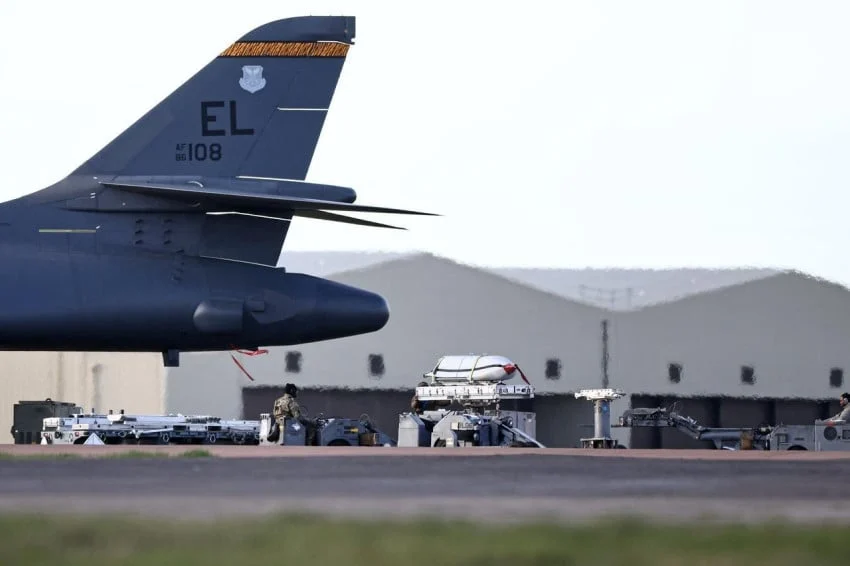
While the station remains under the official sovereignty of the Royal Air Force, it has long served as a critical forward-operating location for the United States Air Force. The base is uniquely equipped to host heavy bomber aircraft, including the B-52 Stratofortress and the B-2 Spirit stealth bomber, alongside vital aerial refueling wings. In recent months, the strategic relevance of RAF Fairford has been sharply underscored by geopolitical tensions. The base has functioned as a vital logistical hub and deployment point for US tactical and strategic assets involved in defensive operations and regional deterrence missions in the Middle East, notably surrounding escalations involving Iran.
Because of this high-profile operational profile, the base has historically been a focal point for security concerns, ranging from anti-war protests to more sinister reconnaissance and sabotage threats by hostile state actors or extremist factions. The proximity of foreign military hardware and personnel makes installations like Fairford attractive targets for those seeking to project anti-Western sentiment or disrupt allied defense capabilities.
The Suspects and Legal Framework Under the Terrorism Act
The five detained men initially faced questioning under the auspices of the UK Explosives Act, following the discovery of suspicious materials and vehicles near the perimeter. However, as the Counter Terrorism Policing network assumed control of the inquiry, the legal parameters of the detention were escalated.
Authorities confirmed that the suspects are now being held on suspicion of the commission, preparation, or instigation of acts of terrorism. The identities and nationalities of the five individuals have not been publicly released by law enforcement, and police have withheld details regarding the specific detention facilities where the men are currently being held.
Under the United Kingdom’s Terrorism Act 2000, individuals arrested on suspicion of terrorism-related offenses can be held for a significantly extended period compared to standard criminal suspects. While normal criminal detention without charge is typically limited to 24 hours (with extensions up to 36 or 96 hours under specific magistrates’ authorization), terrorism suspects can be detained for up to 14 days without charge under exceptional judicial review. This extended window allows counter-terrorism investigators to analyze digital forensics, trace international communications, examine explosive residues, and conduct thorough interrogations across multiple jurisdictions.
Official Responses and Community Impact
The security incident has prompted coordinated responses from both British civil authorities and United States military leadership stationed in the region.
Acting Chief Constable Maggie Blyth of Gloucestershire Constabulary addressed the public and the media during a press conference on Sunday evening, outlining the extensive resources dedicated to the ongoing operation. Blyth emphasized that the robust emergency services presence observed near the base since the early hours of Sunday will remain active for several days.
"We are working hand-in-hand with Counter Terrorism Policing and our national intelligence partners to ensure a comprehensive and thorough investigation," Blyth stated. She added that while local police are providing critical operational support, the formal determination of whether the event constitutes a classified "terrorist incident" rests with national counter-terrorism leads.
Meanwhile, representatives for the United States military issued a concise statement acknowledging the situation. The Pentagon and US Air Forces in Europe confirmed they are collaborating closely with British civilian and military counterparts to continuously monitor the security environment. The primary focus, according to US officials, remains the mitigation of operational impact and the guaranteed safety of all US service members, civilian contractors, their families, and the surrounding British community.
The immediate locality has experienced visible disruptions. Alongside the stringent cordons established around Whelford and the approaches to RAF Fairford, dozens of residential properties in the immediate vicinity were temporarily evacuated as a precautionary measure while bomb disposal units neutralized potential hazards. Local authorities have established community liaison points to address concerns from residents whose daily routines have been disrupted by the security lockdown.
Broader Security Implications and Analytical Perspective
The thwarted breach at RAF Fairford casts a sharp light on the vulnerabilities inherent in securing sprawling, open military installations. While high-value assets are heavily guarded behind perimeter fences, advanced surveillance systems, and armed patrols, the vast expanses of rural infrastructure surrounding such bases often rely on the passive security provided by geography and local observation.
Security analysts point out that this incident reinforces the critical importance of community vigilance—often termed "eyes and ears" policing. Without the timely report from the local civilian who observed the unusual vehicle movements, the suspects might have advanced their preparations closer to the installation’s vulnerable points before interception.
Furthermore, the case illustrates the persistent threat landscape facing Western military installations from decentralized or cell-based actors. Whether motivated by international extremist ideologies, state-sponsored sabotage, or radicalized domestic elements, the intent to target foreign military personnel on UK soil remains a continuous challenge for security services.
As the investigation enters its second phase under the direction of Counter Terrorism Policing, investigators will likely focus on establishing the provenance of the materials recovered from the vehicles, tracing the communications of the five suspects, and determining whether they acted alone or as part of a wider network. With the suspects facing up to two weeks of intensive interrogation under terrorism legislation, further details regarding the nature of the plot and the specific objectives of the cell are expected to emerge in the coming days.