JAKARTA — In a decisive move to restore order, compliance, and strict operational standards within the nation’s correctional facilities, Director General of Corrections Mashudi of the Ministry of Immigration and Corrections (Imipas) has officially announced a sweeping mandate to demolish all unauthorized buildings located within the perimeters of correctional institutions (Lapas) and state detention centers (Rutan) throughout Indonesia. This aggressive administrative and physical overhaul places a special, immediate focus on the Class IIA Penitentiary in Cibinong, West Java, which has recently drawn severe scrutiny from federal lawmakers.
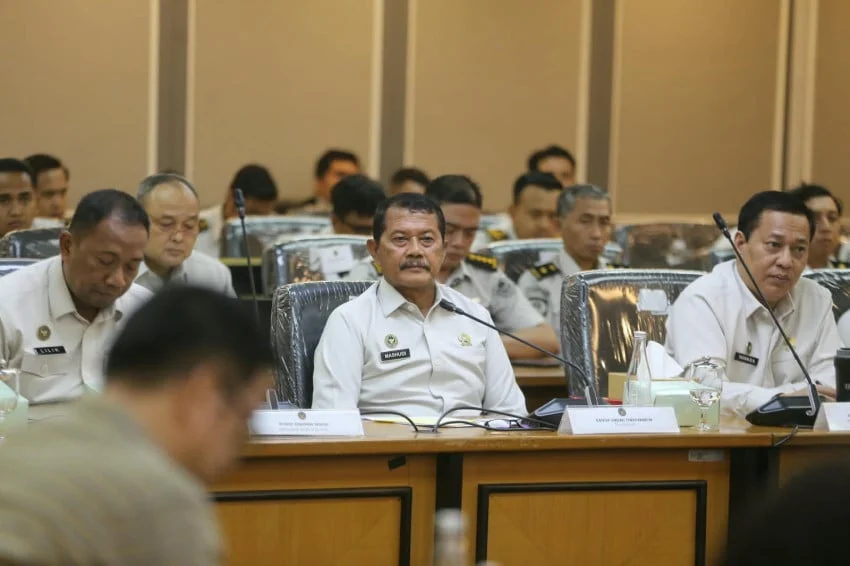
The announcement was delivered by the Director General during a high-stakes, official Hearing Session (Rapat Dengar Pendapat/RDP) convened with Commission XIII of the House of Representatives (DPR RI) at the parliamentary complex in Senayan, Jakarta. The directive marks a significant turning point in the government’s ongoing efforts to audit institutional governance, eliminate unauthorized modifications, and reassert centralized control over facilities that have historically struggled with infrastructure irregularities and administrative deviations.
Strict Enforcement and Directives Issued Nationwide
Addressing members of the parliamentary oversight committee, Mashudi emphasized that the Ministry of Immigration and Corrections is treating the matter with the utmost seriousness, leaving no room for leniency or non-compliance by regional directors or local prison wardens.
"What is certain is that we have issued explicit orders to all ranks of prison governors, detention center heads, and heads of prison security (KPLP) to inspect, regulate, and demolish all buildings that do not comply with official architectural, security, and administrative provisions," Mashudi stated firmly during the parliamentary session. "We have already dispatched official circulars and formal letters to all Regional Office Heads (Kakanwil) and Technical Implementation Unit Heads (Ka UPT) operating across our entire jurisdictional network."
The directive is not merely a suggestion but an enforceable administrative mandate. Mashudi made it unequivocally clear that the central government will monitor local compliance closely, issuing a stern warning to any regional official who attempts to delay, obstruct, or ignore the demolition order.
"Regarding the recommendations resulting from this oversight, we are not playing games. We will take decisive, punitive action against any Regional Office Head or Prison Warden who fails to execute these demolitions. Any structure found to be outside the bounds of established legal and operational guidelines will be systematically torn down," he added.
Background Context: The Cibinong Penitentiary Controversy
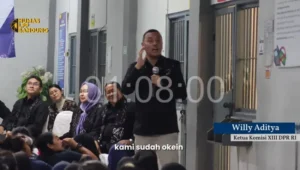
The nationwide crackdown on unauthorized infrastructure is a direct administrative and political fallout from intense parliamentary grilling regarding irregularities discovered at specific facilities, most notably the Class IIA Penitentiary in Cibinong, West Java. In the days leading up to the RDP, members of Commission XIII expressed profound outrage during oversight sessions, directly interrogating local prison leadership over unauthorized structural additions and severe governance discrepancies.
During previous inquiry sessions, parliamentarians openly criticized the management of the Cibinong facility, accusing local leadership of administrative deception. Tension peaked when members of the House openly challenged the warden, with statements highlighting a profound breach of trust between local facility administrators and top ministerial authorities. Legislators pointed out that unauthorized buildings—ranging from informal commercial outposts and unregulated staff quarters to unauthorized visitor pavilions—compromised the security layout, spatial integrity, and primary rehabilitative mission of the institution.
The existence of these unregulated structures has long posed logistical and security challenges within the Indonesian correctional system. Historically, unauthorized modifications within prison complexes have created blind spots for surveillance, facilitated unauthorized communication channels, and strained the already limited oversight capabilities of correctional officers. By targeting these structural anomalies, the Ministry aims to re-establish standardized facility blueprints that prioritize high-level security, prisoner safety, and transparent administrative oversight.
Chronology of Events Leading to the Policy Shift
The unfolding of events that led to Dirjen Pas Mashudi’s sweeping directive can be traced through a distinct timeline of institutional oversight and legislative intervention:
- Initial Field Findings and Audits: Oversight bodies and investigative journalists previously flagged irregularities within several correctional facilities across West Java, noting structural expansions that lacked official budgetary approval, structural authorization, or alignment with Directorate General security standards.
- Parliamentary Inquiries and Committee Scrutiny: Commission XIII of the DPR RI, which oversees legal, human rights, and correctional affairs, initiated comprehensive inquiries into the state of infrastructure across various regional penitentiaries.
- Intense RDP Confrontations: Lawmakers directly confronted facility leaders, including the leadership of the Cibinong Penitentiary, regarding discrepancies between official ministry reports and physical realities on the ground, leading to sharp reprimands from elected representatives.
- Formal Recommendations Issued: Following rigorous investigative questioning, Commission XIII formally recommended that the Ministry of Immigration and Corrections take immediate, corrective action to dismantle unauthorized spatial modifications and penalize negligent administrators.
- Ministerial Response and Order Dispatch: In direct compliance with the parliamentary consensus, Dirjen Pas Mashudi announced the zero-tolerance policy, culminating in the formal dispatch of enforcement letters to all Regional Offices and Technical Implementation Units nationwide on Monday, September 28, 2026.
Data and Structural Challenges in the Indonesian Correctional System
The decision to demolish unauthorized structures underscores broader, systemic challenges facing the Directorate General of Corrections. According to recent data from the Ministry of Law, Human Rights, and Immigration, the Indonesian correctional system continues to grapple with chronic issues of overcrowding, understaffing, and infrastructure strains.
National detention facilities operate at an average occupancy rate that frequently exceeds safe capacities, sometimes reaching over 200% in major urban centers. This severe overpopulation places immense pressure on physical infrastructure. Over the years, local facility heads have occasionally resorted to ad-hoc, unauthorized expansions to manage growing inmate populations or accommodate administrative needs. However, these unmonitored structures frequently bypass rigorous architectural safety assessments, fire code regulations, and, most importantly, security protocols designed to prevent escapes and illicit contraband smuggling.
Security experts and institutional analysts note that standardized infrastructure is a vital component of modern penology. Facilities designed with clear lines of sight, secure perimeters, and strictly controlled access points minimize the risk of internal security breaches. The proliferation of makeshift or unauthorized buildings disrupts this delicate spatial equilibrium, creating vulnerabilities that compromise both staff safety and the security of the broader community.
Official Responses and Legislative Stance
Reactions from members of Commission XIII have been largely supportive of Mashudi’s swift and uncompromising stance, though lawmakers have emphasized that policy announcements must be matched by rigorous, verifiable field execution. Members of the legislative oversight body stressed that institutional reform within the correctional sector cannot succeed without absolute transparency and accountability at all levels of leadership.
During the hearing, legislators reiterated that the Ministry must not only tear down unauthorized physical structures but also conduct a comprehensive financial and administrative audit of how such constructions were initiated, funded, and permitted in the first place. Questions regarding potential collusion, budgetary misuse, and administrative oversight failures remain central to the ongoing parliamentary inquiry.
Furthermore, civil society organizations focusing on prison reform have cautiously welcomed the announcement. Representatives from legal aid and penal reform advocacy groups noted that while physical demolition is a necessary symbolic and practical step toward restoring order, it must be accompanied by broader structural reforms aimed at improving living conditions, reducing systemic corruption, and ensuring humane treatment for inmates in accordance with international human rights standards.
Broader Impact and Future Implications
The implementation of the nationwide demolition directive carries significant administrative, financial, and operational implications for the Ministry of Immigration and Corrections.
From an administrative perspective, the policy signals a major assertion of top-down authority by the central government over decentralized regional offices. By demanding strict adherence to central architectural and operational guidelines, Dirjen Pas Mashudi is signaling the end of unchecked autonomy for local prison wardens who previously operated with minimal oversight regarding infrastructure management.
Operationally, the removal of unauthorized buildings will require careful logistical planning. Correctional facilities must manage the temporary displacement of administrative functions or storage spaces while ensuring that ongoing security operations, prisoner rehabilitation programs, and daily institutional routines are not severely disrupted. The spotlight will remain heavily focused on the Class IIA Penitentiary in Cibinong, which is expected to serve as the benchmark and primary testing ground for the execution of the demolition orders.
Economically, while the demolition of recently erected structures may represent a temporary loss of invested local resources, the long-term fiscal benefits of enforcing standardized, secure, and legally compliant infrastructure are expected to outweigh the immediate costs. By eliminating structural vulnerabilities, the Ministry can reduce long-term security expenditures associated with monitoring high-risk, non-standard zones within prison walls.
As the Ministry of Immigration and Corrections moves forward with its enforcement timeline, the success of this initiative will be measured by its thoroughness, consistency, and the extent to which it prevents future unauthorized construction. With the full backing of parliamentary oversight committees, the Directorate General of Corrections has positioned institutional discipline and infrastructural integrity as the foundational pillars for the future of Indonesia’s correctional system.