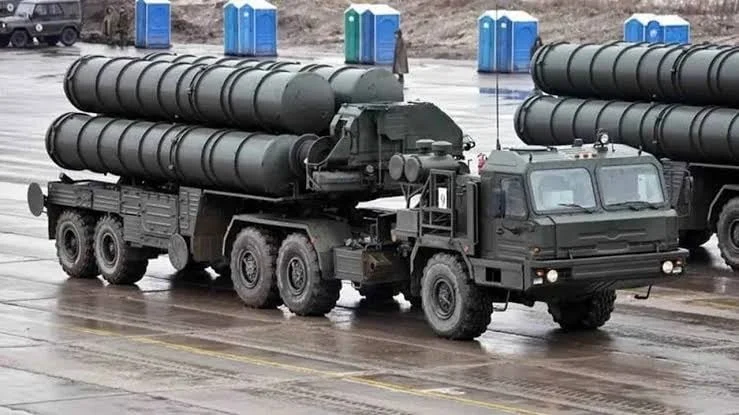
Moscow has signalled its willingness to relocate its advanced S-400 Triumph surface-to-air missile systems currently stationed in Turkey to a third nation, a diplomatic and military shift that could potentially break a years-long deadlock between Ankara and Washington. Kremlin officials confirmed that discussions are underway regarding the potential transfer, a development that could pave the way for Turkey to re-enter the multi-billion-dollar Lockheed Martin F-35 Lightning II joint strike fighter program.
The procurement of the Russian-made air defense system has remained one of the most contentious friction points within the North Atlantic Treaty Organization (NATO) alliance over the past decade. If finalized, the removal of the S-400 hardware from Turkish soil would eliminate the primary technical and political obstacle that led to the imposition of American sanctions against Ankara, fundamentally reshaping geopolitical dynamics in the Eastern Mediterranean and the broader Middle East.
Historical Context and the Roots of the Crisis
The origins of the controversial defense procurement trace back to 2017, a period marked by profound strategic divergence between Turkey and the United States. Ankara, seeking to bolster its domestic air defense capabilities following persistent security concerns along its southern border with war-torn Syria, engaged in high-level negotiations with Moscow. At the time, Turkish leadership expressed frustration over what it perceived as a lack of willingness from its Western allies—specifically the United States—to share critical air defense technology and Patriot missile battery systems on favorable terms.
Despite repeated warnings from Washington and other NATO member states, Turkey finalized the purchase of the S-400 Triumf system, manufactured by Almaz-Antey, in a deal valued at approximately $2.5 billion. Western military officials argued vociferously that the deployment of the Russian system within a NATO member state posed an intolerable security risk. The primary concern centered on the S-400’s advanced radar capabilities, which intelligence analysts feared could be used to gather sensitive operational data on Western stealth aircraft, including the fifth-generation F-35 fighter jet, thereby compromising the alliance’s collective air superiority.
The diplomatic fallout was swift and severe. In July 2019, the United States formally suspended Turkey from the F-35 program—a project in which Ankara was not only a customer slated to purchase over 100 aircraft but also a critical co-developer that manufactured various fuselage and engine components. By December 2020, the U.S. government escalated the pressure by enacting mandatory sanctions under the Countering America’s Adversaries Through Sanctions Act (CAATSA). These punitive measures targeted Turkey’s Presidency of Defense Industries (SSB), freezing asset transactions and denying export licenses to key Turkish defense entities.
Moscow’s Conditions for Relocation
The recent momentum toward resolving the crisis emerged from statements made by Russian Foreign Minister Sergey Lavrov. Speaking to state-controlled media outlet TASS, Lavrov outlined the Kremlin’s official stance regarding the potential redeployment of the S-400 batteries. According to the top Russian diplomat, Moscow is open to transferring the sophisticated missile systems to another sovereign state, provided specific geopolitical and diplomatic criteria are met.
"There is a possibility of such a transfer if the recipient nation is a responsible state that maintains friendly and constructive relations with the Russian Federation," Lavrov stated. He emphasized that Moscow would act upon formal requests from interested governments, signaling that the hardware would not simply be abandoned or returned without diplomatic consideration.

While Russian authorities have not publicly named prospective destination countries, defense analysts suggest that nations in regions friendly to Moscow, such as parts of Asia, Latin America, or the broader Global South seeking reliable long-range air defense architecture, could emerge as prospective buyers or recipients. For Russia, offloading the hardware allows it to monetize or diplomatically leverage military assets currently tied down in a geopolitical stalemate, while maintaining strategic alignment with nations outside the Western sphere of influence.
Chronology of Key Events
- December 2017: Turkey and Russia formally sign a loan and procurement agreement for the delivery of S-400 missile defense systems.
- July 2019: The first components of the S-400 system arrive at Mürted Air Base near Ankara; the United States officially suspends Turkey from the F-35 program.
- December 2020: Washington imposes CAATSA sanctions on Turkey’s defense procurement agency, the SSB, citing the operational activation of the S-400 systems.
- 2021–2024: Bilateral negotiations stall as Turkey insists on maintaining its sovereign right to purchase defense equipment, while U.S. lawmakers maintain strict legislative barriers against lifting sanctions.
- September 2026: Russian Foreign Minister Sergey Lavrov announces that Moscow is open to transferring the S-400 systems to a friendly third country, opening a new pathway for diplomatic resolution.
Implications for NATO Unity and Regional Security
The potential removal of the S-400 systems from Turkey carries profound implications for transatlantic relations and the internal cohesion of NATO. For years, Western policymakers viewed the presence of Russian-built radar and missile batteries within a NATO airspace network as an operational vulnerability. Alliance commanders consistently maintained that the coexistence of Western stealth technology and Russian air defense nodes was fundamentally incompatible.
By signaling an openness to withdraw the hardware, Moscow appears to be acknowledging the shifting strategic realities in Ankara. Over the past two years, Turkish foreign policy has sought a careful diplomatic balance between maintaining its foundational commitments to NATO and preserving extensive economic and political ties with Russia. Resolving the S-400 dispute would allow Ankara to mend fences with Washington without appearing to capitulate entirely to Western pressure, utilizing the third-party transfer mechanism as a face-saving diplomatic off-ramp.
Furthermore, a successful resolution could reinvigorate defense industrial cooperation between Turkey and the United States. Turkish aerospace companies that were unceremoniously dropped from the F-35 supply chain could potentially seek reintegration, while the Turkish Air Force—which currently relies on aging fleets of F-16 Fighting Falcons—could resume its pursuit of modernizing its tactical aviation capabilities.
Official Reactions and Anticipated Next Steps
As of yet, the Turkish Ministry of National Defense and the U.S. State Department have not issued definitive joint statements confirming an immediate operational timeline for the physical removal of the S-400 batteries. However, diplomatic channels in both capitals are reportedly reviewing the technical feasibility of the proposed relocation.
U.S. congressional leaders, who hold significant sway over arms exports and the lifting of CAATSA sanctions through legislative oversight, have historically adopted a hardline stance. Lawmakers have repeatedly insisted that any removal of sanctions must be preceded by the complete, verifiable, and permanent absence of Russian military infrastructure and personnel from Turkish territory. Lavrov’s recent comments directly address this prerequisite, potentially satisfying the legal thresholds required for Washington to reconsider its punitive measures.
Defense economists and geopolitical analysts note that while the logistical hurdles of dismantling and transporting heavy surface-to-air missile batteries are considerable, the political incentives for all parties involved are substantial. For Turkey, regaining access to the F-35 program resolves a critical modernization gap in its air defense strategy. For the United States and NATO, removing Russian radar technology from a strategic geopolitical choke point strengthens the alliance’s collective security architecture.
As diplomatic consultations progress, the coming months will determine whether Moscow’s willingness to relocate the S-400 systems translates into concrete operational steps, potentially closing one of the most volatile chapters in modern U.S.-Turkey-Russia relations.