
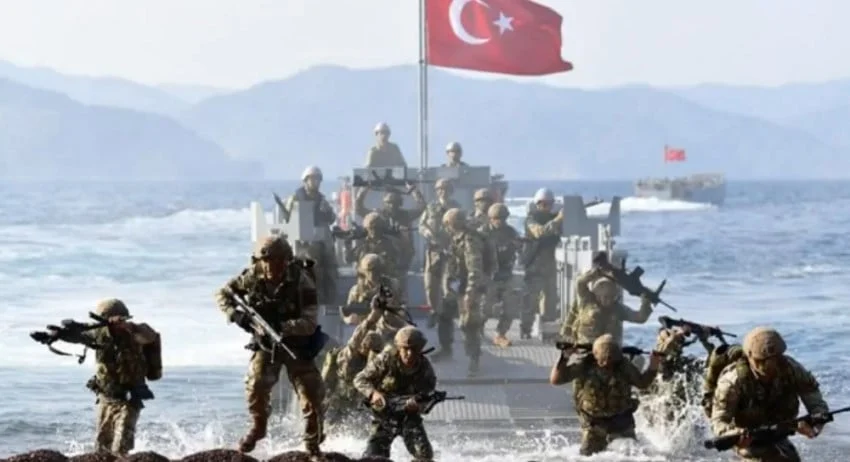
The geopolitical architecture of the Middle East faces a critical juncture as escalating hostilities from Yemen’s Houthi movement threaten the stability of the Arabian Peninsula. Amid mounting regional turbulence, the Republic of Turkey has formally announced its readiness to fulfill the military and technical requirements of the Kingdom of Saudi Arabia. This declaration follows a surge in cross-border missile and drone attacks targeting Saudi urban centers, vital energy infrastructure, and crucial maritime trade routes. The current security crisis serves as an immediate litmus test for the recently forged Mecca Mutual Defense Pact, a trilateral security framework signed by Saudi Arabia, Turkey, and Pakistan. As global markets monitor the security of energy corridors through the Red Sea, the unfolding situation highlights a profound shift in regional alliance systems, collective security frameworks, and multi-lateral defense cooperation.
Background and Context of the Regional Escalation
The friction currently testing Saudi security infrastructure is deeply rooted in a complex matrix of regional conflicts and protracted proxy warfare. For years, the Houthi movement—officially known as Ansar Allah—has maintained effective control over large swathes of Yemen, including the capital city of Sana’a. Despite prolonged military campaigns led by a Saudi-led coalition, the insurgent group has substantially advanced its offensive and defensive military capabilities, largely through the acquisition and domestic assembly of advanced unmanned aerial vehicles (UAVs) and ballistic missiles.
The theater of conflict expanded significantly following a broader geopolitical confrontation involving the United States, Israel, and Iran. The intensification of hostilities in February catalyzed a domino effect across the Middle East, drawing non-state actors and regional powers into a wider web of confrontation. Within this volatile environment, the Houthis have capitalized on their strategic geographic position along the Bab-el-Mandeb strait and the southern Red Sea. By tightening their control over these vital maritime chokepoints, the group has successfully disrupted international shipping lanes. This disruption has become particularly acute for Riyadh, which relies heavily on Red Sea routes as an alternative corridor for oil exports, especially given potential vulnerabilities and blockages in the strategic Strait of Hormuz. Consequently, Saudi Arabia’s territorial integrity and economic lifelines have faced persistent asymmetrical assaults, necessitating a recalibration of its national security and defense procurement strategies.
The Genesis and Architecture of the Mecca Mutual Defense Pact
The urgency of these security challenges catalyzed a landmark diplomatic and military realignment last month, culminating in the signing of the Mecca Mutual Defense Pact. Conceived as a robust shield against escalating asymmetric and conventional threats, the trilateral treaty unites three of the most potent military forces in the Islamic world: Saudi Arabia, Turkey, and Pakistan.
Under the core tenets of the Mecca Pact, the signatories have codified a doctrine of collective security. The treaty explicitly stipulates that any armed aggression directed against the sovereign territory, infrastructure, or military assets of any single member state shall be legally and operationally interpreted as an assault against all three signatory nations. This mutual defense clause mirrors collective security models seen in international alliances such as NATO, albeit tailored to the specific geopolitical realities of the Middle East and South Asia.
By incorporating Turkey—a major NATO military power possessing advanced defense manufacturing capabilities—alongside Pakistan, a recognized nuclear-armed state with extensive conventional forces, Saudi Arabia has significantly diversified its security umbrella. The pact moves beyond traditional bilateral arms sales or intelligence-sharing agreements, aiming to establish an integrated deterrence posture. However, analysts have consistently noted that such ambitious treaties are rarely tested so soon after their inception. The ongoing Houthi aerial bombardment campaign has therefore transformed the Mecca Pact from a diplomatic milestone into an active operational framework.
Turkish Official Statements and the Scope of Potential Assistance
The operational readiness of the trilateral pact was underscored by high-level diplomatic and security declarations from Ankara. Speaking to the Turkish broadcasting network NTV, Turkish Minister of Foreign Affairs Hakan Fidan addressed the deteriorating security situation on the Arabian Peninsula, confirming that Turkey’s commitments under the defense agreement remain absolute.
Minister Fidan explicitly noted that Arab Saudi Arabia is confronting severe threats to its territorial integrity and national sovereignty due to sustained and increasingly sophisticated Houthi strikes. Acknowledging these challenges, Fidan stated that Riyadh may require targeted military assistance, particularly concerning complex technical capabilities, air defense optimization, and counter-drone systems. He affirmed that Ankara stands fully prepared to fulfill these requirements, acting in close coordination with both Saudi authorities and Islamabad.
"We see very serious attacks targeting the territorial integrity and sovereignty of Saudi Arabia," Fidan told NTV. "In the framework of our existing defense agreements and the newly established trilateral pact, we are fully prepared to extend the necessary support to ensure regional stability and uphold the security of our allies."
While Turkish officials have maintained diplomatic discretion regarding the precise deployment of combat troops, defense analysts interpret the offer of "technical assistance" to encompass the deployment of advanced electronic warfare systems, radar calibration expertise, military advisory personnel, and the supply of combat-proven Turkish defense hardware, such as Bayraktar TB2 and Akinci drones, which have demonstrated high operational efficacy in various modern conflict zones.
Chronology of Recent Escalations
To understand the current urgency, it is essential to examine the sequence of events that brought Saudi-Turkish defense cooperation to the forefront:
- Early February: A major escalation occurs as regional tensions involving Iran, the United States, and Israel trigger secondary fronts across the Middle East.
- Mid-February: Houthi forces increase the frequency of maritime harassment operations in the Red Sea, effectively utilizing the waterway as leverage amid broader geopolitical friction and threats to the Strait of Hormuz.
- March: Strategic energy infrastructure within the Arabian Peninsula experiences a notable uptick in coordinated drone and missile salvos, exposing gaps in localized air defense perimeters.
- Late March: Recognizing the shared vulnerabilities, delegations from Riyadh, Ankara, and Islamabad finalize and sign the Mecca Mutual Defense Pact, establishing the principle of collective retaliation.
- April: Minister of Foreign Affairs Hakan Fidan publicly addresses the relentless Houthi campaign, explicitly confirming Turkey’s readiness to provide military and technical support to Saudi Arabia under the terms of the new pact.
Implications for Regional Security and Global Energy Markets
The activation of the Mecca Mutual Defense Pact through Turkish military assistance carries profound implications for the geopolitical equilibrium of the Middle East. For decades, Gulf Cooperation Council (GCC) states relied heavily on Western security guarantees, primarily from the United States, to deter regional adversaries. However, shifting strategic priorities in Washington and perceived inconsistencies in security commitments have prompted nations like Saudi Arabia to pursue a multi-aligned foreign policy. By integrating non-Western military powers into its primary defense architecture, Riyadh is diversifying its strategic partnerships.
The involvement of Turkish military expertise in the defense of Saudi airspace also signals a broader resurgence of Ankara’s geopolitical footprint in the Gulf. Historically, diplomatic relations between Turkey and Saudi Arabia experienced periods of friction; however, pragmatic economic and security imperatives have successfully bridged past divides. This defense cooperation not only strengthens Saudi Arabia’s defensive posture against asymmetric threats but also positions Turkey’s burgeoning defense industry as a primary provider of high-tech military solutions in the region.
From an economic perspective, the stabilization of Saudi infrastructure and the securing of Red Sea shipping lanes are matters of paramount global concern. Any prolonged disruption to Saudi oil facilities or maritime transit corridors directly impacts global energy supplies, triggering inflationary pressures and market volatility. By signaling a credible, multi-national deterrence mechanism, the Saudi-Turkish-Pakistani alignment aims to reassure international energy markets that critical supply chains remain protected against militant interdiction.
Conclusion
As the Houthi movement continues its campaign of cross-border missile and drone strikes, the Mecca Mutual Defense Pact is undergoing its baptism by fire. Turkey’s definitive offer to assist in safeguarding Saudi sovereignty marks a pivotal moment in contemporary Middle Eastern diplomacy and security strategy. By operationalizing their collective defense commitments, Riyadh and Ankara are demonstrating a new paradigm of regional security management—one driven by indigenous alliances and mutual strategic interdependence. Whether this robust posture will successfully deter further escalation and stabilize the volatile southern approaches of the Arabian Peninsula remains to be seen, but the message of deterrence has been unequivocally delivered.
