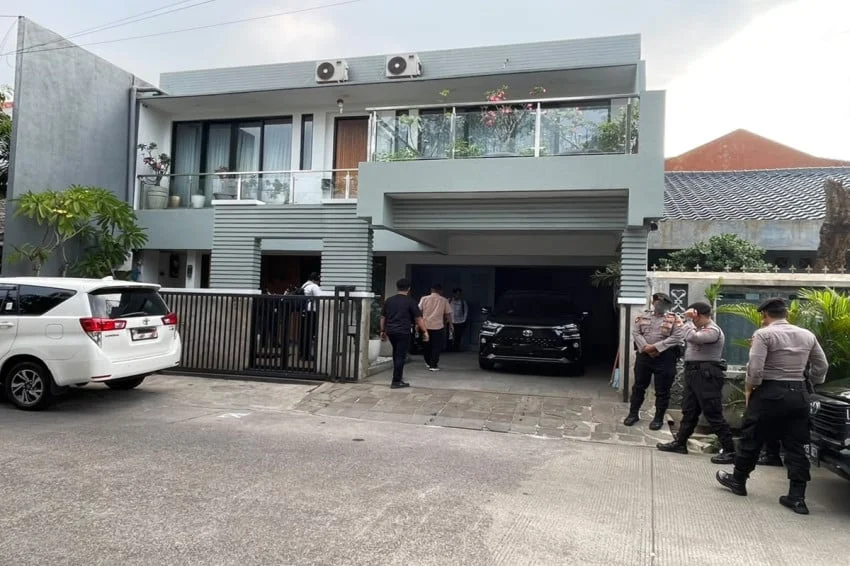
The Corruption Eradication Commission (KPK) has intensified its investigation into an ongoing bribery scandal involving high-profile public figures and law enforcement officials. In the latest development, anti-corruption investigators targeted a residential property belonging to active police officer Ipda Yayat Sudrajat, locally identified by his initials YYS. The raid, conducted on Monday, September 21, 2026, marks the second time authorities have searched a property linked to Yayat as they trace the intricate financial web behind a massive advance project bribery scheme.
The sweeping investigation stems from a high-stakes corruption case centered on the inactive Regent of Bekasi, Ade Kuswara Kunang. As federal investigators continue to comb through financial trails, asset tracking, and witness testimonies, the inclusion of a law enforcement officer highlights the complex, multi-layered nature of the alleged conspiracy. The KPK remains steadfast in its mission to recover state losses, map out illicit asset distributions, and hold all complicit actors accountable under Indonesian law.
Background and Context of the Bribery Scandal
The core of the investigation revolves around systemic corruption within local governance, specifically focusing on advance project bribery practices—commonly known in Indonesia as suap ijon proyek. In these illicit arrangements, government officials allegedly accept advance kickbacks or bribes from contractors in exchange for securing guaranteed victories in municipal procurement auctions and infrastructure project tenders.
Ade Kuswara Kunang, who served as the Regent of Bekasi before being suspended following his legal troubles, became the primary target of the KPK’s anti-graft operations after investigators uncovered extensive financial irregularities. The probe quickly expanded beyond the regent’s immediate administrative circle when intelligence reports and forensic financial analyses pointed toward external facilitators, intermediaries, and individuals who allegedly helped launder or conceal the proceeds of the corruption.
Ipda Yayat Sudrajat emerged as a person of interest as investigators traced the movement of suspicious funds and property acquisitions. While law enforcement officers are expected to uphold the rule of law, the involvement of active personnel in high-profile corruption networks underscores persistent institutional challenges regarding integrity and oversight within the broader apparatus of the state.
Chronology of the Investigation and Raids
The legal proceedings and investigative steps taken by the KPK against the suspects have unfolded over several months, marked by systematic intelligence gathering, asset mapping, and targeted enforcement actions:
- Initial Discovery and Arrests: The investigation gained major momentum when the KPK launched sting operations targeting municipal infrastructure projects in Bekasi, leading to the designation of Ade Kuswara Kunang as a primary suspect in the bribery ring.
- Asset Tracing Phase: Following the initial arrests, financial forensic teams began tracking the flow of illicit money, discovering that corruption proceeds were frequently converted into tangible assets, luxury real estate, and holdings distributed across various jurisdictions.
- First Search Operation (Cibubur): As the trail led investigators toward associates and intermediaries, the KPK executed its first major search at a residential property linked to Ipda Yayat Sudrajat located in the Cibubur area.
- Second Search Operation (Depok): Building upon digital evidence and documents seized during the initial raid, anti-corruption investigators returned on Monday, September 21, 2026, to conduct a secondary search at another residential property owned or utilized by Yayat in Depok.
Extent of Alleged Asset Holdings and Distribution
During official briefings following the latest enforcement actions, KPK Spokesperson Budi Prasetyo provided insight into the scale of wealth accumulation suspected to be tied to the case. Investigators believe that Ipda Yayat Sudrajat possesses a vast portfolio of properties and luxury assets acquired through questionable financial means.

According to preliminary findings by financial investigators, the suspect allegedly holds up to a dozen high-value assets. These holdings are not concentrated in a single municipality but are strategically dispersed across several key urban and suburban centers in Western Java and the capital region. The geographical distribution of these contested properties includes:
- The Special Capital Region of Jakarta
- Bekasi Regency and Municipality
- Cibubur
- Depok
- Bogor
- Sukabumi
- Karawang
The dispersion of these assets across multiple jurisdictions suggests a deliberate effort to obscure ownership trails and evade regulatory or law enforcement scrutiny. KPK financial analysts are currently working alongside the Financial Transaction Reports and Analysis Center (PPATK) to examine deeds, bank accounts, and corporate filings associated with these properties to establish direct links to the Bekasi project bribery funds.
Official Statements and Procedural Transparency
The KPK has maintained a measured approach regarding the immediate findings of the Depok search. When pressed by media representatives regarding the specific items seized during the operation, Budi Prasetyo noted that a comprehensive inventory process is still underway. Investigators must catalog all physical documents, electronic devices, and financial records before making formal disclosures to the public.
"Investigators have once again searched the residence of Mr. YYS located in the Depok area," Budi stated during a press briefing at the KPK headquarters. Regarding the details of the seized evidence, he added that a full forensic review must be completed first. "We are still consolidating the findings from the field, and further developments will be announced as the investigation progresses."
Furthermore, the KPK reiterated its commitment to pursuing every lead, regardless of the professional background or institutional affiliation of the individuals involved. The active participation of a police officer in a municipal bribery case has drawn significant public attention, prompting calls from civil society organizations for transparent cooperation between the National Police (Polri) and the anti-graft commission.
Broader Implications and Institutional Impact
The ongoing legal saga surrounding Ade Kuswara Kunang and the expansion of the inquiry into individuals like Ipda Yayat Sudrajat carries profound implications for governance and anti-corruption enforcement in Indonesia.
- Erosion of Public Trust in Local Governance: The involvement of a sitting regional head in systematic procurement corruption demonstrates vulnerabilities in regional financial management. Infrastructure projects, which are meant to serve public welfare and stimulate local economies, are frequently compromised by rent-seeking behaviors and elite collusion.
- Inter-Agency Accountability: The inclusion of law enforcement personnel in graft investigations underscores the critical need for internal reform and rigorous ethical oversight within security institutions. Maintaining public confidence requires absolute transparency and an uncompromised willingness to prosecute lawbreakers, irrespective of their uniform or badge.
- Asset Recovery Challenges: The multi-region dispersion of real estate and luxury holdings highlights the sophisticated methods modern corruption networks use to launder illicit gains. For the KPK, tracing and successfully confiscating these assets is vital not only for punitive justice but also for returning state financial losses to the public treasury.
As the legal process moves forward, the KPK is expected to summon additional witnesses, conduct further forensic examinations of digital evidence, and potentially issue new suspect designations. The unfolding case serves as a stark reminder of the ongoing challenges facing Indonesia’s anti-corruption framework, emphasizing that structural reform and vigilant oversight remain indispensable in the fight against public sector graft.