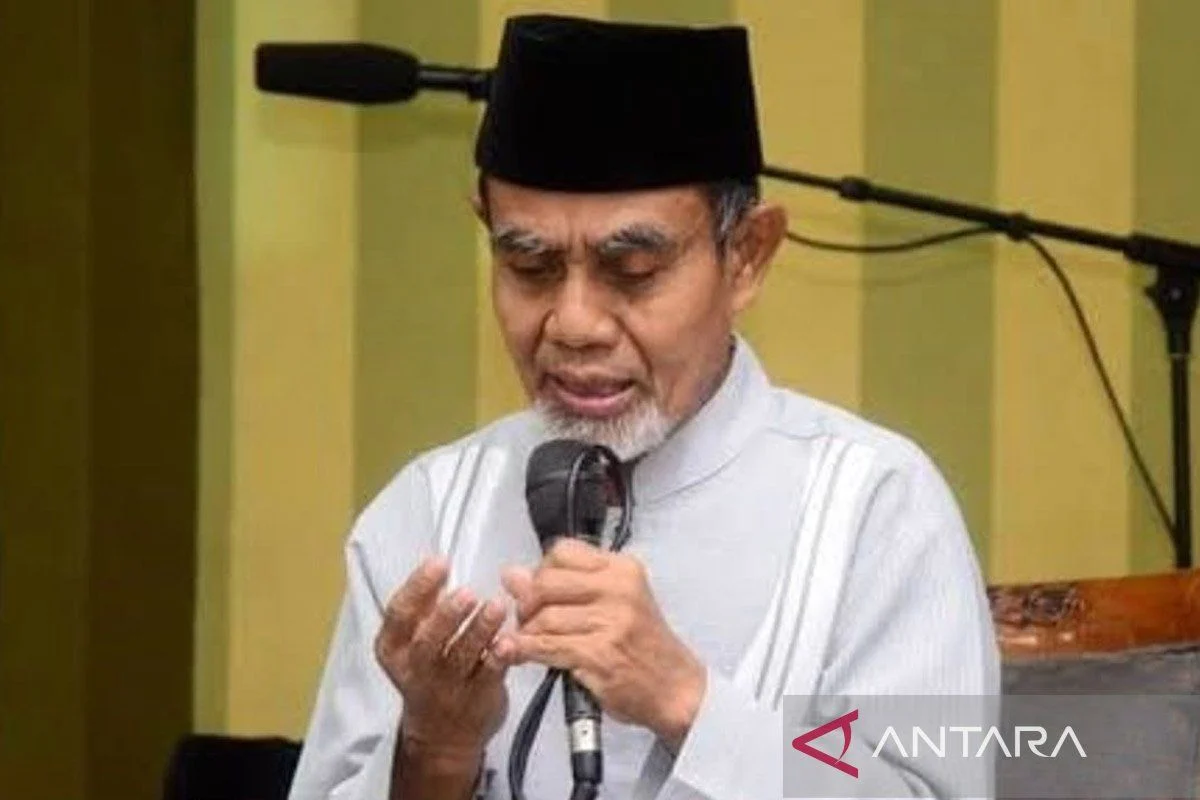
The year 2026 marks a historic milestone for Islamic education in Indonesia as Pondok Modern Darussalam Gontor commemorates its centenary, with KH Hasan Abdullah Sahal standing as the central pillar of this monumental celebration. As one of the primary leaders of this influential institution, KH Hasan Abdullah Sahal has navigated the pesantren through decades of institutional evolution, culminating in a grand centennial reception held on September 19, 2026, in Ponorogo, East Java. His leadership not only reflects the continuity of the founding vision of the "Trimurti"—the three legendary founders—but also underscores the resilience of the Gontor model in an increasingly globalized educational landscape.
A Legacy Rooted in the Trimurti
Born in the village of Gontor on May 24, 1947, KH Hasan Abdullah Sahal is the sixth son of KH Ahmad Sahal, one of the three architects of the institution known as the Trimurti, alongside KH Zainuddin Fananie and KH Imam Zarkasyi. Growing up within the cradle of the boarding school environment, his life has been inextricably linked to the pedagogical philosophy established by his father and his colleagues.
The Gontor system, famously centered on the concept of the "Kulliyyatu-l-Mu’allimin Al-Islamiyyah" (KMI), emphasizes a blend of religious orthodoxy and modern educational structure. For KH Hasan, this environment was not merely a place of study but a lifelong vocation. His formal education began at Gontor in 1959, and he completed his KMI training by 1965. This early exposure to the Gontor curriculum provided him with a foundational understanding of the "Gontor spirit," a culture of discipline, sincerity, and intellectual rigor that he would later champion on the national stage.
Academic Pursuits and Global Perspective
The intellectual profile of KH Hasan Abdullah Sahal is defined by a cosmopolitan approach to Islamic studies. After his formative years in Ponorogo, he expanded his academic horizons significantly. Following his studies at the Faculty of Ushuluddin at the Institut Pendidikan Darussalam (IPD) in Gontor, he embarked on an international academic journey that brought him to some of the most prestigious institutions in the Islamic world.
In 1967, he enrolled at the Faculty of Da’wah and Ushuluddin at the Islamic University of Madinah in Saudi Arabia. This period was transformative, exposing him to diverse interpretations of Islamic theology and global pedagogical practices. Decades later, in 1992, he pursued further specialization in Hadith at Al-Azhar University in Egypt. This combination of deep, traditional Islamic scholarship and exposure to diverse intellectual climates has allowed him to lead Gontor with a perspective that balances preservation of tradition with contemporary relevance.
Chronology of Leadership
KH Hasan Abdullah Sahal’s formal tenure as a leader of Gontor began in 1985, a period of significant transition for the institution. He was appointed to the leadership council alongside KH Shoiman Luqmanul Hakim and the late KH Abdullah Syukri Zarkasyi. This troika steered the institution through the late 20th century, a time when Gontor began to aggressively expand its network of affiliated pesantren across the Indonesian archipelago.
The leadership landscape at Gontor shifted following the passing of Prof. Dr. KH Amal Fathullah Zarkasyi on January 3, 2026. Since then, KH Hasan has served alongside KH Muhammad Akrim Mariyat, ensuring a seamless transition during the institution’s most significant anniversary year. His leadership style, often characterized by a stern commitment to the "Panca Jiwa" (Five Spirits) of Gontor, has been instrumental in maintaining the stability of the institution while it navigated the complexities of its centennial expansion.
Educational Innovation and Institutional Expansion
Beyond his direct management of Gontor, KH Hasan has been a prolific founder of educational initiatives. Recognizing the need for specialized learning environments, he founded the Pondok Pesantren Putri Al-Mawaddah in 1989 in Coper, Jetis, Ponorogo, aimed at providing high-quality Islamic education for young women. In 1992, he established the Pondok Tahfidz Quran Al-Muqoddasah, reinforcing his commitment to the preservation of the Quranic tradition.
These initiatives represent a broader strategy of institutionalizing the Gontor model. By diversifying the types of schools under his influence, KH Hasan has helped create a robust ecosystem that supports the academic, spiritual, and vocational development of thousands of students. His literary contributions, such as Allamatnil Hayah (Life Taught Me) and Membina Keluarga Muslim (Building a Muslim Family), serve as pedagogical guides that bridge the gap between academic theory and the lived experience of his students.
The Centenary Celebration and Global Reach
The 100-year anniversary of Gontor in 2026 was not merely a local event; it was a state-level recognition of the institution’s contribution to the Indonesian nation. The presence of President Prabowo Subianto at the September 19 reception highlighted the political and social significance of the pesantren. During his address, KH Hasan articulated a vision for the future that extended beyond the school’s gates, calling for the consolidation of kiai and alumni to address the challenges of the next century.
His international reach is evidenced by his extensive travels across Asia, Europe, and Australia. These visits were not merely ceremonial; they were part of a sustained effort to build a global network of Gontor alumni—a demographic that plays a vital role in the civil society of many nations. On May 30, 2026, his message delivered from the Masjid Nabawi in Madinah resonated with this global community, emphasizing that the "second century" of Gontor must focus on digital literacy, international diplomacy, and scientific advancement while remaining anchored in the core tenets of Islamic values.
Sociopolitical Implications and Future Outlook
The leadership of KH Hasan Abdullah Sahal at this critical juncture provides a stabilizing force for one of Indonesia’s most influential educational institutions. As the nation grapples with the impact of technological disruption and ideological polarization, Gontor remains a "neutral" ground—a place that prides itself on being "above all groups" and "for all groups."
The implications of his leadership are profound. By successfully guiding Gontor through its centennial, KH Hasan has demonstrated that traditional Islamic boarding schools can adapt to the modern world without sacrificing their foundational character. The success of the 100-year celebration, marked by high-level government engagement and widespread public participation, reinforces the reality that the Gontor model is a cornerstone of the Indonesian educational identity.
Looking ahead, the focus for Gontor under the guidance of KH Hasan and his colleagues will likely involve the modernization of its curriculum to include advanced technological studies, environmental stewardship, and a greater emphasis on soft skills required for the global economy. The challenge, as articulated by KH Hasan in his recent speeches, lies in maintaining the balance between the "spirit of the founders" and the "needs of the future."
As the institution embarks on its second century, the legacy of KH Hasan Abdullah Sahal is already firmly established. He stands as a custodian of a pedagogical tradition that has shaped millions of lives. His ability to connect with the younger generation, while simultaneously honoring the wisdom of the past, ensures that the spirit of the Trimurti remains not just a historical reference, but a living, breathing force in the landscape of Indonesian education. The path forward for Gontor is paved with the lessons of the past century, a journey that KH Hasan continues to lead with unwavering dedication to the intellectual and spiritual enlightenment of the Muslim community.