
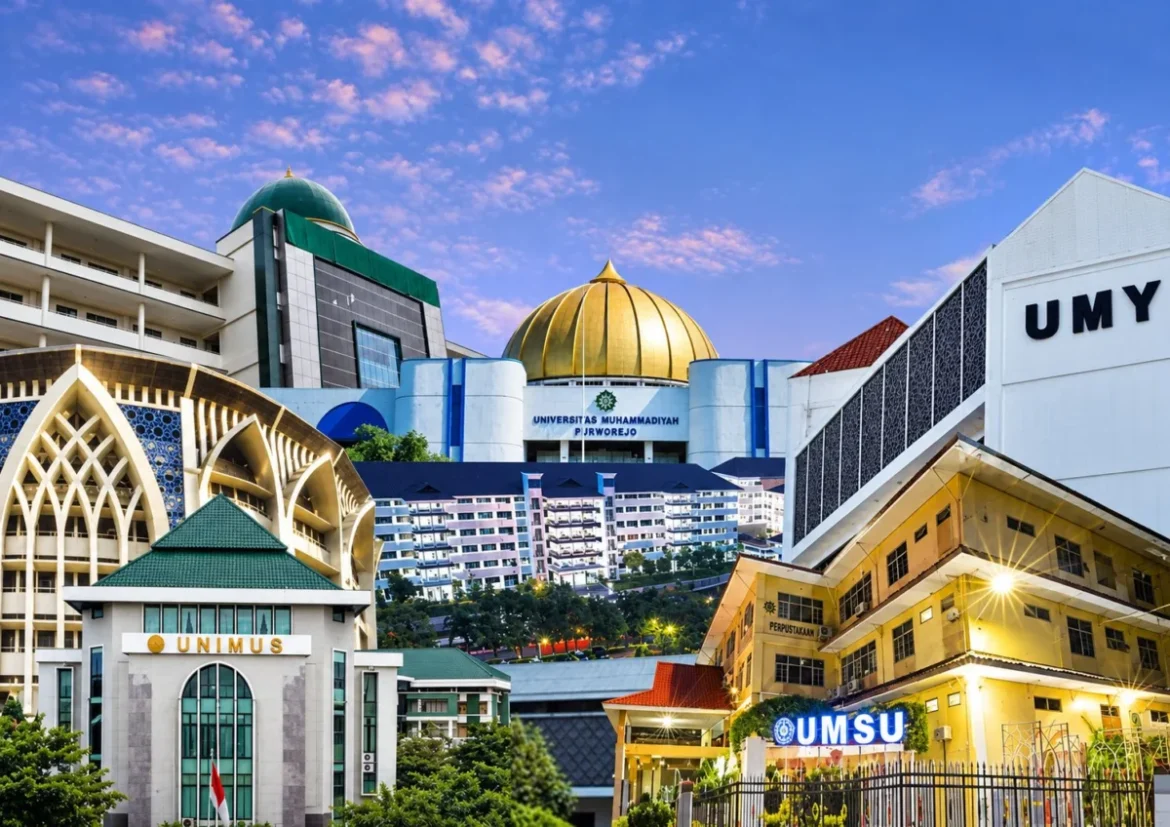
The persistent expansion of the Perguruan Tinggi Muhammadiyah-’Aisyiyah (PTMA) network, which currently encompasses 165 higher education institutions spanning across the Indonesian archipelago and extending internationally to Malaysia, represents the culmination of a visionary educational blueprint conceived decades prior to the nation’s independence. Far from being a recent phenomenon or an opportunistic response to modern educational demands, the establishment of universities and colleges under the auspices of Muhammadiyah stems from foundational discussions initiated by early organization leaders in the pioneering decades of the 20th century.
This deep-rooted historical trajectory highlights an institutional commitment to educational reform, societal progress, and intellectual leadership. As these institutions continue to evolve and adapt to the demands of the twenty-first century, their foundational ethos remains firmly anchored in the principles of progressive Islamic renewal, known locally as tajdid, which seeks to harmonize religious devotion with empirical science, technological advancement, and institutional resilience.
Historical Roots and Early Conceptualization
The conceptual framework for establishing higher education institutions within Muhammadiyah was not forged in the post-colonial era of nation-building, but rather during the nascent stages of the Indonesian nationalist movement. Historical archives indicate that formal deliberations concerning advanced education began as early as July 1920. During a general membership meeting held on July 17, 1920, at the central headquarters (Hoofdbestuur) of Muhammadiyah in Kauman, Yogyakarta, the Head of the School Division, Kiai Hisyam, formally articulated the urgent need to project educational development beyond primary and secondary schooling into the realm of higher learning.
This early vision reflected a profound understanding among the leadership that sustainable social reform and community empowerment required native populations to attain advanced academic qualifications, professional expertise, and critical intellectual capacities. Kiai Ahmad Dahlan, the founder of Muhammadiyah, consistently emphasized that the organization must act as a dynamic agent of change, operating at the vanguard of societal transformation rather than merely reacting to external pressures.
Chronological Milestones in Muhammadiyah Educational Expansion
To fully comprehend the scale of the current 165 PTMA network, it is essential to examine the historical chronology that transitioned the organization from a localized socio-religious movement into a national educational powerhouse.
- 1912: Establishment of Muhammadiyah in Yogyakarta by Kiai Ahmad Dahlan, initially focusing on primary education, social welfare, and religious purification rooted in modern educational methodologies.
- July 17, 1920: The landmark meeting at the Hoofdbestuur Muhammadiyah Kauman where Kiai Hisyam formally introduced the concept of establishing higher education institutions.
- Mid-20th Century (Post-Independence): Active participation of Muhammadiyah intellectuals and leaders in the founding of premier national universities, notably the Universitas Islam Indonesia (UII) in Yogyakarta, which stands as one of the country’s oldest and most prestigious private higher education institutions.
- 1950s–1980s: Systematic establishment of dedicated Muhammadiyah academies, institutes, and universities across various provinces, addressing regional disparities in access to higher education.
- 1990s–2010s: Rapid consolidation, modernization, and standardization of PTMA infrastructure, focusing heavily on curriculum enhancement, accreditation, and scientific research capabilities.
- Present Era: Management of 165 institutions distributed extensively across Indonesia, ranging from large comprehensive universities to specialized technical colleges, alongside the establishment of international extensions such as Universiti Muhammadiyah Malaysia (UMM).
Reflections from Leadership on Institutional Legacy
Addressing academics, administrators, and students at Universitas Muhammadiyah Kalimantan Timur (UMKT) in Samarinda, Central Executive Board (PP) Muhammadiyah Chairman Ahmad Dahlan Rais elaborated on the historical interconnectedness of early Indonesian higher education and Muhammadiyah’s foundational figures.
"Before independence, we were already discussing higher education. Therefore, if we examine history objectively in Yogyakarta, there are several oldest tertiary institutions, notably Universitas Islam Indonesia. If we trace the founders, they were individuals from Muhammadiyah," Ahmad Dahlan Rais stated during his address.
He further emphasized that this historical footprint extends beyond the Special Region of Yogyakarta into Central Java and other provinces, where prominent figures and cadres of the organization instrumentalized their reformist ideas to build durable institutional frameworks. According to Dahlan Rais, the underlying philosophy of Muhammadiyah has always been oriented toward progressive advancement. "Muhammadiyah wants to walk at the front of change, not just walk in front of the house," he remarked, underscoring the organization’s proactive stance in anticipating future societal shifts rather than remaining passive observers.
Strategic and Philosophical Imperatives for the Future
In interpreting the enduring legacy of Kiai Ahmad Dahlan—who famously reminded his followers that Muhammadiyah today must differ from Muhammadiyah tomorrow—the leadership has consistently urged its members to adopt a strategic, reflective, and future-oriented mindset. Modern institutional management within the PTMA network requires moving beyond basic operational inquiries to address complex strategic questions regarding operational methodology, societal relevance, and global competitiveness.
This forward-looking perspective is deeply intertwined with the pedagogical methods historically employed by Kiai Ahmad Dahlan. Historical accounts note that Dahlan dedicated significantly more time—approximately eight months—to teaching Surah Al-Asr (Chapter of Time) compared to the three months spent teaching Surah Al-Ma’un (Chapter of Assistance). While Al-Ma’un serves as the foundational theological driver for philanthropic action, poverty alleviation, and social service, Al-Asr emphasizes the critical value of time, discipline, strategic planning, and collective perseverance in righteous and truthful endeavors.
"Therefore, if one wishes to be a member of Muhammadiyah who possesses sufficient knowledge and comprehensive insight, they should return to Al-Asr, without sidelining Al-Ma’un," Dahlan Rais explained. This balance between immediate humanitarian concern and long-term temporal strategy forms the philosophical bedrock of the modern PTMA network.
Socio-Economic Impact and Broader Implications
The existence of 165 institutions within the PTMA network carries profound implications for the socio-economic and educational landscape of contemporary Indonesia and the broader Southeast Asian region. By providing accessible, high-quality tertiary education—particularly in regions outside the traditional metropolitan centers of Java—these campuses serve as crucial engines of human capital development, regional economic stimulation, and social mobility.
- Democratization of Access: The geographic dispersion of PTMA campuses ensures that students from diverse economic backgrounds and remote regions have access to accredited, competitive degree programs without the financial burden of relocating to major urban hubs.
- Research and Innovation: Modern PTMAs have increasingly transitioned into active hubs for scientific research, technological innovation, and community-based problem-solving, addressing pressing local and national challenges such as environmental sustainability, public health, and economic resilience.
- Internationalization: The establishment of institutions like Universiti Muhammadiyah Malaysia signifies a strategic evolution toward cross-border educational engagement, regional academic collaboration, and the projection of progressive Islamic scholarship onto the international stage.
- Institutional Continuity: As an organizational movement defined by continuous motion, Muhammadiyah treats stagnation as an existential impediment. The ongoing expansion, digital transformation, and quality assurance accreditation of its universities ensure that the network remains responsive to the demands of the fourth industrial revolution and the changing global labor market.
Conclusion
The journey of Muhammadiyah higher education—from an ambitious discussion in a Yogyakarta meeting hall in 1920 to a robust international network of 165 institutions—demonstrates the enduring power of visionary leadership and strategic institutional planning. By continuously aligning its educational mission with the imperatives of temporal awareness, intellectual rigor, and social responsibility, the PTMA network remains a central pillar in the intellectual and structural development of modern society.
