The Indonesian Communist Party, historically known as Partai Komunis Indonesia (PKI), stands as one of the most polarizing and structurally consequential political phenomena in modern Southeast Asian history. Before its eventual dismantling and official prohibition in 1966, the PKI evolved from an underground anti-colonial apparatus into an electoral powerhouse, boasting millions of members and wielding substantial influence within the highest echelons of Indonesia’s state governance. The trajectory of the party encapsulates the turbulent sociopolitical currents of the 20th century, bridging the late Dutch colonial era, the crucible of the Indonesian National Revolution, the parliamentary experiments of the 1950s, the autocratic centralization of the Guided Democracy period, and the cataclysmic violence of 1965–1966. Decades after its demise, the historiography surrounding the PKI remains a subject of intense academic inquiry, archival preservation, and national reflection, touching upon unresolved questions of political responsibility, human rights, and the shaping of the contemporary Indonesian nation-state.
Foundations and the Colonial Era
The genesis of organized communist movements in the Dutch East Indies dates back to May 1914, with the establishment of the Indische Sociaal-Democratische Vereeniging (ISDV) by the Dutch socialist Henk Sneevliet and a small cadre of European and Indonesian intellectuals. Operating initially as a splinter faction within the Indies Social Democratic movement, the ISDV sought to inject Marxist ideology into the burgeoning anti-colonial consciousness of the local populace. Through strategic infiltration and ideological alignment with indigenous mass organizations—most notably Sarekat Islam—the movement expanded its operational footprint.
By May 1920, the organization formally transitioned into the Perserikatan Komunis di Hindia (PKH), later officially adopting the name Partai Komunis Indonesia (PKI) in 1924. As the party sought to mobilize the burgeoning proletariat and agrarian workforce against colonial hegemony, internal ideological fractures and radical factions within the leadership pushed for direct confrontation with the Dutch administration.
In November 1926, and subsequently spreading to West Sumatra in early 1927, the PKI spearheaded a premature, poorly coordinated armed insurrection against the Dutch colonial government. The rebellion was swiftly crushed by colonial security forces. In the aftermath, the Dutch administration unleashed severe repressive measures: thousands of party members and suspected sympathizers were arrested, and more than a thousand individuals were exiled to the harsh penal colony of Boven Digoel in remote Papua. The PKI was effectively driven underground, its leadership decimated, and its open political activities banned for the remainder of the colonial period.
The 1948 Madiun Affair and the Post-Independence Crisis
Following the Japanese occupation and Indonesia’s formal declaration of independence on August 17, 1945, the political landscape underwent a radical reconfiguration. The PKI re-emerged from clandestine networks to reassert itself within the national political sphere. However, the young republic was locked in an existential diplomatic and military struggle against returning Dutch colonial forces intent on re-establishing control.
Amidst severe economic austerity, cabinet instability, and ideological polarization between the republican government—led by President Sukarno and Vice President Mohammad Hatta—and leftist factions, tensions boiled over in September 1948. The immediate catalyst was the Rationalization Program (RERA) initiated by the Hatta cabinet, which aimed to downsize and professionalize the Indonesian military by demobilizing irregular armed units, including various pro-leftist militias.
On September 18, 1948, leftist groups coalesced under the banner of the Front Demokrasi Rakyat (FDR)—which included the PKI, the Socialist Party, and labor organizations—and seized control of Madiun, East Java. Proclaiming the "Soviet Republic of Indonesia," the insurgent leadership challenged the authority of the central government in Yogyakarta.
President Sukarno responded decisively, broadcasting an urgent appeal to the public to choose between him and Hatta or the Madiun insurrectionists. The Indonesian military, under the command of Colonel Sungkono and then-Colonel Abdul Haris Nasution, launched a rapid counter-offensive. Within weeks, the rebellion was neutralized. Key communist leaders, including Musso, were killed during military operations, while Amir Sjarifuddin and other prominent figures were subsequently captured and executed. The Madiun Affair left deep scars within the national consciousness, establishing a profound, enduring animosity between the military establishment, mainstream nationalist and religious groups, and the Indonesian communist movement.
Resurgence and Electoral Triumph in the 1950s
Despite the catastrophic setback of 1948, the PKI exhibited remarkable organizational resilience. By the early 1950s, under the dynamic new leadership of Dipa Nusantara (D.N.) Aidit, Njoto, Lukman, and Sudisman, the party underwent a comprehensive internal overhaul. Abandoning the adventurist, insurrectionary tactics that characterized the Madiun episode, the new leadership pivoted toward a strategy of legal, mass-based parliamentary politics combined with extensive grassroots mobilization.
The Aidit-led PKI systematically expanded its operational reach by embedding itself within the daily socioeconomic struggles of ordinary Indonesians. The party established and dominated numerous massive auxiliary organizations catering to distinct demographic segments: SOBSI (All-Indonesia Central Labor Organization) for industrial workers, BTI (Indonesian Peasants Front) for rural farmers, Lekra (Institute of People’s Culture) for artists and intellectuals, as well as robust wings for women (Gerwani) and youth (Pemuda Rakyat). This multi-layered strategy transformed the PKI into a formidable social welfare and political network, particularly across rural Java.
The efficacy of this strategy was unequivocally demonstrated during Indonesia’s first nationwide parliamentary elections in 1955. According to official data from the General Elections Commission (KPU), the PKI secured an astonishing 6,179,914 votes, translating to 16.36 percent of the total national vote and capturing 39 seats in the People’s Representative Council (DPR). This placed the party fourth nationally, trailing only the Indonesian National Party (PNI), Masyumi, and Nahdlatul Ulama (NU). In the subsequent elections for the Constituent Assembly (Konstituante), the party further consolidated its standing, garnering approximately 6.23 million votes and securing 80 seats. By the mid-1950s, the PKI was no longer a marginal underground faction but a central pillar of Indonesia’s vibrant yet volatile parliamentary democracy.
The Guided Democracy Era and Nasakom
The paralysis of the parliamentary system, characterized by short-lived coalition cabinets and deepening regional rebellions, prompted President Sukarno to dismantle the constitutional democracy framework and declare the return to the 1945 Constitution, ushering in the era of "Guided Democracy" following his presidential decree on July 5, 1959.
Under Guided Democracy, political power became heavily centralized around President Sukarno, who sought to balance the three major ideological streams in Indonesian society: nationalism, religion, and communism. To institutionalize this equilibrium, Sukarno promulgated the political concept of Nasakom (Nasionalisme, Agama, Komunisme).
For the PKI, Nasakom provided unprecedented political legitimacy and protection. Aligning itself closely with Sukarno’s anti-imperialist rhetoric and foreign policy objectives—such as the confrontation against Malaysia (Konfrontasi) and the withdrawal from the United Nations—the party experienced a meteoric rise in official political standing. By the early 1960s, the PKI claimed a membership base numbering in the millions, supported by tens of millions more through its front organizations.
However, this expansion occurred alongside an escalating polarization of Indonesian society. The PKI’s aggressive unilateral implementation (Aksi Sepihak) of land reform policies in rural Java—designed to redistribute land from wealthy landowners and religious elites (particularly affiliated with the Nahdlatul Ulama) to impoverished peasants—triggered bitter local conflicts. Concurrently, tensions between the PKI and the Indonesian Army (Angkatan Darat) reached a boiling point. The military viewed the communist party’s growing influence, coupled with its persistent lobbying for the creation of a "Fifth Force" (arming workers and peasants outside the traditional military chain of command), as an existential threat to national security and the state apparatus.
The 1965 Crisis: G30S and the Historiographical Debate
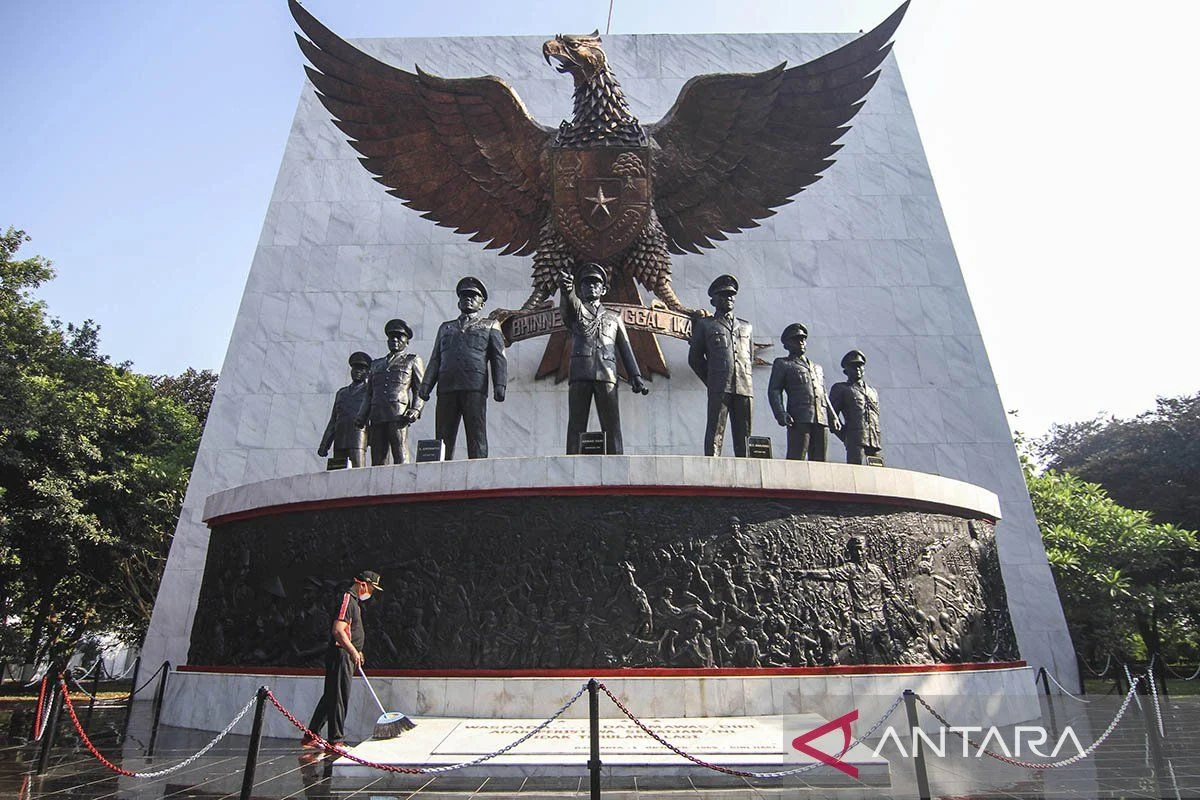
The fragile political equilibrium engineered by Sukarno shattered dramatically on the night of September 30 and the early hours of October 1, 1965. A military faction operating under the designation of the "30 September Movement" (G30S), led by Lieutenant Colonel Untung Syamsuri of the Tjakrabirawa Presidential Guard, carried out a coordinated operation in Jakarta. The movement abducted and assassinated six senior Army generals and one officer, subsequently dumping their bodies in a well in the Lubang Buaya area on the outskirts of the capital.
The stated rationale of the G30S leaders was to preempt an alleged coup d’état by a shadowy "Council of Generals" supposedly backed by the Central Intelligence Agency (CIA). However, the intervention of Major General Suharto, who assumed command of strategic army elements in the capital following the incapacitation of Army Commander General Ahmed Yani, rapidly dismantled the movement within days.
The exact nature of the PKI’s institutional involvement in the G30S has remained one of the most heavily scrutinized and debated subjects in modern Southeast Asian historiography.
- The New Order Narrative: The official narrative constructed during President Suharto’s New Order regime (1966–1998) maintained that the G30S was entirely orchestrated and executed by the PKI as part of a premeditated, treasonous conspiracy to overthrow the legitimate government and establish a communist state.
- Alternative Academic Analyses: Subsequent independent historical research—utilizing declassified diplomatic archives from the United States, Great Britain, and Japan, alongside domestic records—has advanced various alternative interpretations. These analyses suggest that while certain high-ranking PKI leaders (such as D.N. Aidit, Sjam Kamaruzaman, and Sudisman) were deeply and independently implicated in the conspiracy, the party as a vast institutional mass organization did not officially sanction or prepare for the operation. Other interpretations view the event as an internal military factional conflict wherein the communist leadership was disastrously manipulated or drawn into an opportunistic alliance.
The National Archives of Republic Indonesia (ANRI) has repeatedly emphasized that comprehensive historical scholarship requires rigorous cross-examination of multi-national archival sources, distinguishing clearly between verified documentation, formal state decrees, and evolving historical interpretations. Meanwhile, the Indonesian National Commission on Human Rights (Komnas HAM) has documented that the assassination of the generals served as the trigger for an unprecedented wave of mass violence across the archipelago.
The Fall of the PKI and the 1965–1966 Violence
In the immediate wake of the collapsed G30S movement, the political landscape of Indonesia underwent a radical and bloody transformation. Major General Suharto systematically consolidated military authority, marginalizing President Sukarno and initiating a nationwide crackdown on the PKI, its mass organizations, and anyone suspected of leftist sympathies.
Between late 1965 and 1966, a massive campaign of mass killings, arbitrary arrests, forced internments, and systemic violence swept across Central Java, East Java, Bali, and parts of Sumatra. The violence was executed by military units acting in tandem with civilian vigilante groups, religious militias, and anti-communist youth organizations.
According to official investigations and findings by Komnas HAM, the human cost of this period constituted grave human rights violations, encompassing:
- Mass extrajudicial killings estimated by historians to range from several hundred thousand to over one million victims.
- Mass arbitrary detention without trial in concentration camps and prisons across the country.
- Systematic use of sexual violence, torture, forced labor, and forced displacement.
- The stigmatization and civil disenfranchisement of millions of surviving family members and relatives of suspected communists, who faced systemic discrimination, employment bans, and denial of basic civil rights for decades under the New Order administration.
Legal Ban and Dissolution in 1966
The political dismantling of the PKI was formalized through strict legislative and executive actions in 1966:
- March 12, 1966: Major General Suharto, acting under the authority of the Presidential Decree of March 11 (Supersemar), issued Presidential Decree No. 1/1965-1966, formally dissolving the PKI and banning all its constituent mass organizations, declaring them illegal entities across the territory of the Republic of Indonesia.
- July 5, 1966: The Provisional People’s Consultative Assembly (MPRS) ratified and strengthened this executive decision by issuing MPRS Decree No. XXV/MPRS/1966. This foundational decree formally prohibited the PKI throughout Indonesia and explicitly banned any activities aimed at propagating or developing Marxist, Leninist, and communist teachings.
This decree remains a formal part of the Indonesian legal framework. In subsequent decades, the status, interpretation, and enforcement of Decree No. XXV have been subject to ongoing constitutional debates regarding human rights, freedom of expression, and democratic governance, though the formal legal prohibition against the dissemination of communist ideology remains intact.
Broader Implications and Historical Legacy
The destruction of the PKI and the subsequent political realignment brought an definitive end to Indonesia’s parliamentary and guided democracy experiments. The shifting balance of power culminated in the formal transfer of executive authority from President Sukarno to General Suharto, who was appointed acting president in 1967 and full president in 1968, inaugurating the 32-year authoritarian rule of the New Order.
For contemporary Indonesia, more than six decades after the events of 1965, the legacy of the PKI remains a sensitive and complex touchstone. Ongoing academic research, archival releases by institutions such as ANRI, and periodic public debates reflect a nation continually grappling with its historical trauma. While the legal proscription against communism remains absolute, modern discussions increasingly emphasize the necessity of historical accuracy, archival transparency, and the humanitarian dimensions of the transition period.
Ultimately, the history of the PKI is far more than a narrative of a single failed rebellion or a dramatic political collapse; it is an extensive, multi-phase chronicle of 20th-century ideological mobilization, systemic social conflict, geopolitical maneuvering, and state transformation that fundamentally forged the political architecture of modern Indonesia.