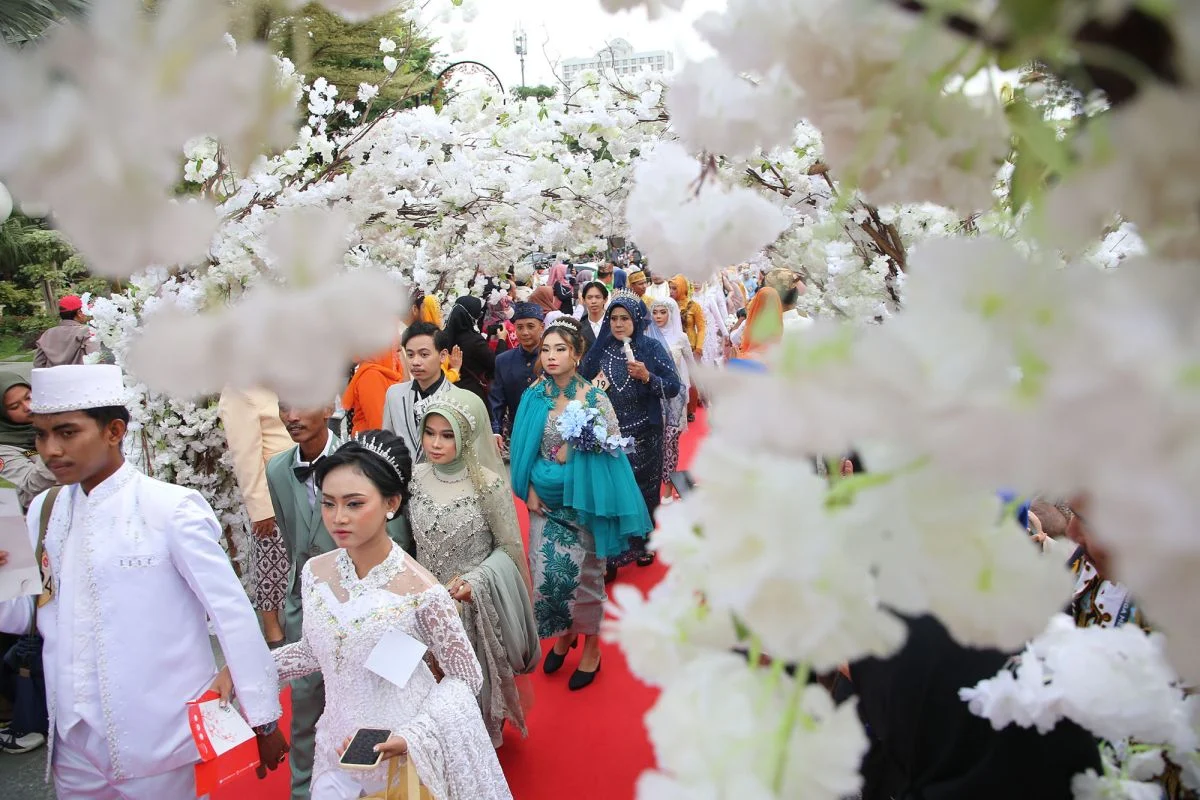
The completion of the Akad Nikah, the sacred Islamic marriage contract, represents one of the most significant milestones in a Muslim’s life, transitioning two individuals into a unified bond recognized by both divine law and the state. Beyond the legalities and the celebratory atmosphere of the wedding day, Islam places a profound emphasis on the spiritual foundation of this new union. This foundation is primarily established through specific prayers, or duas, which are offered immediately following the conclusion of the marriage ceremony. These prayers are not merely traditional customs but are rooted in the Sunnah—the practices and teachings of the Prophet Muhammad SAW—aimed at invoking divine blessings (Barakah), enduring love (Mawaddah), and mercy (Rahmah) upon the couple.
The Theological Significance of the Post-Akad Prayer
In Islamic theology, the marriage contract is referred to as Mithaqan Ghalidha, a "solemn covenant." Because this bond is considered a form of worship, it is initiated and sustained through the remembrance of God. The prayers offered after the Akad Nikah serve as a formal petition to the Creator to safeguard the household from future trials and to fill the home with peace.
The most prominent prayer, widely recited by guests, family members, and the officiating officer (Penghulu), is derived from a Sahih (authentic) Hadith narrated by Abu Hurairah RA. When the Prophet Muhammad SAW offered his congratulations to a newlywed, he would say:
“Bārakallāhu laka wa bāraka ‘alaika wa jama’a bainakumā fī khair.”
This translates to: "May Allah bestow blessings upon you, and send blessings upon you, and unite you both in goodness."
According to scholars such as Imam At-Tirmidzi, who classified this Hadith as Hasan Sahih, the wording of this prayer is deliberate. The repetition of "blessings" (Barakah) covers two dimensions: "Barakallahu laka" refers to blessings in times of ease and prosperity, while "wa baraka ‘alaika" refers to blessings during times of hardship or challenge. This acknowledges that every marriage will face fluctuations, and the prayer seeks God’s grace to remain steadfast regardless of the circumstances.
The Ritual and Prayer of the Husband for the Wife
A specific and intimate tradition encouraged in Islam occurs when the husband first interacts with his wife following the legal completion of the Akad. It is highly recommended (Mustahabb) for the husband to place his hand gently upon the crown of his wife’s head (the ubun-ubun) and recite a specific supplication. This act symbolizes the husband’s role as a protector and a partner who seeks goodness from his spouse.
The prayer, as recorded in the traditions of Abu Dawud, is as follows:
“Allāhumma innī as’aluka min khairihā wa khairi mā jabaltahā ‘alaihi, wa a’ūdzu bika min syarrihā wa syarri mā jabaltahā ‘alaihi.”
This translates to: "O Allah, I ask You for the goodness within her and the goodness of the nature upon which You have created her. And I seek refuge in You from her evil and the evil of the nature upon which You have created her."
Linguistic analysis of this prayer reveals a deep psychological and spiritual intent. By asking for the "goodness of her nature," the husband acknowledges that his wife is an individual with her own character created by God. The "seeking refuge" part is a humble recognition that all human beings have flaws, and the prayer asks for divine intervention to ensure that these flaws do not disrupt the harmony of the marriage. It sets a tone of humility and mutual dependence on God from the very first moment of their life together.
Historical Evolution: From Jahiliyyah to Islam
The introduction of these specific prayers by the Prophet Muhammad SAW marked a significant cultural shift in the Arabian Peninsula. Prior to the advent of Islam, during the period known as Jahiliyyah (the Age of Ignorance), the common greeting for newlyweds was "Bir-rifa’ wal-banin," which translates to "May you live in harmony and have many sons."
While seemingly positive, Islamic scholars note that the Prophet SAW replaced this greeting because it focused solely on material outcomes and gender-biased lineage. The Islamic alternative—the prayer for Barakah—shifted the focus from worldly success to spiritual prosperity. Barakah is defined not just as "more" of something, but as the presence of divine goodness in a thing, regardless of its quantity. A small income with Barakah can sustain a family better than a large fortune without it. By changing the vernacular of wedding congratulations, Islam institutionalized a worldview where the success of a family is measured by its alignment with divine pleasure.
Institutional Support: The Role of the KUA and Penghulu in Indonesia
In the modern Indonesian context, the administration of the Akad Nikah is overseen by the Ministry of Religious Affairs (Kemenag) through the Office of Religious Affairs (KUA). In recent years, the Ministry has significantly expanded the role of the Penghulu (marriage officials). No longer are they seen merely as administrative registrars who sign marriage licenses; they are now being trained as frontline counselors and spiritual guides.
Data from the Ministry of Religious Affairs indicates that there are thousands of KUA offices across the Indonesian archipelago, serving millions of couples annually. To improve the quality of Indonesian households, the Ministry has implemented "Bimwin" (Bimbingan Perkawinan) or Marriage Guidance programs. In these sessions, the spiritual significance of post-Akad prayers is taught alongside practical skills such as financial management, reproductive health, and conflict resolution.
The Ministry’s objective is to transform the KUA into a "center for family resilience." By ensuring that the Penghulu can explain the deep meanings behind the Arabic supplications recited during the ceremony, the government hopes to reduce the national divorce rate, which has seen fluctuations in the post-pandemic era. Official statements from Kemenag officials emphasize that a marriage that starts with a clear understanding of its spiritual obligations is statistically more likely to withstand the pressures of modern life.
Analysis of the Implications for Family Resilience
The practice of reciting these prayers has broader implications for social stability. Sociological studies on Muslim communities suggest that ritualized spirituality acts as a "buffer" against marital distress. When a couple begins their journey with a shared recognition of a higher power, it establishes a framework for forgiveness and patience (Sabr).
- Psychological Grounding: The act of the husband praying for the wife’s goodness fosters an environment of respect. It discourages an adversarial view of the spouse and encourages a view of the spouse as a "trust" (Amanah) from God.
- Community Support: When guests recite "Barakallahu laka," they are not just spectators; they are active participants in the couple’s spiritual success. This reinforces the "Ummah" or community bond, signaling to the couple that they have a support system invested in their well-being.
- Conflict Resolution: The prayer "Jama’a bainakuma fii khair" (unite you both in goodness) serves as a constant reminder during arguments. It prompts the couple to return to "goodness" as their default state of interaction.
Administrative Procedures for Akad Nikah
For couples planning to conduct their Akad Nikah in Indonesia, the Ministry of Religious Affairs has streamlined the process, though it requires adherence to specific timelines. According to current regulations:
- Registration: Couples are advised to register their marriage at the KUA at least 10 working days before the ceremony.
- Location: The Akad can be performed at the KUA office during working hours for zero cost. However, if the ceremony is held at a home, mosque, or wedding hall outside of working hours, a flat statutory fee of Rp600,000 is required, paid via a perception bank to the state treasury as Non-Tax State Revenue (PNBP).
- Documentation: Requirements include N1, N2, and N4 forms, copies of identity cards (KTP), birth certificates, and a certificate of health from a local clinic (Puskesmas), which often includes a tetanus toxoid injection for the bride.
These administrative steps, while secular in nature, are the legal prerequisites that allow the spiritual rituals to take place. The synergy between state law and religious tradition ensures that the marriage is protected under both jurisdictions.
Conclusion: The Enduring Legacy of the Sunnah
The prayers following the Akad Nikah are a testament to the holistic nature of Islam, which seeks to sanctify every aspect of human life. By following the Sunnah of the Prophet Muhammad SAW, newlyweds in the modern world can connect with a tradition that spans over 1,400 years. These supplications provide a roadmap for a successful marriage, emphasizing that while love and attraction are the catalysts for union, it is divine blessing and mutual prayer that provide the longevity needed for a "Sakinah, Mawaddah, wa Rahmah" household.
As the Ministry of Religious Affairs continues to modernize the KUA and train its officials, the focus remains clear: to ensure that every marriage ceremony in Indonesia is not just a legal formality, but a profound spiritual beginning supported by the wisdom of the ages. Through the simple yet powerful words of the post-Akad prayers, the foundations of the next generation are laid in the hope of goodness, peace, and eternal blessing.