The Universitas Negeri Jakarta (UNJ) has reported a consistent and significant increase in the number of applicants for its Independent Admission Path (Penmaba) specifically designed for students with disabilities over the last several years. In the 2026 academic cycle, the institution recorded a total of 138 participants for this specialized entry route, representing a 9.6 percent increase compared to the 125 applicants documented in 2025. This upward trajectory highlights a shifting landscape in Indonesian higher education, where inclusivity and accessibility are no longer peripheral concerns but are instead becoming central pillars of institutional growth and public trust.
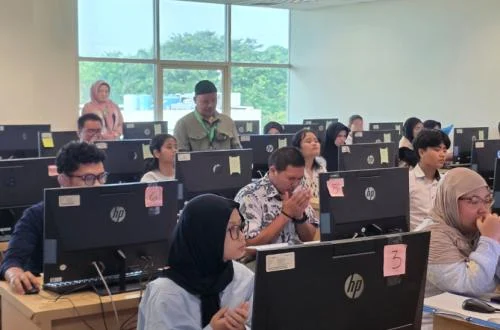
The selection process for the 2026 Penmaba Mandiri Disability Path was conducted in person at the Dewi Sartika Building on the UNJ campus on Saturday, July 18, 2026. This annual event serves as a critical gateway for students with various physical and neurodivergent conditions to access high-quality academic programs. According to I Wayan Sugita, the Head of the UNJ Admissions Office, the rising numbers are a direct reflection of the growing aspirations among persons with disabilities to pursue higher learning and a testament to the community’s increasing confidence in UNJ’s capacity to provide a supportive, inclusive environment.
Statistical Growth and Academic Preferences
The 9.6 percent year-on-year growth in applicants is indicative of a broader social trend where higher education is viewed as an attainable goal for individuals who have historically been marginalized within the academic system. Wayan Sugita emphasized that the 138 participants this year represent a diverse range of backgrounds and abilities, all seeking to leverage education as a tool for personal and professional empowerment.
"The fact that we have reached 138 participants this year is a milestone," Wayan stated during the event. "It shows that more persons with disabilities are not only interested in continuing their studies but specifically see UNJ as a premier destination that can cater to their unique educational needs."
An analysis of the 2026 application data reveals specific trends in academic interests among the candidates. Three faculties emerged as the most sought-after destinations for students in the disability path: the Faculty of Engineering, the Faculty of Education, and the Faculty of Languages and Arts. Within these faculties, the Applied Bachelor’s Program in Culinary Arts and Food Service Management stood out as the most popular choice. This preference for vocational and creative arts programs suggests that many students are looking for practical, skill-based education that offers clear pathways to the labor market, particularly in industries that are increasingly valuing diversity and specialized expertise.
The Chronology of the 2026 Selection Day
The selection day on July 18 began early in the morning at the Dewi Sartika Building, which had been specially outfitted to ensure maximum accessibility. The atmosphere was one of focused determination as students, accompanied by their families and university-assigned mentors, prepared for the rigorous assessment.
The process was meticulously organized to accommodate a wide spectrum of needs. Upon arrival, students were greeted by members of the UNJ Disability Volunteers (REDIS), a dedicated student organization that plays a pivotal role in the university’s inclusive framework. These volunteers provided logistical support, navigating the campus with students and ensuring they reached their designated testing rooms without physical or psychological barriers.
Inside the testing halls, the environment was adapted to the specific requirements of the participants. For students with hearing impairments, the university stationed professional sign language interpreters in every room to translate instructions and facilitate communication between the proctors and the candidates. For students with visual impairments, neurodivergent conditions such as autism, or Attention-Deficit/Hyperactivity Disorder (ADHD), specialized assistance was provided to ensure that the testing environment was conducive to their specific cognitive and sensory needs.
The Role of REDIS and the Support Ecosystem
The success of the Penmaba Mandiri Disability Path relies heavily on the "REDIS" (Relawan Disabilitas UNJ) framework. Prila Ahdanila, the Coordinator of REDIS for the 2026 admissions cycle, explained that the support system is the result of months of careful planning and data analysis. This year, the organization deployed 65 volunteers drawn from various academic cohorts and disciplines across the university.
"Our work begins long before the exam day," Prila noted. "We receive detailed data from the Admissions Office regarding the specific needs of each participant. From there, we map out a support strategy, assigning volunteers who are trained to handle specific challenges, whether they are physical, sensory, or developmental. Our goal is to ensure that every participant receives the exact level of support they need to compete on an even playing field."
The 65 volunteers underwent training sessions to familiarize themselves with disability etiquette, basic sign language, and crisis management for neurodivergent students who might experience sensory overload. This peer-to-peer support model has been praised by observers as a highly effective way to foster a culture of empathy and inclusion within the broader student body, transforming the campus into a living laboratory for social integration.
Institutional Commitment to Educational Equity
The leadership at UNJ views the disability admission path as a moral and legal imperative. Vice Rector for Academic, Student, and Alumni Affairs, Ifan Iskandar, reiterated that the program is part of the university’s mission to uphold the rights of every citizen to access quality education, as mandated by national law.
"UNJ is committed to ensuring that every prospective student has an equal opportunity to demonstrate their academic potential," Professor Ifan said. "We are constantly refining our support services to ensure that the selection process is not only fair but also fully accessible. We believe that a university is enriched by the presence of students with diverse perspectives and life experiences."
This commitment aligns with Indonesia’s Law No. 8 of 2016 concerning Persons with Disabilities, which requires educational institutions to provide "reasonable accommodation" and ensure that at least two percent of their student body includes persons with disabilities. UNJ’s proactive approach in expanding its specialized admission path suggests that the university is aiming to exceed these minimum legal requirements and set a national standard for inclusivity.
Critical Reflections and Future Reform
Despite the successes of the 2026 cycle, the university’s leadership acknowledges that there is still room for improvement. During a site visit to the Dewi Sartika Building to monitor the examination process, UNJ Rector Komarudin expressed his appreciation for the dedication of the volunteers and the logistics team. However, he also offered a critical assessment of the current testing methodology.
Rector Komarudin pointed out that while the physical and logistical support systems are robust, the academic content of the exams may still require further calibration. "If the exam questions remain identical to those used in the regular admission path, then we must look at adjusting the evaluation criteria," Komarudin observed. "To achieve true fairness, the assessment must account for the different ways in which students with disabilities process information and demonstrate their competence. We are looking into adjusting the scoring rubrics or even the nature of the questions themselves to better reflect the potential of these candidates."
This call for "assessment equity" marks a sophisticated shift in the conversation regarding inclusive education. It moves beyond physical access (ramps and elevators) and logistical support (interpreters and guides) toward a deeper pedagogical integration where the very methods of measuring intelligence and aptitude are scrutinized for bias.
Broader Impact and Implications for the Future
The growth of the disability path at UNJ has implications that extend far beyond the campus walls. As one of the leading teacher-training universities in Indonesia, UNJ’s focus on inclusivity is likely to have a "multiplier effect." The graduates of these programs—whether they are the students with disabilities themselves or the volunteers who assisted them—will enter the workforce with a profound understanding of inclusive practices.
Furthermore, the popularity of the Culinary Arts and Food Service Management program highlights a growing niche in the economy. As the hospitality and service sectors in Indonesia continue to modernize, there is an increasing demand for skilled professionals who can navigate diverse work environments. By training students with disabilities in these high-demand fields, UNJ is directly contributing to the economic independence of a demographic that has historically faced high rates of unemployment.
The 2026 Penmaba Mandiri Disability Path at UNJ serves as a case study for other institutions in the region. The 9.6 percent increase in participants is not merely a statistic; it is a signal that the barriers to higher education are slowly being dismantled. As the university moves toward more nuanced assessment criteria and continues to strengthen its volunteer networks, it paves the way for a more equitable society where academic merit is recognized in all its diverse forms.
In the coming years, UNJ plans to further integrate assistive technology into its testing centers, including screen-reading software and braille-based digital interfaces. These technological advancements, combined with the human-centric approach of the REDIS volunteers, position UNJ as a pioneer in the national movement toward a truly inclusive Indonesian education system. The 2026 selection process concludes not just with the admission of a new cohort of students, but with a renewed institutional pledge to leave no student behind.