
Economic progress is a multi-faceted concept that serves as the primary objective for nations worldwide, yet the terminology used to describe this progress—specifically economic growth and economic development—is frequently used interchangeably despite representing distinct economic phenomena. While economic growth refers to the quantitative increase in a country’s production of goods and services, economic development encompasses a broader, more qualitative transformation of the socio-economic structure, focusing on the improvement of human welfare and institutional quality. In the context of modern governance, distinguishing between these two metrics is essential for crafting policies that do not merely inflate national accounts but also improve the lived experience of the citizenry.
The Quantitative Foundation of Economic Growth
Economic growth is defined as the steady increase in the productive capacity of an economy, typically measured by the annual percentage increase in the Real Gross Domestic Product (GDP). This metric tracks the market value of all final goods and services produced within a country’s borders over a specific period, adjusted for inflation. The focus of economic growth is inherently numerical and financial, prioritizing indicators such as stock market performance, industrial output, and price stability.
From a macroeconomic perspective, growth is often driven by the accumulation of capital, the expansion of the labor force, and the efficiency of resource allocation. It is a necessary precursor to development; without a surplus of wealth generated through growth, a state lacks the fiscal resources to invest in social infrastructure. However, growth is often criticized for its "blindness" to distribution. A nation may experience a 7% increase in GDP while the majority of its population remains in poverty, a phenomenon often seen in resource-rich nations where wealth is concentrated in a small elite or specific industrial sectors.
The Qualitative Transformation of Economic Development
In contrast, economic development is a normative concept that addresses the quality of life. It is not merely about how much a country produces, but how that production affects the well-being of the individual. Development includes improvements in literacy rates, life expectancy, healthcare access, and the reduction of income inequality. If economic growth is the "body" of the economy, economic development is its "soul."
Development involves structural changes, such as the transition from an agrarian society to an industrial or service-based economy, the adoption of new technologies, and the strengthening of democratic institutions. It focuses on the "Human Development Index" (HDI), a composite statistic of life expectancy, education, and per capita income indicators. Therefore, while growth is a means to an end, development is the end itself—the realization of human potential.
Comparative Indicators: A Detailed Analysis
To understand the divergence between these two concepts, economists look at four primary indicators that highlight how a nation can grow without necessarily developing.
1. GDP and Population Dynamics
One of the most critical distinctions lies in the relationship between output and population. Economic growth measures the total increase in GDP, but economic development requires that the rate of GDP growth exceeds the rate of population growth. If a country’s economy grows by 3% while its population also grows by 3%, the average standard of living remains stagnant. Development policies specifically target the "per capita" improvement, ensuring that the wealth generated is sufficient to provide a better life for an expanding demographic.
2. The Role of Technological Advancement and IPTEK
The integration of Science, Technology, and Art (known in some academic circles as IPTEK) is a hallmark of economic development. While growth can occur through the sheer exhaustion of natural resources, development requires innovation. For instance, the construction of Mass Rapid Transit (MRT) or Light Rail Transit (LRT) systems in metropolitan areas like Jakarta represents more than just a financial investment. These projects signify a shift toward a more efficient, technology-driven society. While the revenue from ticket sales contributes to economic growth, the reduction in traffic congestion, the lowering of carbon emissions, and the increase in worker productivity represent economic development.
3. Welfare and Income Distribution
Economic growth does not inherently address the gap between the rich and the poor. A rising tide does not always lift all boats; sometimes, it only lifts the yachts. Economic development, however, is deeply concerned with the Gini Coefficient—a measure of statistical dispersion intended to represent the income or wealth inequality within a nation. True development occurs when growth is "inclusive," meaning it provides opportunities for the marginalized sectors of society to improve their economic standing.
4. Institutional and Structural Change
Growth can be recorded in a spreadsheet, but development is seen in the landscape. The transformation of an abandoned lot into a Regional General Hospital (RSUD) is a physical manifestation of development. While the construction process contributes to GDP (growth), the long-term impact on community health, the reduction in infant mortality, and the increased longevity of the workforce are the metrics of development.
Historical Context and the Evolution of Economic Thought
The distinction between growth and development gained prominence in the post-World War II era. During the 1950s and 1960s, many economists believed in the "trickle-down" theory, positing that rapid industrial growth would naturally lead to social benefits. However, the experience of many developing nations in the 1970s proved otherwise. Despite high growth rates, poverty and unemployment often persisted or even worsened.
This led to the "Basic Needs Approach" and later the "Capabilities Approach" championed by Nobel laureate Amartya Sen. Sen argued that development should be seen as the expansion of human freedoms—the freedom to be healthy, the freedom to be educated, and the freedom to participate in the economy. This shift in perspective forced international organizations like the World Bank and the United Nations to move away from purely fiscal metrics and toward more holistic evaluations of national success.
Case Study: Infrastructure as a Catalyst for Dual Progress
The recent infrastructure boom in emerging economies provides a clear example of how growth and development intersect. Consider the massive investment in transportation networks across Southeast Asia. From a growth perspective, these projects represent billions of dollars in foreign direct investment (FDI) and thousands of jobs in the construction sector.
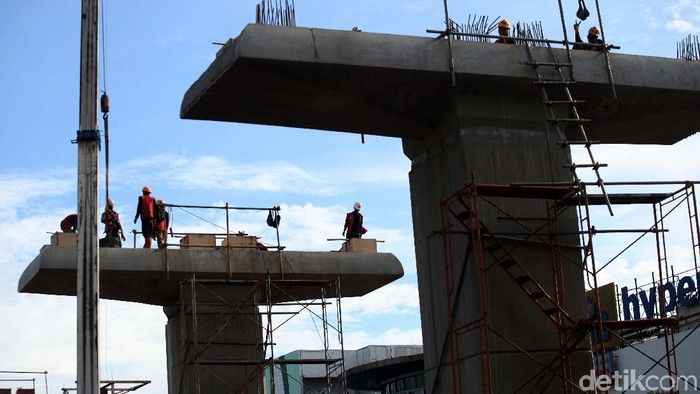
However, the development impact is found in the "multiplier effect." By connecting rural areas to urban centers, these projects allow farmers to bring goods to market more cheaply, allow children to reach schools more safely, and allow the government to provide emergency services more effectively. In this scenario, the initial capital expenditure drives growth, while the long-term social utility drives development.
Official Responses and Policy Implications
Governments today are increasingly pressured to report on development metrics rather than just growth figures. In various national budget speeches, finance ministers are now highlighting "stunting reduction rates" and "literacy improvements" alongside GDP targets.
Economists argue that a focus solely on growth can lead to a "middle-income trap," where a country reaches a certain level of income but fails to transition into a high-income economy because it neglected the qualitative aspects of development, such as a high-quality education system or a robust legal framework. Conversely, focusing on development without growth is unsustainable, as the state will eventually run out of funds to support social programs.
Analysis of Broader Implications
The tension between economic growth and economic development is particularly relevant in the era of climate change. Traditional economic growth has often come at the expense of the environment, through deforestation, pollution, and carbon emissions. However, the modern paradigm of "Sustainable Development" suggests that true development cannot occur if it compromises the ability of future generations to meet their own needs.
This has given rise to the "Green Economy," where growth is decoupled from environmental degradation. In this framework, investing in renewable energy is seen as a dual-purpose strategy: it creates new industries and jobs (growth) while ensuring a habitable planet and better public health (development).
Conclusion
In summary, while economic growth and economic development are inextricably linked, they represent different dimensions of national progress. Growth is a quantitative measure of an economy’s size and speed, whereas development is a qualitative measure of its health and equity. A successful nation is one that manages to synchronize both—using the engine of growth to power the vehicle of development. For policymakers, students, and citizens alike, understanding this distinction is the first step toward advocating for an economy that does not just get bigger, but also gets better. By prioritizing inclusive growth, technological innovation, and human welfare, society can ensure that the "lahan kosong" (empty lots) of today become the hospitals, schools, and transit hubs of a more prosperous tomorrow.