The landscape of Middle Eastern geopolitics has shifted into a volatile new phase following a series of high-stakes military engagements between United States forces and the Islamic Revolutionary Guard Corps (IRGC). As United States Central Command (CENTCOM) confirms retaliatory strikes against Iranian-backed assets in response to a deadly attack on American personnel in Jordan, military analysts are turning their attention away from traditional balance sheets and toward the idiosyncratic decision-making process of the Oval Office. According to prominent military experts, the psychological profile and strategic instincts of President Donald Trump are now proving to be more decisive factors in the trajectory of the conflict than the conventional calculations of political capital or economic expenditure.
The recent escalation began on July 17, 2026, when a sophisticated drone and missile barrage struck a U.S. military installation in Jordan, resulting in American casualties and significant infrastructure damage. In a swift and expansive response, CENTCOM launched a coordinated kinetic operation targeting IRGC facilities that Washington identifies as the nerve centers for regional destabilization. The strikes, described by defense officials as "precision-driven and comprehensive," successfully neutralized coastal surveillance hubs, integrated air defense systems, maritime assets, and critical storage sites for unmanned aerial vehicles (UAVs) and ballistic missiles.
The Psychology of Deterrence: Beyond the Bottom Line
Traditional foreign policy analysis often relies on the "rational actor" model, which suggests that leaders weigh the literal costs of war—budgetary constraints, potential loss of life, and domestic polling—before authorizing military action. However, military psychologists and strategic advisors suggest that under the current administration, the "America First" doctrine has evolved into a more complex form of psychological warfare. The expert consensus suggests that for President Trump, the perception of American strength and the personal credibility of the Commander-in-Chief outweigh the logistical or political costs typically associated with protracted engagements.
"The calculus has shifted from ‘what can we afford’ to ‘what must be projected,’" noted one senior military analyst. "In the eyes of this administration, the cost of inaction, which is perceived as a psychological weakness, is infinitely higher than the billions of dollars spent on Tomahawk missiles or carrier strike group deployments. The President operates on a principle of maximum leverage, where unpredictability is a feature, not a bug, of his strategic framework."
This psychological approach seeks to keep adversaries like Tehran in a state of perpetual uncertainty. By prioritizing personal resolve over institutional caution, the administration aims to disrupt the IRGC’s long-term planning. If the Iranian leadership cannot predict the threshold for a U.S. kinetic response, their ability to conduct "gray zone" operations—attacks that fall just below the threshold of open war—is severely compromised.
Chronology of the Escalation: From Jordan to the Persian Gulf
The path to the current confrontation has been marked by a steady erosion of diplomatic channels and an increase in proxy-led hostilities. To understand the gravity of the recent strikes, one must examine the timeline of events leading up to the July 2026 flashpoint:
- January – May 2026: Increased frequency of maritime "harassment" in the Strait of Hormuz. Iranian fast-attack craft repeatedly challenged international shipping lanes, leading to a spike in global oil prices and heightened naval presence from the U.S. Fifth Fleet.
- June 12, 2026: Intelligence reports surfaced indicating that the IRGC had transferred advanced "suicide drones" and precision-guided munitions to militia groups operating near the Syrian-Jordanian border.
- July 17, 2026: The fatal attack in Jordan occurred. A swarm of low-altitude drones penetrated the base’s perimeter defenses during a shift change, maximizing the impact on personnel. Washington immediately blamed IRGC-affiliated "Khattab" cells for the logistics and execution of the strike.
- July 18, 2026: President Trump convened an emergency session with the National Security Council (NSC). Unlike previous administrations that might have spent weeks debating a proportional response, the order for "Operation Sentinel’s Wrath" was issued within hours.
- July 19, 2026: CENTCOM executed the strikes. B-1B Lancer bombers, launched from the continental United States, joined regional assets to strike over 85 targets across eastern Syria and western Iran, specifically focusing on IRGC command nodes.
Technical Analysis of the Military Response
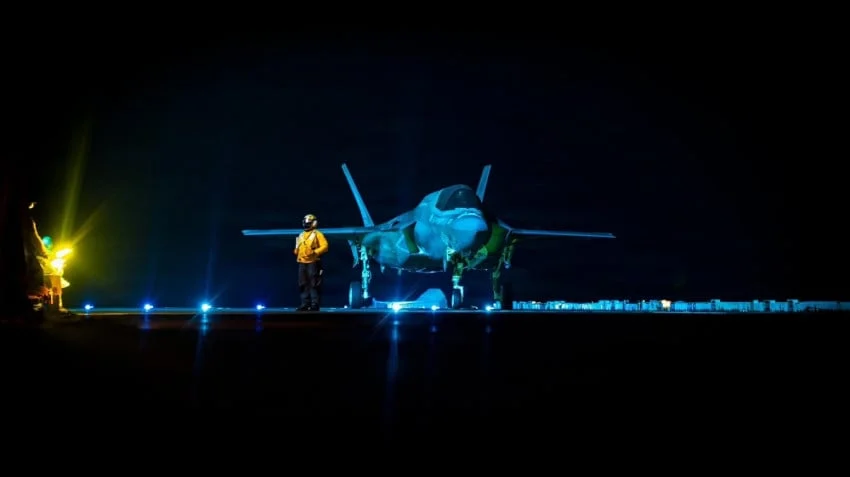
The scale of the U.S. response was designed to send a message of technological and logistical dominance. According to CENTCOM data, the operation utilized a mix of Joint Direct Attack Munitions (JDAMs) and stealth technology to bypass the very air defense systems the U.S. was targeting.
The destruction of coastal surveillance facilities is particularly significant. These sites provided the IRGC with real-time data on the movement of U.S. and allied vessels in the Persian Gulf. By "blinding" these stations, the U.S. military has effectively restricted Iran’s ability to coordinate maritime ambushes or mine-laying operations. Furthermore, the targeting of UAV storage sites addresses the primary tool of Iranian power projection. In the last three years, Iran’s drone program has become its most effective export, fueling conflicts from Ukraine to the Levant. The July 19 strikes are estimated to have set back the IRGC’s drone deployment capabilities by at least six to nine months.
Political Costs vs. Strategic Gains
Domestically, the strikes have reignited a fierce debate in Washington. Critics of the administration argue that bypassing Congressional approval for such a broad offensive risks unconstitutional overreach and could stumble into a "forever war" that the American public has little appetite for. The financial cost of the operation, estimated to be in the hundreds of millions of dollars when factoring in fuel, ordnance, and deployment logistics, comes at a time of heightened scrutiny over the federal budget.
However, the "psychology over cost" theory posits that these criticisms are secondary to the President’s primary objective: establishing a "red line" that is backed by immediate action. Supporters of this approach argue that the Obama-era "red lines" in Syria failed because they were rooted in political consensus rather than psychological certainty. By acting decisively, Trump seeks to ensure that the IRGC views any future provocation as a direct threat to their own survival, rather than a manageable political risk.
Regional Reactions and Global Implications
The international community remains deeply divided over the escalation.
- Tehran: The Iranian Foreign Ministry condemned the strikes as a "flagrant violation of sovereignty" and a "terrorist act." While the IRGC has vowed "crushing revenge," military observers note that the scale of the U.S. strikes has likely forced a pause in their immediate operational planning as they assess the extent of their internal security breaches.
- Israel and Saudi Arabia: Historically the primary regional rivals of Iran, both Jerusalem and Riyadh have offered quiet support for the U.S. actions. For these allies, the psychological resolve of the U.S. President is the ultimate security guarantee in a region where American "retreat" has been a long-standing fear.
- The European Union: Leaders in Brussels have called for "maximum restraint," fearing that a full-scale war would lead to a massive refugee crisis and the total collapse of global energy markets. They remain wary of the President’s "unpredictable" nature, which complicates traditional diplomatic mediation.
Analysis of Future Scenarios
As the dust settles from the July 19 strikes, the central question remains: will this psychological gambit lead to de-escalation or a broader conflagration?
There are three primary scenarios currently being modeled by regional experts:
- The Deterrence Success: The IRGC, recognizing that the "political cost" barrier has been removed, retreats to its borders and reduces proxy activity to avoid a direct threat to the regime’s core infrastructure. This would validate the "psychology over cost" strategy.
- Asymmetric Retaliation: Unable to match the U.S. in a conventional fight, Iran may pivot to cyber-warfare, targeting U.S. financial institutions or power grids, or utilizing "sleeper cells" for low-level attacks in Europe or South America.
- The Miscalculation Loop: The very unpredictability that the Trump administration uses as a tool could lead to a catastrophic misunderstanding. If Tehran perceives that the U.S. is committed to regime change regardless of their actions, they may conclude that they have nothing to lose by initiating a total blockade of the Strait of Hormuz.
The military expert’s revelation regarding the President’s psychology highlights a fundamental shift in how the United States projects power. It is no longer a matter of simply having the most expensive military or the largest economy; it is about the willingness to use that power in ways that defy traditional political logic. In the high-stakes game of Middle Eastern chicken, the U.S. has signaled that it has thrown the steering wheel out the window, betting that the IRGC will be the first to blink.
As the situation in Jordan and the wider region continues to evolve, the global community will be watching not just the troop movements, but the rhetoric and mindset of the man in the White House. In this new era of conflict, the most potent weapon in the American arsenal may not be a missile or a drone, but the psychological conviction of its leader that some things are simply more important than the cost of war.