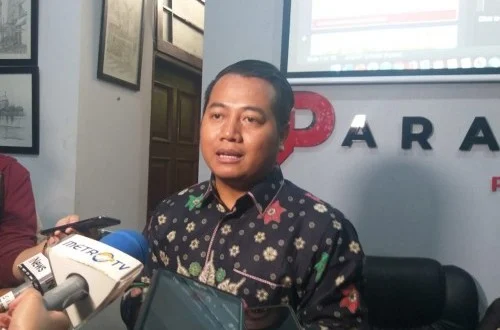
Taj Yasin Maimoen, the former Vice Governor of Central Java for the 2018–2023 period, has emerged as the most recognized figure in the early stages of the 2024 Central Java gubernatorial race. According to a comprehensive survey conducted by Parameter Politik Indonesia (PPI) between May 15 and May 21, 2024, Taj Yasin commands a significant lead in popularity among potential candidates. The survey results, which were released by the institute’s Executive Director, Adi Prayitno, during an online press briefing in Jakarta on Wednesday, May 29, 2024, indicate that the political landscape in Central Java is beginning to solidify ahead of the regional elections (Pilkada) scheduled for later this year.
The data collection process involved face-to-one-face interviews with respondents across the province. Adi Prayitno explained that the methodology was designed to gauge the "top-of-mind" recognition and general awareness of various public figures who have been frequently discussed in the media or political circles as potential successors to the provincial leadership. "We asked respondents one by one: ‘Sir, Madam, do you know or not the following figures?’ Among the names presented, approximately 52.1 percent of respondents stated they were familiar with Taj Yasin Maimoen," Prayitno stated. This figure places Taj Yasin as the only candidate currently crossing the 50 percent threshold in terms of name recognition, reflecting his five-year tenure as a high-ranking provincial official and his deep-rooted connections within the religious and traditionalist communities of Central Java.
Following Taj Yasin in the popularity rankings is Hendrar Prihadi, the current Head of the National Public Procurement Agency (LKPP) and the former Mayor of Semarang. Prihadi, widely known by his nickname Hendi, secured a recognition rate of 40 percent. In third place is Dico Ganinduto, the current Regent (Bupati) of Kendal, who garnered 38.1 percent popularity. These figures suggest a competitive field, although Prayitno noted that none of the candidates have yet achieved a "stunning" or "dominant" status that would guarantee a landslide victory, as the gap between the top contenders remains relatively narrow and many voters are still evaluating their options.
Methodology and Regional Political Context
The Parameter Politik Indonesia survey was conducted using a rigorous sampling method to ensure a representative cross-section of the Central Java electorate, which is one of the largest and most politically significant provinces in Indonesia. Central Java has long been considered a stronghold of the Indonesian Democratic Party of Struggle (PDI-P), often referred to as the "Kandang Banteng" (the Bull’s Pen). However, the political dynamics in the region are undergoing a shift following the 2024 General Elections, where national alliances and local interests have begun to intersect in new ways.
The survey period of May 15–21, 2024, captures the public sentiment during a critical window as political parties begin their internal deliberations for candidate nominations. By focusing on popularity, PPI aims to provide a baseline for the "marketability" of candidates. Popularity is frequently seen as a precursor to electability, although the two are not always synonymous. In the context of Central Java, where the population is deeply influenced by both nationalist and religious (specifically Nahdlatul Ulama) values, the high visibility of a figure like Taj Yasin—who represents the bridge between these two spheres—is a significant data point for political strategists.
Profiling the Top Three Contenders
Taj Yasin Maimoen’s lead is attributed to several factors. As the son of the late charismatic cleric Maimun Zubair, Taj Yasin carries a massive cultural and religious legacy. His service as Vice Governor alongside Ganjar Pranowo provided him with a platform to travel extensively across the province’s 29 regencies and 6 cities. His background in the United Development Party (PPP) and his affiliation with the traditionalist Islamic base make him a formidable figure in rural areas and among the "Santri" (religious students) population.
Hendrar Prihadi, holding the second position, represents the urban and bureaucratic success story. His tenure as the Mayor of Semarang was marked by significant infrastructure development and the modernization of the provincial capital. His transition to a national role as the head of LKPP under President Joko Widodo’s administration has kept him in the public eye, though his distance from the day-to-day local issues of Central Java might account for the 12-point gap between him and Taj Yasin. As a senior cadre of the PDI-P, Prihadi’s standing is also tied to the party’s machinery, which remains the most organized political force in the province.
Dico Ganinduto, the Regent of Kendal, represents the younger generation of Indonesian politicians. At 38.1 percent popularity, his rise is considered rapid, driven largely by active social media engagement and high-profile collaborations with national figures, including those within the Koalisi Indonesia Maju (KIM). Dico’s popularity suggests that a segment of the Central Java electorate is open to youthful leadership and the "new energy" narrative that has been successful in recent national elections.
Broader Field and Evolving Dynamics
Adi Prayitno emphasized that the list of names included in the survey was not exhaustive but focused on those who have been consistently "interlinked" with the gubernatorial discourse. "These are people who, in our view, have the potential or are frequently discussed in relation to the possibility of running in the Central Java Pilkada. This is the portrait of their popularity in general," he added.
Beyond the top three, other names have surfaced in the political periphery, including Ahmad Luthfi, the current Chief of the Central Java Regional Police, and Sudaryono, the Chairman of the Gerindra Party’s provincial chapter. While their popularity figures were not the primary focus of the specific data point released regarding the top three, their presence in the race adds a layer of complexity. Ahmad Luthfi, in particular, has seen his name gain traction due to his long-standing service in the province and his perceived closeness to President Joko Widodo.
The survey also highlighted a critical observation by Prayitno: despite the high recognition of Taj Yasin, the field lacks a "super-candidate" who commands over 70 or 80 percent popularity at this stage. This leaves a significant portion of the electorate—nearly half—who are either undecided or unfamiliar with the primary contenders. This "floating" sentiment provides an opportunity for underdogs to gain ground through intensive campaigning and for established figures to lose their lead if they fail to consolidate their base.
Timeline and the Path to November 2024
The 2024 Regional Elections (Pilkada Serentak) are scheduled to be held on November 27, 2024. The timeline for the Central Java race is as follows:
- Preparation Phase (Early 2024): Political parties conduct internal surveys and open registration for prospective candidates.
- Nomination Period (August 2024): Parties and coalitions will officially register their candidate pairs (Governor and Vice Governor) with the General Elections Commission (KPU).
- Campaign Period (September – November 2024): Candidates will engage in formal campaigning, debates, and public outreach.
- Voting Day (November 27, 2024): Eligible voters across Central Java will cast their ballots.
The current survey results from Parameter Politik Indonesia serve as a "pre-season" indicator. Between now and the August registration deadline, the popularity rankings are expected to fluctuate as coalitions are formed. In Indonesia, the selection of a Vice Gubernatorial candidate is often as crucial as the Gubernatorial candidate, as the pair must balance ethnic, religious, and geographic representations.
Analysis of Implications
The popularity of Taj Yasin Maimoen presents a strategic dilemma for the PDI-P. If the party decides to field its own cadre like Hendrar Prihadi or Bambang Wuryanto, they must decide whether to partner with Taj Yasin to secure the religious vote or compete against him. Conversely, the Koalisi Indonesia Maju (KIM), which backed the Prabowo-Gibran ticket in the presidential election, may look to figures like Dico Ganinduto or Ahmad Luthfi to challenge the PDI-P’s traditional dominance in the region.
Furthermore, the "Gibran Effect" cannot be ignored. As the former Mayor of Surakarta (Solo) and the Vice President-elect, Gibran Rakabuming Raka holds significant influence in Central Java. Any candidate perceived to have his or President Jokowi’s endorsement is likely to see a surge in popularity and support among the grassroots who remain loyal to the outgoing president’s legacy.
Adi Prayitno’s assessment that no candidate is yet "mentereng" (extraordinary/shining) suggests that the race is wide open. For Taj Yasin, the challenge will be to convert his high popularity into solid electability. For Hendrar Prihadi and Dico Ganinduto, the mission is to expand their reach beyond their respective strongholds of Semarang and Kendal to the more remote areas of the province.
As the political parties move toward the nomination deadline in August, the focus will likely shift from general popularity to specific policy platforms. Issues such as rural poverty, infrastructure development in the southern coast (Jalur Pansela), and industrialization in the northern corridor (Pantura) will become central to the candidates’ messaging. The Parameter Politik Indonesia survey provides the first clear map of the battlefield, but the true contest for the hearts and minds of Central Java’s 28 million voters has only just begun.