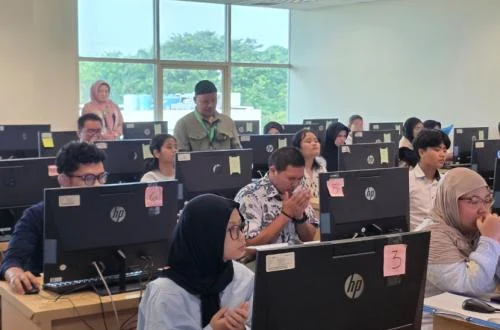
The Universitas Negeri Jakarta (UNJ) has recorded a significant milestone in its commitment to inclusive higher education, reporting a steady and substantial increase in the number of participants for its independent entrance examination specifically designed for students with disabilities. On Saturday, July 18, 2026, the university conducted its annual Penmaba Mandiri Jalur Disabilitas (Independent Admission for the Disability Track) at the Dewi Sartika Building, marking a new peak in institutional accessibility. This year, the number of applicants reached 138 individuals, representing a 9.6 percent increase compared to the 125 participants recorded in 2025. This upward trend highlights not only a growing desire among individuals with disabilities to pursue advanced academic degrees but also a strengthening of public confidence in the specialized support systems provided by one of Indonesia’s leading educational institutions.
The execution of the 2026 entrance exam serves as a critical barometer for the state of inclusive education in Indonesia. According to I Wayan Sugita, the Head of the UNJ Admissions Office, the consistent rise in applicant numbers is a direct result of the university’s long-term strategy to dismantle barriers to entry. Sugita emphasized that the 138 participants this year reflect a broader social shift where higher education is increasingly viewed as an attainable and necessary pathway for all citizens, regardless of physical or cognitive challenges. The university has worked diligently to market these programs and ensure that the infrastructure—both physical and digital—is prepared to accommodate a diverse range of needs.
Chronology of the 2026 Disability Track Selection Process
The selection process on July 18 began early in the morning at the heart of the UNJ campus. Candidates arrived at the Dewi Sartika Building, where a specialized reception and orientation system had been established to mitigate the stress often associated with high-stakes testing. The day was structured to provide maximum accessibility, beginning with a briefing for both students and their guardians regarding the day’s logistics and the specific accommodations available.
By 08:00 AM, the first round of examinations commenced. Unlike standard entrance exams, the disability track at UNJ is characterized by a high degree of personalization. For instance, the university deployed a comprehensive team of sign language interpreters to assist those with hearing impairments, ensuring that instructions were conveyed clearly and that students could ask questions in their primary mode of communication.
Throughout the afternoon, the university administration, including the Rector and Vice-Rectors, conducted on-site inspections to monitor the quality of service. The event concluded in the late afternoon after all participants had completed their respective modules, which included both general aptitude assessments and specific tests tailored to their chosen fields of study. This chronological flow was supported by months of prior planning, including the mapping of participant needs during the registration phase.
Data Analysis: Popular Faculties and Evolving Trends
A detailed breakdown of the 2026 application data reveals specific patterns in the academic interests of students with disabilities. This year, three faculties emerged as the most sought-after destinations: the Faculty of Engineering, the Faculty of Education, and the Faculty of Languages and Arts. Within these faculties, the Applied Bachelor’s program in Culinary Arts and Food Service Management stood out as the most popular major.
Experts suggest that the high interest in Culinary Arts and Engineering reflects a pragmatic approach to higher education among the disability community. These fields offer tangible, skill-based outcomes that are increasingly aligned with inclusive hiring practices in the private sector. The Faculty of Education remains a perennial favorite, as many students with disabilities aspire to return to the special education system as qualified teachers, thereby contributing to a cycle of empowerment.
The 9.6 percent growth from 2025 to 2026 is part of a five-year trajectory of expansion. Data from the UNJ Admissions Office indicates that since 2021, the number of applicants in the disability track has grown by nearly 45 percent. This growth correlates with the university’s increased investment in assistive technologies and the expansion of the "Relawan Disabilitas" (REDIS) program, which has become a cornerstone of the university’s inclusive identity.
The REDIS Framework: A Model for Peer Support
The success of the Penmaba Mandiri Jalur Disabilitas is largely attributed to the dedicated efforts of the UNJ Disability Volunteers, known as REDIS. For the 2026 selection cycle, REDIS mobilized 65 volunteers drawn from various academic years and disciplines. This group serves as the primary liaison between the university administration and the applicants, providing a layer of peer support that is both empathetic and efficient.
Prila Ahdanila, the Coordinator for REDIS during the 2026 admissions cycle, explained that the support process begins long before the day of the exam. "We receive detailed data from the Admissions Office regarding the specific requirements of each participant," Ahdanila stated. "Our task is to map these needs and assign volunteers accordingly. Whether a student requires a scribe, a mobility assistant, or someone to help manage sensory input, we ensure that no student is left to navigate the process alone."
During the examination, volunteers were assigned to support students with visual impairments, autism, and attention-deficit/hyperactivity disorder (ADHD). For students with visual impairments, volunteers assisted with navigating the campus and, where permitted, provided reading assistance for non-standardized portions of the assessment. For students with neurodivergent conditions, the focus was on creating a calm environment and providing structured transitions between testing segments. This level of granular support is rare in the Indonesian higher education landscape and positions UNJ as a regional leader in inclusive practices.
Institutional Leadership and the Philosophy of Equality
The university’s leadership has framed the disability track not as a charitable endeavor, but as a fundamental fulfillment of the state’s constitutional mandate to provide equal education to all citizens. Professor Ifan Iskandar, the Vice-Rector for Academic, Student, and Alumni Affairs, reiterated that the university’s goal is to provide a level playing field where potential—rather than disability—is the primary measure of a candidate’s worth.
"UNJ is committed to ensuring that every prospective student has an equal opportunity to demonstrate their academic potential," Professor Iskandar said. "To achieve this, we must constantly refine our support services so that the selection process is both fair and accessible. We are not just opening doors; we are ensuring that the path leading to those doors is navigable for everyone."
Rector Komarudin, who personally inspected the testing facilities on July 18, echoed these sentiments while also offering a critical perspective on the future of the program. While praising the logistics and the volunteer efforts, Komarudin noted that the university must look beyond physical accessibility and begin addressing the pedagogical aspects of the entrance exam itself.
"If the exam questions remain identical to those in the regular track, we must implement adjustments in our evaluation criteria to ensure true fairness," Komarudin remarked. His observation points toward a future where "equity" replaces "equality"—where the university recognizes that different students may need different assessment methods to truly showcase their intellectual capabilities. This indicates a potential shift toward more holistic admissions processes in the coming years.
Broader Impact and the National Context of Inclusive Education
The developments at UNJ are occurring within a broader national context. Indonesia has made significant strides in disability rights since the enactment of Law No. 8 of 2016 on Persons with Disabilities. This law mandates that all public institutions, including universities, provide reasonable accommodations and eliminate discrimination. UNJ’s proactive approach serves as a practical implementation of this legal framework, providing a blueprint for other State Universities (PTN) across the archipelago.
The implications of UNJ’s success extend into the labor market. By providing specialized tracks and robust support, the university is helping to increase the number of highly skilled graduates with disabilities. This, in turn, challenges the prevailing stereotypes in the Indonesian workforce and encourages corporations to adopt more inclusive hiring policies. As more students from the disability track graduate and enter the professional world, they serve as ambassadors for the "inclusive economy" that the Indonesian government is currently promoting.
Furthermore, the focus on programs like Culinary Arts and Engineering suggests that the university is successfully bridging the gap between academic theory and vocational reality. By empowering students with disabilities in these high-demand sectors, UNJ is directly contributing to the social mobility of a demographic that has historically faced significant economic marginalization.
Future Outlook: Scaling Success and Addressing Challenges
As UNJ looks toward the 2027 admissions cycle, the challenge will be to scale these services to accommodate even higher numbers of participants. The 9.6 percent growth seen this year suggests that the 150-participant threshold may be crossed in the near future. To meet this demand, the university will likely need to increase its budget for assistive technology, expand the REDIS volunteer pool, and potentially decentralize the testing process to other campus buildings to maintain a low-stress environment.
There is also an ongoing discussion within the academic community regarding the "post-admission" phase. While the entrance exam is a critical first step, the university is now focusing on how to maintain this level of support throughout a student’s four-year degree program. This includes the development of inclusive curricula, the training of faculty members in universal design for learning (UDL), and the continuous improvement of campus infrastructure.
The success of the 2026 Penmaba Mandiri Jalur Disabilitas at UNJ is a testament to what can be achieved when institutional will meets community action. By fostering an environment where 138 individuals with disabilities felt empowered to compete for a seat in higher education, UNJ has set a high standard for inclusivity. The university’s journey from simply offering a specialized track to actively refining its assessment criteria and support mechanisms reflects a deep-seated commitment to social justice and educational excellence. As the 2026 academic year begins, the eyes of the national education community will remain on UNJ to see how these 138 students thrive in an environment that has finally begun to recognize their full potential.