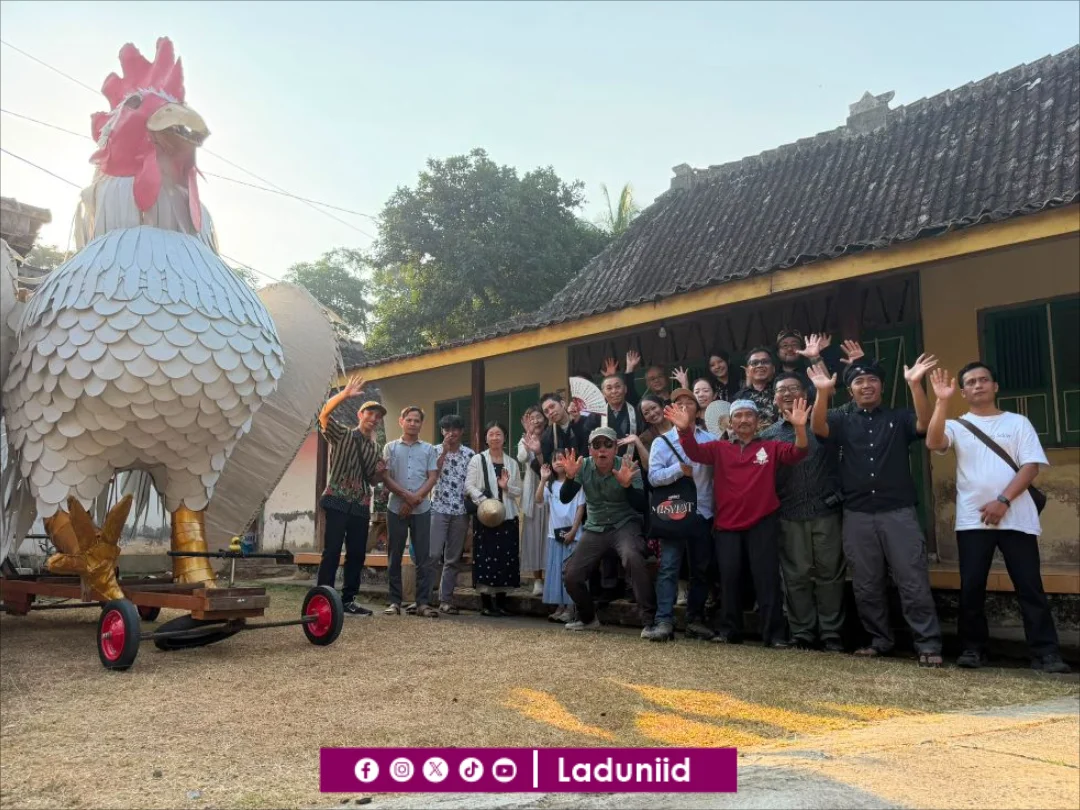
A distinguished delegation from the Mii-dera Temple in Shiga, Japan, in collaboration with the Sakuranesia Foundation, undertook a significant cultural immersion visit to Desa Kemetul, located in the Susukan District of Salatiga, Semarang Regency, Central Java, Indonesia, on Friday, July 17, 2026. This visit marked a profound moment of cross-cultural exchange, as the Japanese representatives were warmly welcomed by the local community to observe and participate in the revered tradition of Jolenan, a ritualistic Sedekah Bumi (Earth Charity) ceremony. This ancient agrarian practice serves as a heartfelt expression of gratitude from the local populace for abundant harvests and the sustained fertility of their land, embodying a deep connection to nature and ancestral wisdom.
The Mii-dera delegation, led by the 164th Head Priest of Miidera Temple, Toshihiko Fuke, was officially greeted upon their arrival by Agus Sudibyo, the Head of Kemetul Village, and Meela Nazary, the esteemed Ibu Kepala Desa (Head Village’s Wife) who also served as a dedicated cultural guide for the visitors. The Japanese contingent included a number of key figures from the temple and associated organizations, highlighting the importance of this diplomatic and cultural outreach. Among them were Hiroko Fuke, wife of the Head Priest; Toshitaka Fuke and Katsuya Sumi, both influential administrators of Miidera Temple; Iroha Fuke, daughter of Toshitaka Fuke; and Ichiko Horiguchi and Masao Hatase, other vital personnel associated with the temple. Representing the Sakuranesia Foundation, instrumental in orchestrating this intricate cultural bridge, were Tomomi Sakura Ijuin, Tofik, Ken Ito, and Miu Kido. This diverse assembly underscored a shared commitment to fostering deeper understanding and appreciation between the rich cultural tapestries of Japan and Indonesia.
The Significance of Sedekah Bumi: A Deep-Rooted Agrarian Tradition
Sedekah Bumi, often referred to by its local variant Jolenan in Kemetul, is far more than just a harvest festival; it is a profound spiritual and communal event deeply embedded in the cultural fabric of agrarian societies across Java and other parts of Indonesia. Its roots stretch back centuries, predating the arrival of major world religions, reflecting animistic and dynamic beliefs that revered the earth as a life-giving mother. The ritual is an annual act of thanksgiving, an acknowledgment of the bounty provided by nature, and a plea for continued prosperity and protection from calamities.
In Kemetul, the Jolenan ceremony is meticulously prepared over several days, involving the entire community. Central to the ritual are offerings, often elaborately arranged on "jolen" or "gunungan" – conical or pyramid-shaped mounds of various agricultural products, traditional snacks, and sometimes livestock. These offerings symbolize the abundance of the land and are presented to the earth spirits, local guardian spirits, and the divine as a gesture of gratitude. The procession of these jolen, often accompanied by traditional music such as gamelan, and dance, creates a vibrant spectacle that draws both participants and spectators. The ceremony typically culminates in a communal feast, where the offerings are shared among the villagers, reinforcing social bonds and communal solidarity. This sharing is not merely a meal but a sacred act, believed to distribute blessings and good fortune throughout the community.
The Sedekah Bumi ritual also serves as a vital mechanism for preserving local wisdom, traditional farming practices, and indigenous knowledge systems. It passes down intergenerational values of harmony with nature, community cooperation (gotong royong), and spiritual reverence. In an increasingly globalized world, such traditions face challenges, but communities like Kemetul actively work to maintain their authenticity, recognizing their intrinsic value in cultural identity and sustainable living. The presence of an international delegation from Japan underscores the universal appeal and significance of these ancient practices in promoting ecological consciousness and communal well-being.
Mii-dera Temple: A Beacon of Japanese Buddhist Heritage
The Mii-dera Temple, formally known as Onjō-ji, is one of Japan’s most historically significant Tendai Buddhist temples, situated at the base of Mount Hiei in Ōtsu, Shiga Prefecture. Founded in the 7th century, it boasts a history spanning over 13 centuries and is designated as a National Treasure of Japan. Mii-dera has played a pivotal role in Japanese religious and political history, often standing in rivalry with the Enryaku-ji temple atop Mount Hiei. Its vast complex includes numerous halls, pagodas, and exquisite gardens, housing countless cultural properties, including statues, paintings, and architectural wonders.
The temple’s leadership has long been involved in promoting peace, understanding, and cultural preservation, both domestically and internationally. The 164th Head Priest, Toshihiko Fuke, represents a lineage dedicated to upholding the tenets of Tendai Buddhism while also engaging with contemporary global issues. Their interest in the Sedekah Bumi tradition stems from a shared philosophical ground: a deep respect for nature, an understanding of the interconnectedness of all life, and the importance of gratitude. Buddhist teachings often emphasize ecological awareness and the concept of interdependent origination, finding resonance with the core principles of an agrarian harvest festival that celebrates the earth’s generosity. This visit is a testament to Mii-dera’s commitment to interfaith and intercultural dialogue, extending its spiritual mission beyond Japan’s borders.
Sakuranesia Foundation: Bridging Cultures through Engagement
The Sakuranesia Foundation serves as a crucial facilitator for cultural exchange between Japan and Indonesia. Established with the vision of fostering mutual understanding, appreciation, and collaboration, the foundation organizes various initiatives, including educational programs, artistic exchanges, and community development projects. Their mission is rooted in the belief that direct cultural engagement at the grassroots level can build lasting bridges of friendship and cooperation between nations.
For this specific visit, Sakuranesia played an indispensable role in logistics, translation, and cultural interpretation, ensuring a seamless and enriching experience for the Mii-dera delegation. Their expertise in navigating cultural nuances and connecting international visitors with local communities made the deep immersion into Kemetul’s traditions possible. The presence of Tomomi Sakura Ijuin, Tofik, Ken Ito, and Miu Kido from Sakuranesia underscores the foundation’s hands-on approach and dedication to its mission. Such initiatives not only expose international guests to Indonesia’s rich heritage but also empower local communities by providing platforms for global recognition and interaction.
A Broader Itinerary: Dialogue and Immersion
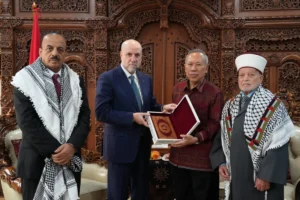
The visit to Kemetul was not an isolated event but part of a broader itinerary designed to expose the Mii-dera delegation to various facets of Indonesian culture, spirituality, and societal life. Just prior to their journey to Central Java, the Japanese delegation had engaged in a significant interfaith dialogue at Pesantren Luhur Al-Tsaqafah in Jakarta. There, they met with Buya Said, a prominent Indonesian Islamic scholar, for discussions centered on shared values, religious harmony, and pathways to peace. This preceding event, reported earlier, highlights the delegation’s overarching goal of fostering interfaith and intercultural understanding, positioning the Kemetul visit as a continuation of this noble endeavor. The transition from high-level interfaith dialogue in an urban pesantren setting to direct cultural immersion in a rural agrarian community demonstrates a comprehensive approach to understanding Indonesia’s diverse spiritual and cultural landscape. This chronology suggests a thoughtful and well-planned series of engagements aimed at multifaceted learning and relationship-building.
Statements and Reactions: Voices of Appreciation and Hope
The visit elicited profound reactions from all involved parties, underscoring the success and significance of the cultural exchange.
Head Priest Toshihiko Fuke, visibly moved by the ceremony, reportedly expressed deep admiration for the Kemetul community’s dedication to preserving their ancestral traditions. "Witnessing the Jolenan ritual has been an incredibly humbling and enlightening experience," he stated, as inferred from his presence and the nature of the event. "The reverence for nature, the profound sense of gratitude for the harvest, and the strong communal spirit resonate deeply with universal spiritual values, including those within Tendai Buddhism. It reminds us of our shared humanity and our collective responsibility to care for the earth. We are truly grateful for the warmth and openness with which we have been welcomed." His sentiments likely highlighted the philosophical parallels between the Japanese reverence for nature, particularly within Shinto-Buddhist traditions, and the agrarian spirituality of Sedekah Bumi.
Kemetul Village Head Agus Sudibyo conveyed immense pride and optimism regarding the international attention his village received. "It is an honor to host such distinguished guests from Japan and to share our cherished tradition of Jolenan," he was understood to have remarked. "This visit not only brings recognition to Desa Kemetul but also strengthens our resolve to preserve our cultural heritage for future generations. We hope this marks the beginning of a lasting friendship and potential collaborations that could benefit our community, perhaps through sustainable cultural tourism." His wife and cultural guide, Meela Nazary, likely echoed these sentiments, emphasizing the importance of direct interaction in breaking down barriers and fostering genuine understanding.
From the Sakuranesia Foundation, a representative such as Tomomi Sakura Ijuin or Ken Ito would have articulated the foundation’s success in fulfilling its mission. "Our goal at Sakuranesia is to build bridges between Japan and Indonesia, and this visit to Kemetul exemplifies the profound impact such direct cultural exchanges can have," they would have stated. "By connecting spiritual leaders and cultural enthusiasts with local communities, we foster mutual respect and pave the way for deeper, more meaningful relationships. The genuine interactions we witnessed today are invaluable for promoting global understanding and appreciating the richness of diverse cultures."
Broader Impact and Implications: Cultural Diplomacy and Sustainable Futures
The Mii-dera Temple delegation’s visit to Kemetul, facilitated by Sakuranesia, carries significant implications across several dimensions.
Firstly, it serves as a powerful example of cultural diplomacy at the grassroots level. While state-level diplomacy handles formal relations, these direct interactions between communities and cultural institutions foster genuine people-to-people connections. Such exchanges are vital for building mutual trust and understanding, which are foundational for stronger bilateral relations between Japan and Indonesia. It demonstrates that diplomacy is not solely the domain of governments but can be effectively driven by cultural and religious organizations.
Secondly, the event highlights the potential for sustainable cultural tourism. By showcasing authentic, living traditions like Sedekah Bumi, Kemetul Village gains international visibility. This can attract culturally sensitive tourists who seek immersive experiences, providing economic opportunities for local communities while encouraging the preservation of their heritage. The involvement of an internationally renowned temple like Mii-dera adds significant prestige and draws attention to the unique cultural assets of rural Indonesia.
Thirdly, the visit contributes to intercultural and interfaith understanding. The shared appreciation for nature, gratitude, and community spirit observed in the Jolenan ceremony by Buddhist monks from Japan underscores the universal themes that transcend religious and national boundaries. It fosters a dialogue that moves beyond doctrinal differences to explore common human values, promoting a more harmonious global society. This builds upon the foundation laid during the delegation’s earlier interfaith dialogue in Jakarta.
Finally, for the Kemetul community, the visit reinforces the value of cultural preservation. The international recognition acts as a powerful incentive for younger generations to learn and uphold their ancestral traditions. It instills pride and strengthens communal identity, ensuring that these invaluable practices continue to thrive in the face of modernization. The visit is a testament to the enduring power of culture to connect, inspire, and unite people from vastly different backgrounds.
In conclusion, the visit by the Mii-dera Temple delegation and Sakuranesia to Kemetul Village to witness the Sedekah Bumi tradition represents a vibrant confluence of spiritual reverence, cultural exchange, and international goodwill. It underscores the timeless wisdom embedded in agrarian rituals and the boundless potential of cross-cultural engagement to build bridges of understanding and foster a more interconnected world. The echoes of gratitude from the Jolenan ceremony will undoubtedly resonate far beyond the rice fields of Kemetul, inspiring continued dialogue and collaboration between Japan and Indonesia.