
In the discourse of modern macroeconomics, the terms "economic growth" and "economic development" are frequently used interchangeably by the public, yet they represent distinct concepts with significant implications for policy-making and national welfare. While both metrics aim to track the progress of a nation, they differ fundamentally in scope, objective, and measurement. Economic growth serves as a quantitative measure of a country’s production capacity, whereas economic development encompasses a broader, more qualitative transformation of the socio-economic structure. Understanding these nuances is essential for evaluating whether a nation is merely becoming wealthier or if it is truly improving the lives of its citizens.
Defining the Core Paradigms
At its most basic level, economic growth is defined as the increase in the inflation-adjusted market value of the goods and services produced by an economy over a specific period. It is traditionally measured by the percentage increase in the Real Gross Domestic Product (GDP). The focus here is strictly numerical: is the "pie" getting bigger? Factors such as stock market performance, industrial output, and consumer spending are the primary drivers of this metric.
In contrast, economic development is a multi-dimensional process involving major changes in social structures, popular attitudes, and national institutions, as well as the acceleration of economic growth, the reduction of inequality, and the eradication of poverty. If economic growth is about the size of the "pie," economic development is about how that pie is baked, what ingredients are used, and how fairly it is distributed among the population. Development is inherently normative, meaning it is tied to values regarding what constitutes a "good life," including access to healthcare, education, and political freedom.
The Evolution of Economic Metrics: A Historical Context
The distinction between growth and development gained prominence in the post-World War II era. In the 1950s and 1960s, many economists assumed that rapid GDP growth would "trickle down" to the masses, automatically solving social ills. However, by the 1970s, it became evident that several nations were experiencing high growth rates while poverty, unemployment, and income inequality remained stagnant or even worsened.
This realization led to the "Redistribution with Growth" movement and the eventual creation of the Human Development Index (HDI) by the United Nations in 1990. The HDI shifted the focus from national income to people-centered policies, emphasizing that people and their capabilities should be the ultimate criteria for assessing the development of a country. Today, international bodies like the World Bank and the International Monetary Fund (IMF) analyze both growth trajectories and development indicators to provide a holistic view of a nation’s health.
Key Indicators of Divergence
To distinguish between these two phenomena, economists point to four primary indicators, all of which use GDP as a baseline but interpret its fluctuations through different lenses.

1. The Nature of GDP Increase
Economic growth is characterized by a simple increase in the Real GDP. It does not necessarily require a change in the economic structure. For example, a country that exports more oil due to rising global prices will see economic growth, even if its internal infrastructure remains antiquated.
Economic development, however, requires that the increase in GDP be accompanied by structural shifts—moving from an agrarian economy to an industrial or service-based one. It focuses on the "quality" of growth. For instance, the construction of a Regional General Hospital (RSUD) on a previously abandoned lot signifies development because it builds long-term human capital, whereas the mere sale of that land for a speculative real estate profit might only contribute to short-term growth.
2. Population Dynamics and Per Capita Income
A critical point of divergence is how each concept treats population growth. Economic growth does not inherently account for the number of people sharing the wealth. If a nation’s GDP grows by 3% but its population grows by 4%, the average citizen is actually becoming poorer.
Economic development specifically monitors the relationship between GDP and population. True development occurs only when the rate of economic growth exceeds the rate of population growth over a sustained period, leading to an increase in per capita income and a tangible improvement in the standard of living.
3. Technological Advancement and Innovation
The role of Science, Technology, and Innovation (known in Indonesia as IPTEK) is a hallmark of economic development. While economic growth can occur through the mere expansion of existing resources (using more labor or more land), development is driven by improvements in efficiency and the adoption of new technologies.
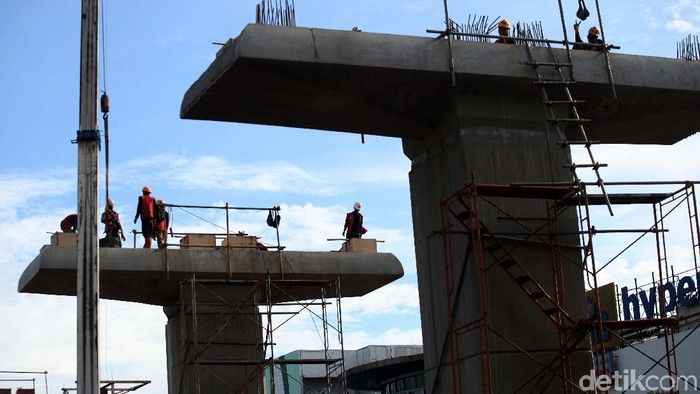
The development of modern transit systems, such as the Light Rail Transit (LRT) and Mass Rapid Transit (MRT) in metropolitan areas like Jakarta, serves as a prime example. The Indonesian government’s investment of approximately Rp 29.9 trillion in the Jabodebek LRT project is more than just a capital expenditure; it is an engine of economic development. It reduces logistics costs, minimizes environmental impact, and improves the productivity of the workforce. While the ticket prices and daily revenue of these systems contribute to economic growth metrics, the existence of the infrastructure itself represents a leap in developmental capacity.
4. Social Welfare and Equity
The final and perhaps most vital distinction lies in social welfare. Economic growth is often "blind" to inequality. A country could theoretically have a very high GDP while the majority of its wealth is concentrated in the hands of a small elite.
Economic development asks whether the rising GDP is translating into lower infant mortality, higher literacy rates, and better gender equality. It utilizes tools like the Gini Coefficient to measure income distribution. If the growth of a nation does not result in a reduction of the poverty gap, it is failing the test of development.
Case Study: Indonesia’s Infrastructure Push
Indonesia provides a contemporary case study in the tension between growth and development. In the last decade, the nation has maintained a steady GDP growth rate of approximately 5% (excluding the pandemic-induced contraction). However, the government’s focus has shifted toward "Indonesia-centric" development rather than "Java-centric" growth.
The construction of the Trans-Papua Highway, the expansion of regional airports, and the building of new RSUDs in remote provinces are strategic attempts to convert economic growth into economic development. By building a hospital on a site that once housed a defunct minimarket, the state transforms a private commercial failure into a public social asset. This transition improves the "Human Capital Index," a key metric of development, by ensuring a healthier workforce capable of sustaining future growth.
Implications for Policy and Future Outlook
For policymakers, the distinction between growth and development dictates the allocation of national budgets. A government focused solely on growth might prioritize tax cuts for large corporations and deregulation to stimulate immediate investment. A government focused on development will prioritize "pro-poor" spending, such as subsidies for education, universal healthcare, and sustainable energy infrastructure.
The long-term implication of ignoring development in favor of growth is the "Middle-Income Trap." This occurs when a country grows to a certain level of income but cannot transition to a high-income economy because it lacks the necessary human capital, technological innovation, and institutional quality.
In conclusion, while economic growth is a necessary prerequisite for a nation’s advancement, it is not the final goal. Growth provides the financial resources, but development determines the societal outcome. A truly prosperous nation is one that manages to harmonize the two: achieving a robust, growing economy that simultaneously fosters an equitable, healthy, and educated society. As global challenges like climate change and digital transformation accelerate, the ability to distinguish between these two paths will be the defining factor in national success for the 21st century.