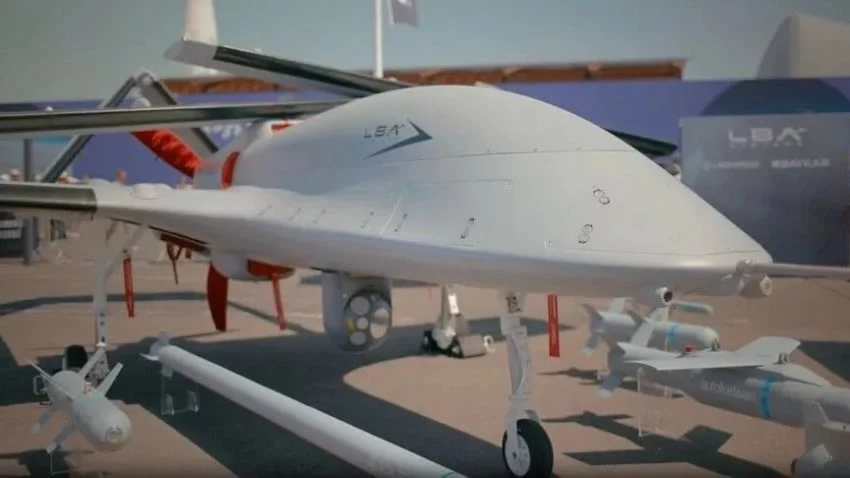
The Farnborough International Airshow has served as the backdrop for a landmark announcement in the evolution of aerial warfare, as Turkish defense giant Baykar and Italy’s aerospace leader Leonardo unveil the latest milestones in their collaborative efforts regarding Manned-Unmanned Teaming (MUM-T) technology. This strategic alliance, which bridges the gap between Mediterranean defense powerhouses, marks a significant shift in how modern air forces envision the integration of piloted aircraft with autonomous systems. The two companies are scheduled to hold a comprehensive briefing on Monday, providing the global defense community with a detailed look at the successful trials and future roadmap of a project that could dictate the standards of 21st-century combat operations.
The Convergence of Manned and Unmanned Capabilities
At the heart of this collaboration is the integration of Leonardo’s M-346 advanced jet trainer and light combat aircraft with Baykar’s KIZILELMA, a state-of-the-art unmanned combat aerial vehicle (UCAV). The concept of MUM-T represents a paradigm shift in military strategy, often referred to as the "Loyal Wingman" doctrine. In this configuration, a piloted aircraft serves as the command-and-control hub, orchestrating a fleet of autonomous or semi-autonomous drones that can perform reconnaissance, electronic warfare, or direct strike missions.
The recent trials conducted in Turkey have demonstrated the seamless communication and operational synergy between these two distinct platforms. By utilizing the M-346, which is widely regarded as one of the most sophisticated lead-in fighter trainers in the world, pilots can gain hands-on experience in managing high-performance drones like the KIZILELMA in a contested environment. This partnership addresses a critical need in modern air forces: the ability to project power while minimizing the risk to human pilots and maximizing the cost-efficiency of aerial fleets.
Technical Profiles: The M-346 and Bayraktar KIZILELMA
To understand the magnitude of this partnership, one must examine the technical prowess of the platforms involved. Leonardo’s M-346 is a twin-engine, tandem-seat aircraft designed for the final stages of pilot training before they transition to fifth-generation fighters like the F-35 or the Eurofighter Typhoon. Beyond its role as a trainer, the M-346 Fighter Attack (FA) variant is equipped with a Grifo-346 multi-mode radar and seven hardpoints, making it a formidable light combat platform. Its open architecture and advanced datalink capabilities make it the ideal candidate for controlling unmanned assets in a MUM-T framework.
On the other side of the equation is the Bayraktar KIZILELMA, Baykar’s first unmanned fighter jet. Unlike traditional drones that are propeller-driven and optimized for long-endurance surveillance, the KIZILELMA is a jet-powered, low-observable (stealth) aircraft capable of carrier-based operations and supersonic speeds. Since its maiden flight in December 2022, the KIZILELMA has undergone rapid development, incorporating high-maneuverability features and an internal weapons bay to maintain its stealth profile. The integration of such a high-performance UCAV with a manned jet like the M-346 allows for a "sensor-to-shooter" cycle that is faster and more resilient than traditional methods.
The Role of LBA Systems and the Bayraktar TB3
The collaboration between Baykar and Leonardo is further solidified through LBA Systems, a joint venture specifically designed to explore and exploit the synergies between Turkish drone expertise and Italian aerospace engineering. A key highlight of their presentation at Farnborough is the Bayraktar TB3. This unmanned platform is a naval-optimized evolution of the world-renowned TB2, featuring foldable wings and the ability to take off and land on short-runway carriers, such as Turkey’s TCG Anadolu or similar amphibious assault ships utilized by European navies.
The inclusion of the TB3 in the Farnborough display is a strategic move aimed at the European market. As many European nations look to modernize their naval aviation and coastal defense capabilities, a cost-effective, combat-proven drone that can operate from smaller decks offers a compelling alternative to expensive manned carrier-borne jets. The TB3 serves as a "mature" platform—one that is nearing full-scale production and is ready for deployment, proving that the Baykar-Leonardo partnership is not merely experimental but is producing tangible hardware for the global market.
Chronology of a Growing Defense Alliance
The path to the Farnborough announcement has been paved by several years of deepening industrial ties between Ankara and Rome.
- 2021-2022: Initial discussions between the Turkish Presidency of Defense Industries (SSB) and Italian defense officials highlighted the potential for joint development in the unmanned sector.
- December 2022: The Bayraktar KIZILELMA completed its first flight, signaling Turkey’s entry into the jet-powered UCAV arena.
- Early 2023: Leonardo and Baykar formalized their intent to explore MUM-T integration, recognizing that the M-346’s avionics suite provided the perfect "brain" for controlling autonomous "wingmen."
- Mid-2024: Successful flight tests in Turkey confirmed that the datalink protocols between the M-346 and KIZILELMA could operate reliably under simulated combat conditions.
- July 2024: The joint briefing at the Farnborough International Airshow serves as the public unveiling of their progress, targeting NATO allies and global defense buyers.
Strategic Implications for NATO and the Global Market
The timing and location of this announcement carry heavy strategic weight. By choosing the Farnborough International Airshow—a premier event for the UK and its Western allies—Baykar and Leonardo are sending a clear message to the NATO alliance. This partnership demonstrates that innovative, high-tech defense solutions can emerge from intra-NATO collaboration outside of the traditional US-centric supply chain.
For Turkey, this represents a significant step in its "Century of Turkey" vision, which aims to make the country a top-tier global defense exporter. For Italy, the partnership allows Leonardo to maintain its edge in the advanced trainer market while positioning itself as a leader in the rapidly growing MUM-T sector. Analysts suggest that this collaboration could provide a formidable competitor to other "Loyal Wingman" programs, such as the Boeing MQ-28 Ghost Bat or the various unmanned components of the Franco-German Future Combat Air System (FCAS).
Furthermore, the integration of Turkish combat experience with Italian technical standards provides a unique value proposition. Baykar’s systems have seen extensive action in conflict zones ranging from Nagorno-Karabakh to Ukraine, providing a wealth of real-world data that Leonardo can use to refine its avionics and control interfaces.
Analysis: The Future of Aerial Combat
The shift toward MUM-T is driven by two primary factors: the rising cost of fifth-generation manned fighters and the increasing lethality of modern Integrated Air Defense Systems (IADS). A single F-35 or Eurofighter represents a massive investment in both capital and human life. By utilizing a "hub and spoke" model, where one M-346 or similar aircraft controls several KIZILELMA or TB3 drones, an air force can saturate enemy defenses, conduct high-risk suppression of enemy air defenses (SEAD) missions, and maintain a persistent presence over the battlefield at a fraction of the cost.
The Baykar-Leonardo partnership also addresses the "mass" problem in modern warfare. Recent conflicts have shown that high-tech, expensive platforms can be overwhelmed by sheer numbers. The ability to mass-produce UCAVs that can fly alongside manned jets allows for a scalable force that can adapt to various threat levels.
Official Responses and Industry Reactions
While official statements from the Monday briefing are highly anticipated, industry insiders have already noted the synergy. Sources close to the project suggest that the feedback from pilots who participated in the Turkish trials has been overwhelmingly positive, particularly regarding the intuitive nature of the M-346’s interface when managing the KIZILELMA’s flight paths.
Defense analysts in the UK and Europe have noted that this partnership could accelerate the adoption of unmanned systems within NATO. "What we are seeing at Farnborough is the transition of drones from being ‘auxiliary tools’ to being ‘integral teammates’ in the air combat mosaic," noted one senior aerospace consultant. "The fact that a Turkish firm and an Italian firm are leading this charge shows the decentralization of defense innovation."
Conclusion and Outlook
As the Farnborough International Airshow continues, the eyes of the defense world remain fixed on the Monday briefing by Baykar and Leonardo. The progress reported in their MUM-T trials signifies more than just a successful technical experiment; it represents a new era of industrial cooperation. By combining the agility and combat-proven innovation of Baykar with the sophisticated engineering and systemic reliability of Leonardo, the two companies are positioning themselves at the forefront of the next great leap in military aviation.
In the coming months, the focus will likely shift toward the finalization of the LBA Systems production lines and the potential for the M-346/KIZILELMA package to be offered to international customers. As air forces around the world grapple with the challenges of the modern battlefield, the "loyal wingman" solution presented by this Turkish-Italian alliance offers a glimpse into a future where the sky is shared by man and machine in a lethal, coordinated dance of technology and strategy. For the global defense industry, the message from Farnborough is clear: the future of air combat has arrived, and it is collaborative, autonomous, and increasingly integrated.