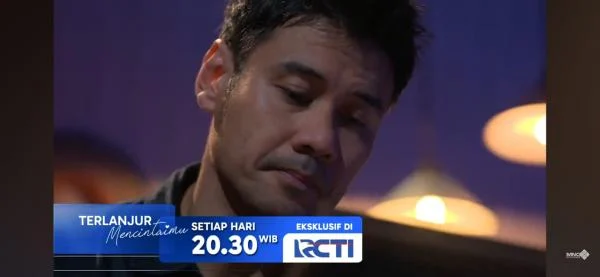
The television landscape in Indonesia continues to be dominated by high-stakes drama and intricate storytelling, with RCTI’s latest offering, Terlanjur Mencintaimu, securing its position as a primetime staple. Airing nightly at 20:30 WIB on RCTI Channel 28, the series has captivated a broad demographic by blending traditional soap opera tropes with contemporary production values and a sophisticated exploration of human emotions. As the narrative progresses, the series has moved beyond a simple romantic premise, evolving into a complex web of revenge, hidden identities, and the search for long-lost familial connections. The latest developments in the plot suggest a turning point for the lead characters, challenging their motivations and forcing them to confront the consequences of their past actions.
The Evolution of the Elio and Arumi Narrative Arc
At the heart of Terlanjur Mencintaimu is the turbulent relationship between Elio, portrayed by the seasoned actor Chicco Jerikho, and Arumi, played by Marsha Aruan. The casting of Jerikho, who has spent much of the last decade focusing on feature films, marks a significant return to the small screen, bringing a level of gravitas to the character of Elio. Elio is a man driven by a singular purpose: a meticulously planned revenge strategy. However, the latest episodes demonstrate that even the most calculated plans are susceptible to the unpredictability of human connection.
The burgeoning chemistry between Elio and Arumi has reached a new level of visibility during a recent sequence set in a pediatric hospital. In a departure from the corporate and domestic settings that usually define the genre, the characters are seen volunteering to entertain children suffering from cancer. By donning superhero costumes alongside Kevin (played by Erdin Werdrayana), Elio and Arumi engage in an act of altruism that serves a dual purpose in the narrative. First, it humanizes Elio, showing a softer side that contradicts his vengeful exterior. Second, it provides a catalyst for Arumi to see Elio as more than a mere acquaintance or adversary.
This specific plot point—volunteering for a social cause—is a recurring theme in modern Indonesian "sinetrons" (soap operas), used to build character depth and provide a brief respite from the central conflict. However, the warmth of the moment is juxtaposed with the internal struggle of Elio. He is seen repeatedly attempting to convince himself that his kindness toward Arumi is merely a tactical move in his broader scheme of retribution. This internal monologue highlights the psychological complexity of the character, as he battles the cognitive dissonance between his mission and his growing affection for his target.
The Dynamics of Jealousy and the Support Cast
The hospital scene also serves as a flashpoint for the secondary characters, particularly Kevin. As Elio and Arumi share moments of genuine laughter and connection, Kevin’s observation of their rapport triggers a palpable sense of jealousy. This development adds a layer of tension to the trio’s dynamic, suggesting that future episodes will see a more aggressive stance from Kevin as he attempts to protect his own interests or feelings for Arumi.
The supporting cast of Terlanjur Mencintaimu is instrumental in fleshing out the world of the show. With a lineup that includes Miqdad Addausy as Rendi/Alex, Jennifer Eve as Laura, and veteran actress Sari Nila as Anika, the series employs a multi-generational approach to storytelling. Each character represents a different facet of the central mystery. Miqdad Addausy’s dual-identity role as Rendi/Alex provides a noir-like element to the drama, while the presence of Sari Nila and Verlita Evelyn (who plays Celia) ensures that the "matriarchal" power struggles common in Indonesian dramas are well-represented.
The Search for Identity: Celia’s Quest and the Dirgantara Mystery
While the romantic tension between Elio and Arumi drives the primary interest of the younger demographic, the subplot involving Celia offers a more traditional mystery that appeals to long-time drama viewers. Celia’s search for her missing daughter has taken a dramatic turn following the revelation regarding her late partner, Reza Dirgantara. The discovery that Reza had a legal, legitimate wife prior to their "nikah siri" (unregistered marriage) introduces significant legal and social complications.
In the context of Indonesian society, the concept of "nikah siri" often carries weight in television dramas because of the inherent vulnerabilities it creates for the woman and any children born of the union. Celia’s realization that she was, in essence, a second wife without the full legal protections of the state adds a layer of tragedy to her character. This discovery is not merely a plot device for emotional distress; it serves as a lead to the whereabouts of her lost child. The search for this daughter is expected to collide with the main storyline involving Elio and Arumi, as the Dirgantara family secrets are slowly unraveled.
Production Context and the Role of RCTI in Digital Migration
The success of Terlanjur Mencintaimu must be viewed through the lens of Indonesia’s recent transition to digital broadcasting. RCTI, as part of the Media Nusantara Citra (MNC) group, has been a leader in this transition. The shift to Channel 28 is part of the nationwide Analog Switch-Off (ASO) initiative, which has forced broadcasters to improve the visual and audio quality of their content to match the capabilities of digital signals.
Terlanjur Mencintaimu benefits from this high-definition environment. The cinematography in the recent hospital scenes, the costume design, and the use of urban Jakarta as a backdrop reflect a higher production budget compared to sinetrons of the previous decade. Furthermore, the integration of the show with the Vision+ streaming platform allows for a multi-platform engagement strategy. Viewers who miss the 20:30 WIB broadcast can catch up on-demand, a factor that has helped maintain the show’s high ratings despite the competitive primetime slot.
Chronology of Key Events Leading to the Current Conflict
To understand the weight of the current episodes, it is necessary to look at the timeline of events that brought the characters to this point:
- The Foundation of Revenge: Several weeks prior, Elio entered the lives of the Dirgantara family under a cloud of mystery, driven by a grievance related to his past that he blames on the family’s patriarch.
- The Encounter with Arumi: Arumi, initially skeptical of Elio, began to trust him after a series of orchestrated "heroic" moments where Elio saved her from various professional and personal crises.
- The Celia Revelation: Celia’s investigation into her past began when she found a hidden photograph of Reza Dirgantara with an unknown woman, leading her down a path of uncovering Reza’s double life.
- The Hospital Volunteerism: The most recent development, where the characters stepped out of their comfort zones to engage in charity work, served as the catalyst for the current emotional shift and Kevin’s heightened jealousy.
Broader Implications and Thematic Analysis
The narrative of Terlanjur Mencintaimu touches upon several themes that resonate with the Indonesian public. The most prominent is the concept of "karma" and the cycle of revenge. Elio’s struggle is a classic literary conflict: the desire for justice versus the capacity for forgiveness. By placing him in a situation where he must perform acts of kindness (the hospital visit), the writers are forcing the character to confront his own humanity.
Furthermore, the show addresses social issues such as pediatric health and the complexities of family law. By incorporating a subplot about cancer patients, the production brings a level of awareness to the audience, even if portrayed through a fictional lens. The legal drama surrounding Celia’s marriage highlights the ongoing social discourse in Indonesia regarding the status of unregistered marriages and the rights of the children involved.
From a market perspective, the series demonstrates the enduring power of the sinetron format. While international streaming services like Netflix and Disney+ Hotstar have gained traction in Indonesia, local content that reflects local values, linguistic nuances, and social structures continues to hold the largest market share. The ability of RCTI to produce content that rivals the production quality of regional dramas (such as K-Dramas or Thai Lakorns) while remaining uniquely Indonesian is a key factor in its continued dominance.
Future Outlook: What to Expect
As Terlanjur Mencintaimu moves into its next phase, viewers can expect a collision of the two main storylines. It is highly probable that the daughter Celia is searching for is already integrated into the main cast, a common revelation in serialized dramas that ensures maximum emotional impact. For Elio, the path forward is fraught with risk. If Arumi discovers that her burgeoning love was born out of a revenge plot, the betrayal could be the central conflict for the remainder of the season.
The jealousy of Kevin also remains a wildcard. In many sinetrons, the "third wheel" character often shifts from a rival to an antagonist if their feelings are not reciprocated, potentially leading Kevin to join forces with Elio’s enemies or to uncover Elio’s true identity to Arumi prematurely.
In conclusion, Terlanjur Mencintaimu is more than just a romantic drama; it is a carefully constructed narrative that mirrors the complexities of modern Indonesian life. With its strong cast, high production values, and layered storytelling, it remains a flagship program for RCTI. As the characters navigate the thin line between love and hate, the audience remains tethered to their journeys, making it one of the most successful television programs currently on the air. Fans are encouraged to tune in to RCTI Channel 28 or access the Vision+ app to follow the next chapters of this unfolding saga.