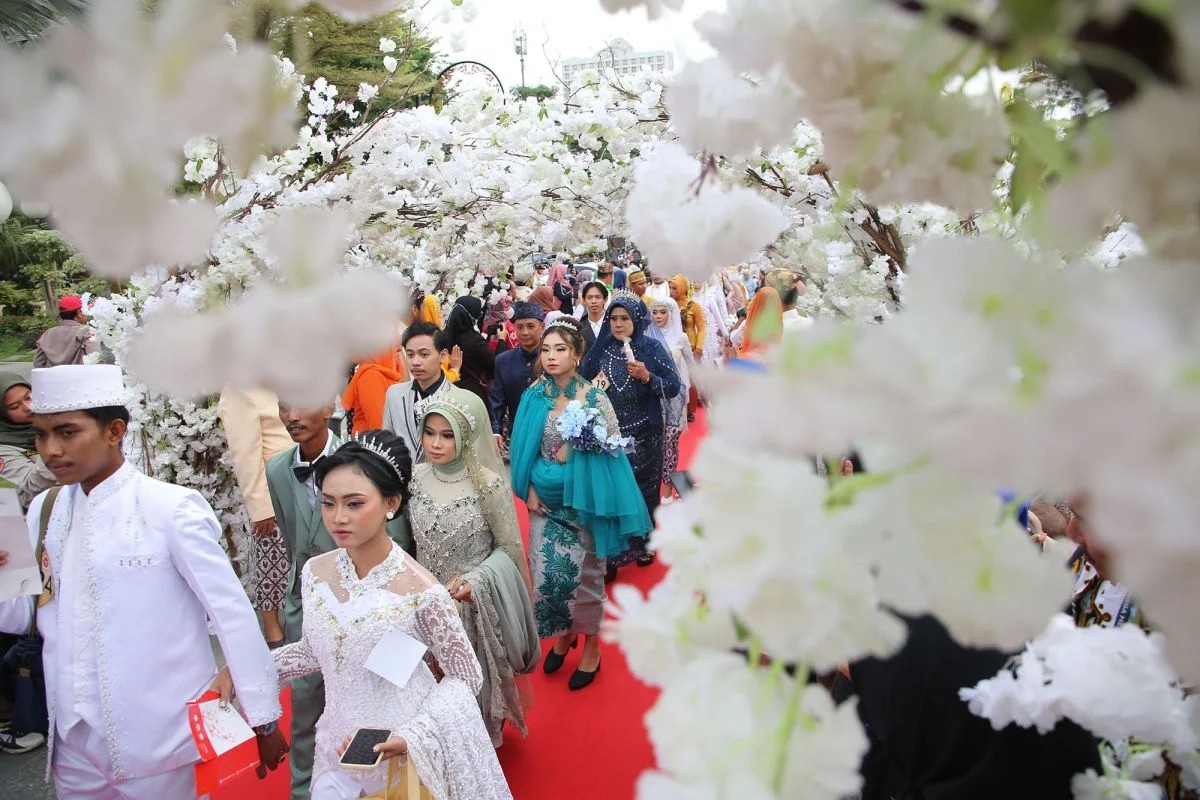
In the Islamic tradition, the conclusion of the akad nikah, or the solemnization of the marriage contract, marks more than just a legal change in status; it signifies the beginning of a spiritual journey that requires divine intervention and community support. Following the completion of the formal vows, Islam encourages Muslims to offer specific prayers for the newlyweds. These supplications serve as a profound petition to the Almighty, seeking that the newly established household be filled with barakah (blessings), mawaddah (affection), and rahmah (mercy). Far from being mere formalities, these prayers are deeply rooted in the Sunnah—the practices and teachings of the Prophet Muhammad SAW—and are intended to provide a spiritual foundation for the challenges and joys of married life.
The act of praying for a couple after their union is a highly recommended practice that involves the family, relatives, and guests in attendance. By reciting these prayers, the community collectively validates the union and asks for the couple’s transition into a life characterized by sakinah, or tranquility. This tradition emphasizes that a successful marriage is not solely the result of human effort but is also a gift of divine grace. In the contemporary context, where the institution of marriage faces various socio-economic pressures, these spiritual practices are increasingly viewed by scholars and religious authorities as essential tools for building domestic resilience and long-term stability.
The Prophetic Supplication: Seeking Universal Blessings
The most renowned prayer offered to newlyweds, which is firmly grounded in authentic Hadith, is a concise yet comprehensive plea for the couple’s welfare. The Prophet Muhammad SAW taught his followers to say: "Barakallahu laka wa baraka ‘alaika wa jama’a bainakuma fii khair." Translated into English, this means: "May Allah bless you, and may He shower His blessings upon you, and may He unite you both in goodness." This particular phrasing is significant because it covers all aspects of a couple’s life—their individual prosperity, their shared experiences, and their ultimate destination of performing good deeds together.
This prayer is sourced from narrations provided by Abu Hurairah RA and recorded in the major Hadith collections of Abu Dawud (No. 2130), At-Tirmidzi (No. 1091), and Ibnu Majah (No. 1905). Imam At-Tirmidzi classified this Hadith as hasan sahih (good and authentic), reinforcing its status as the gold standard for wedding felicitations in the Muslim world. Historically, this prayer replaced the greetings used during the pre-Islamic era, known as the period of Jahiliyyah. During that time, people would congratulate a groom by saying "Bir-rifa’ wal banin," which translates to "May you live in harmony and have many sons." The Prophet Muhammad SAW redirected this focus from worldly outcomes—such as the gender of children—toward the concept of barakah, which encompasses holistic well-being in both this life and the hereafter.
The Husband’s First Act: A Prayer of Responsibility and Tenderness
Beyond the general prayers offered by guests, Islamic tradition outlines a specific ritual for the husband to perform immediately following the akad nikah. It is recommended that the husband places his hand gently upon his wife’s forehead (the crown of the head) and recites a specific supplication. This act symbolizes the husband’s role as a protector and his recognition of his wife as a divine trust. The prayer is as follows: "Allahumma inni as’aluka min khairiha wa khairi ma jabaltaha ‘alaihi, wa a’udzu bika min syarriha wa syarri ma jabaltaha ‘alaihi."
This translates to: "O Allah, I ask You for her goodness and the goodness of the nature upon which You have created her. And I seek refuge in You from her evil and the evil of the nature upon which You have created her." This prayer, narrated by Abu Dawud, is often misunderstood by those outside the faith. In Islamic jurisprudence, "goodness" refers to the virtuous traits and potential for righteousness within the spouse, while "evil" refers to the human fallibilities and trials that any person may bring into a relationship. By reciting this, the husband acknowledges that both he and his wife are imperfect beings in need of God’s guidance to navigate their life together. It sets a tone of humility and spiritual accountability from the very first moments of the marriage.
The Chronology of the Islamic Wedding Ceremony
To understand the placement of these prayers, one must look at the typical chronology of an Islamic wedding in Indonesia and across the Muslim world. The process usually begins with the Khutbah Nikah (marriage sermon), which provides a theological framework for the union. This is followed by the Ijab Kabul (the offer and acceptance), which is the legal core of the contract. Once the witnesses declare the contract valid (Sah!), the officiant or a designated religious leader leads the congregation in the post-wedding prayers.
In Indonesia, the Ministry of Religious Affairs (Kemenag) has standardized this process through the Office of Religious Affairs (KUA). The ceremony concludes with the signing of the marriage books and the symbolic exchange of the dowry (mahr). It is during this transition—from the legal signing to the social celebration—that the prayers for the couple are most prominently featured. This sequence ensures that the couple enters their new life with a clear understanding of their legal obligations, followed immediately by a reminder of their spiritual duties.
Statistical Context: Marriage Trends and the Need for Resilience
The emphasis on these prayers and spiritual guidance comes at a time when marriage dynamics in Indonesia are shifting. According to data from the Central Bureau of Statistics (BPS), Indonesia recorded approximately 1.5 million marriages in 2023. While this number remains high, there has been a noticeable trend in the rising age of first-time marriages and an increase in divorce rates over the last decade. In 2022, divorce cases in Indonesia reached over 500,000, often cited as being caused by economic disputes, domestic violence, or a lack of communication.
In response to these figures, the Ministry of Religious Affairs has intensified its "Bimbingan Perkawinan" (Marriage Guidance) programs. These programs are designed to move beyond the administrative aspects of the akad nikah and focus on "Ketahanan Keluarga" (Family Resilience). Religious officials, known as penghulu, are now trained to be more than just wedding officiants; they are tasked with being counselors who can explain the deep philosophical meanings of the prayers and the rights and responsibilities inherent in an Islamic marriage. The goal is to ensure that the "sakinah, mawaddah, wa rahmah" sought in the post-akad prayers becomes a lived reality rather than just a recited wish.
Theological Analysis: The Meaning of Sakinah, Mawaddah, and Rahmah
The prayers offered after the akad nikah are essentially a request for the realization of three Quranic concepts: Sakinah, Mawaddah, and Rahmah. Islamic scholars explain that Sakinah refers to a state of tranquility and security that descends upon a home where God is remembered. It is the peace that allows a couple to remain calm during the inevitable storms of life.
Mawaddah is often translated as "love," but specifically refers to the passionate, outward expression of affection and the desire for the partner’s well-being. Rahmah, or "mercy," is the deeper, more enduring bond that sustains a marriage when the initial fires of passion might fade. It is the compassion that allows spouses to forgive each other’s mistakes and care for one another in old age or illness. By invoking these three elements through prayer, the community is asking for a comprehensive emotional and spiritual ecosystem for the couple.
Expert Perspectives and Institutional Support
Religious leaders and sociologists alike argue that the ritual of prayer serves a vital psychological function. Dr. H. Jazilul Fawaid, a prominent figure in religious education, has noted in various forums that the spiritual atmosphere of the akad nikah acts as a "sacred anchor." When a couple faces conflict later in life, the memory of the solemn prayers and the presence of their community can serve as a deterrent to impulsive separation.
Furthermore, the KUA (Kantor Urusan Agama) has evolved to become a "hub" for family welfare. The Ministry of Religious Affairs recently launched initiatives to ensure that penghulu are equipped to detect early signs of domestic instability and provide intervention. This institutional support mirrors the intent of the post-akad prayers: it is a collective effort to ensure that the "goodness" (khair) mentioned in the Prophetic supplication is maintained through both spiritual practice and social support systems.
Conclusion: A Holistic Approach to Modern Marriage
The practice of reciting prayers after the akad nikah is a testament to the holistic nature of Islam, which refuses to separate the legal from the spiritual or the individual from the community. These prayers provide a scriptural blueprint for what a healthy relationship should look like: one blessed by God, supported by the community, and characterized by mutual goodness.
As Indonesia continues to modernize, the preservation of these traditions serves as a vital link to the past and a shield against the pressures of the present. By enriching the akad nikah ceremony with a deep understanding of its prayers, couples are not just fulfilling a religious requirement; they are equipping themselves with a spiritual vocabulary that will help them navigate the complexities of building a life together. The ultimate goal remains the same as it was in the time of the Prophet: to create a home that is a sanctuary of peace and a source of goodness for the wider world.