The political landscape in Jakarta has entered a period of intense deliberation following the unexpected resignation of Vice President Gibran Rakabuming Raka. In a move signaling strong internal cohesion, the political parties forming the coalition government under President Prabowo Subianto have collectively opted to refrain from proposing their own internal candidates for the vacancy. Instead, the coalition has unanimously agreed to grant President Prabowo full discretion to nominate two candidates to be submitted to the People’s Consultative Assembly (MPR) for final confirmation. This development marks a significant consolidation of executive authority and highlights the strategic alignment of the ruling coalition in the wake of a major leadership transition.
The Context of the Vacancy and the Shift in Political Strategy
The departure of Gibran Rakabuming Raka, who resigned from the vice presidency citing personal reasons, triggered an immediate constitutional requirement to fill the vacancy. Under Indonesian law, the process necessitates that the President propose two candidates to the MPR, which then selects the replacement through a plenary session.
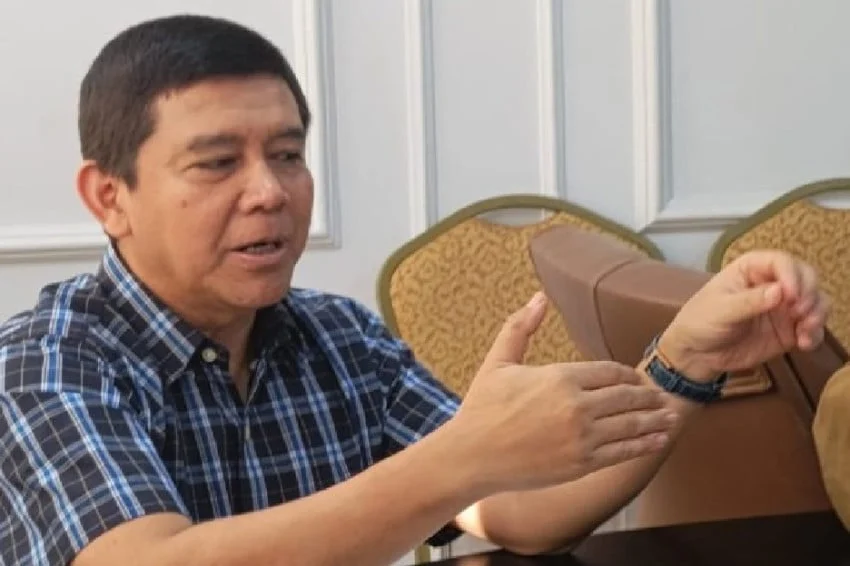
Historically, such vacancies in Indonesian political history have often been characterized by intense lobbying and internal competition among coalition partners. However, the current environment is markedly different. Yuddy Chrisnandi, Head of the Research and Development Agency (Balitbang) of the Golkar Party’s Central Executive Board, observed that the current restraint shown by coalition parties serves as a clear indicator of the government’s internal stability. According to Chrisnandi, the decision to defer entirely to President Prabowo is not merely a gesture of deference but a deliberate political signal. "This signals a clear consensus," Chrisnandi noted in a formal statement on Saturday, November 21, 2026. He specifically pointed to the growing consensus surrounding Sufmi Dasco Ahmad, the Daily Chair of the Gerindra Party, as a potential frontrunner in the President’s deliberations.
Chronology of the Leadership Transition
The timeline of this transition began with the official announcement of the Vice President’s resignation, which sent shockwaves through the Indonesian political establishment. Within 48 hours of the announcement, President Prabowo Subianto held a series of closed-door meetings at the State Palace with the chairmen of the coalition parties.
By the third day following the vacancy, Zulkifli Hasan, Chairman of the National Mandate Party (PAN), emerged from a coalition summit to confirm that no party leaders had formally submitted names of their own cadres for the position. This was a departure from the expected posturing of parties attempting to leverage their parliamentary strength for executive representation.
By the end of the first week, the focus had shifted toward the criteria required for the role. With the government facing significant economic headwinds—including global inflation pressures and domestic fiscal reform targets—the coalition recognized that the next Vice President must be someone with high technical competency, not just political capital. The formal selection process is expected to culminate in the submission of the two presidential choices to the MPR by early December 2026.
Strategic Realignment and the Role of Golkar
The Golkar Party, as one of the largest entities within the coalition, has played a pivotal role in maintaining the narrative of unity. Yuddy Chrisnandi emphasized that Golkar remains firmly behind the President’s prerogative. He candidly admitted that while Golkar has a deep bench of experienced politicians, there is a clear recognition that the President’s inner circle—particularly those from the Gerindra Party—possesses a level of institutional and personal rapport that is currently essential for the stability of the administration.
"Golkar will support the candidate chosen by President Prabowo," Chrisnandi stated. "We recognize that the current exigencies of the state require a Vice President who is not only politically capable but is already synchronized with the President’s vision and working rhythm." This stance effectively neutralizes potential friction within the coalition, ensuring that the process of selecting a new Vice President does not devolve into a period of parliamentary paralysis or inter-party infighting.
Defining the Ideal Candidate: Criteria for Governance
The search for the next Vice President is framed by a rigorous set of professional and political standards. Based on the consensus reached among the coalition leadership, the criteria for the next Vice President include:
- Established Trust: The individual must have a long-standing history of professional trust with President Prabowo, ensuring that the executive branch operates as a cohesive unit.
- Visionary Alignment: The candidate must share the President’s long-term developmental goals, particularly regarding the "Golden Indonesia 2045" roadmap and the current administration’s focus on industrial downstreaming.
- Parliamentary Proficiency: Given the need to pass critical legislation in the coming years, the Vice President must be adept at managing communications with the House of Representatives (DPR) and navigating complex political coalitions.
- Economic Acumen: The candidate must possess a deep understanding of fiscal policy, budgetary constraints, and the nuances of the state budget (APBN).
- Public Engagement: The individual must have the capacity to effectively communicate government policies to the broader public, ensuring transparency and maintaining popular support.
These criteria appear tailored to minimize the learning curve for a new Vice President, suggesting that the administration is prioritizing continuity over political expansion.
Analysis of Implications: Executive Stability vs. Coalition Diversity
The decision to defer to President Prabowo holds profound implications for the future of the coalition. By empowering the President to make the final decision without the interference of traditional party-quota politics, the coalition is effectively granting him a mandate to prioritize efficiency over patronage.
Political analysts suggest that this move could significantly strengthen the executive branch’s leverage in the coming legislative sessions. If the chosen candidate is a seasoned technocrat or a trusted aide with strong political instincts, such as Sufmi Dasco Ahmad, the administration could see a streamlining of its decision-making processes. However, this also poses a long-term challenge for the coalition parties. By failing to nominate their own, these parties are effectively subordinating their independent political brands to the Prabowo-Gerindra identity.
Furthermore, the impact on the MPR and the legislative process is likely to be positive in the short term. A Vice President hand-picked by the President is more likely to act as a bridge between the State Palace and the legislature, reducing the friction that often occurs when a Vice President is forced upon a President by political compromise.
Supporting Data and Political Landscape
As of late 2026, the coalition government controls over 70% of the seats in the DPR, providing the administration with a supermajority that is rare in Indonesia’s democratic history. This numeric dominance is the primary reason why the coalition feels comfortable leaving the Vice Presidential appointment to the President. With such a strong buffer in the legislature, the President does not need to "buy" support through a Vice Presidential appointment; he is already in a position of total legislative control.
Furthermore, economic data suggests that the administration is under pressure to deliver on growth targets. Recent reports from the Ministry of Finance indicate that fiscal space is limited, necessitating a Vice President who can hit the ground running on budget management. The move to prioritize competence over partisan representation is a direct response to these economic realities.
Conclusion and Future Outlook
The current situation represents a maturation of the Indonesian coalition system. By avoiding the pitfalls of internal competition, the coalition parties have signaled that the stability of the Prabowo administration is their primary objective. The upcoming submission of names to the MPR will likely be a formality, provided the President selects candidates who align with the established criteria and the broader coalition’s expectations.
As Indonesia prepares for this transition, the focus remains on whether the new Vice President can maintain the balance between the administrative demands of the state and the political requirements of a diverse coalition. With the backing of the major parties and a clear path toward selection, President Prabowo Subianto is well-positioned to steer the country through this transition with minimal disruption, cementing his authority and ensuring that the government’s agenda remains firmly on track for the remainder of his term. The nation now watches closely as the President finalizes his choice, a decision that will define the trajectory of the government for years to come.