The Indonesian national basketball team is setting its sights on a decisive campaign in the upcoming second round of the FIBA Asia Cup 2029 Pre-Qualifiers, scheduled to take place in Mongolia from November 26 to 29, 2026. Under the strategic leadership of head coach Koko Heru Setyo Nugroho, the squad is aiming for a minimum of two victories, a goal deemed highly achievable following a rigorous and successful series of domestic exhibition matches. This campaign represents a critical juncture for Indonesia as it seeks to solidify its position in the continental basketball landscape and move closer to securing a berth in the prestigious FIBA Asia Cup 2029.
The Momentum of Preparation
The national team’s preparation phase has been marked by a concentrated effort to build chemistry and tactical cohesion. Recognizing the competitive intensity that awaits them in Ulaanbaatar, the coaching staff organized a series of three high-level scrimmages against formidable opponents from the Indonesian Basketball League (IBL). These practice games were designed not merely to secure wins, but to stress-test the team’s defensive rotations and offensive efficiency against physically imposing domestic squads.
The results have been overwhelmingly positive, providing the coaching staff with valuable data on player rotations and lineup versatility. By sweeping these exhibition matches, the team has cultivated a sense of momentum that is essential when heading into international tournament settings.
Chronology of the Domestic Exhibition Series
The preparation schedule was carefully curated to mimic the intensity of a tournament format, with games spaced closely together to test the team’s endurance and ability to recover.
- November 17, 2026 – The Opener: The series kicked off at the GOR GMSB Kuningan in South Jakarta. Facing the Borneo Hornbills, the national team demonstrated superior perimeter shooting and transition defense, securing a comfortable 96-82 victory. This opening performance was critical for establishing the team’s offensive identity under coach Nugroho.
- November 19, 2026 – The Close Call: Two days later, the squad faced a significantly stiffer challenge against Dewa United. The game served as a masterclass in late-game execution, with the national team narrowly escaping with a 76-74 victory. The slim margin highlighted the team’s resilience under pressure, a trait that will be indispensable in the high-stakes environment of the FIBA qualifiers.
- November 20, 2026 – The Final Test: Concluding the domestic stretch, the national team squared off against the perennial powerhouse Satria Muda Pertamina. The 74-70 victory served as the perfect bookend to the preparation phase, confirming that the team could maintain defensive discipline even when facing high-caliber league rivals.
Roster Composition and Key Personnel
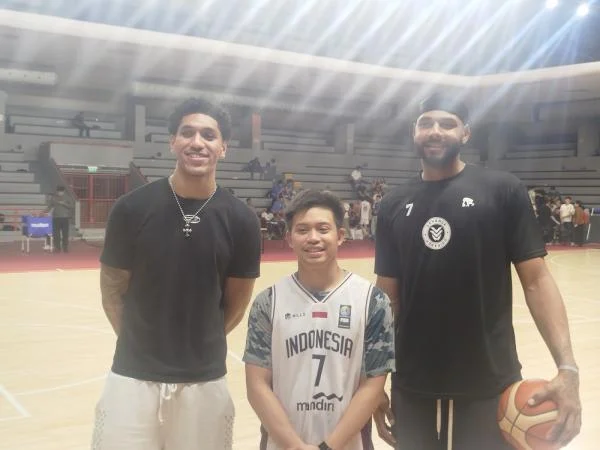
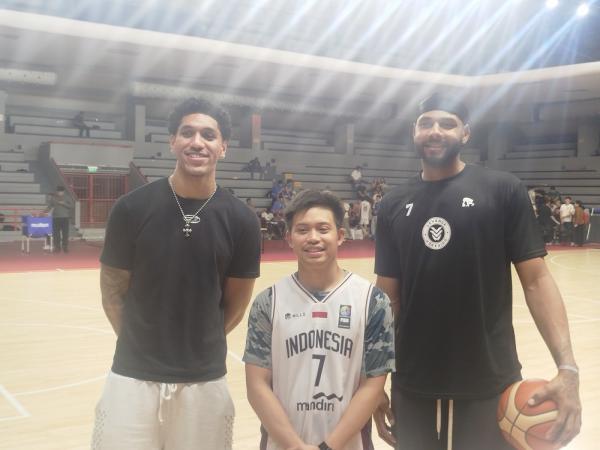
The current iteration of the Indonesian national team is built around a core of experienced campaigners and rising talent. As confirmed by the recent roster announcement, the team will feature 17 players, with heavy reliance on the frontcourt presence of Marques Bolden and the dynamic versatility of Derrick Michael.
Marques Bolden, a naturalized center with significant international experience, remains the defensive anchor and the primary offensive outlet in the paint. His ability to control the glass and alter opponent shots is central to the team’s strategy. Alongside him, Derrick Michael provides the necessary athleticism and floor spacing required in the modern game. Their partnership is expected to be the focal point of Indonesia’s tactical approach in Mongolia, providing a reliable baseline of production regardless of the opponent.
Contextualizing the FIBA Asia Cup 2029 Pre-Qualifiers
The FIBA Asia Cup 2029 represents a long-term goal for the Indonesian Basketball Association (PERBASI). The Pre-Qualifiers are the preliminary gatekeepers that determine which nations advance to the main qualifying windows. Mongolia, acting as the host nation for this second round, presents a unique challenge, both in terms of the environment and the travel logistics.
For Indonesia, these qualifiers are not just about individual game results; they are part of a broader mandate to increase the national program’s FIBA ranking. Improving this ranking is essential for more favorable draws in future international events, including the FIBA World Cup and the Asia Cup proper. Coach Nugroho has emphasized that the team’s performance in this round will serve as a barometer for how much the national program has evolved since the last qualifying cycle.
Tactical Analysis: The Nugroho Philosophy
Coach Koko Heru Setyo Nugroho has implemented a system that prioritizes high-tempo basketball balanced with disciplined half-court sets. The exhibition matches against the Borneo Hornbills, Dewa United, and Satria Muda revealed a team that is comfortable playing at a high pace but capable of grinding out wins in low-scoring affairs.
Tactically, the team has been working on "switch-everything" defensive schemes, which are designed to neutralize smaller, faster guards—a common trait among many Asian national teams. By utilizing the length of players like Bolden and Michael, the coaching staff intends to force opponents into contested mid-range jumpers rather than allowing easy drives to the rim or open corner three-pointers.
Implications for the Future of Indonesian Basketball
The broader impact of a successful performance in Mongolia cannot be understated. A strong showing would likely boost interest in the national team program and provide a template for future IBL seasons. Furthermore, the inclusion of young, high-potential players alongside established stars like Bolden suggests that Indonesia is looking to build a sustainable pipeline of talent.
The team’s ability to compete with domestic clubs like Dewa United—which has recently invested heavily in its own infrastructure and coaching staff—serves as a testament to the rising quality of the local talent pool. As the IBL continues to professionalize and expand, the national team acts as the flagship entity that represents the pinnacle of this progress.
Challenges Ahead in Ulaanbaatar
While the preparation has been flawless, the transition to the international stage brings new variables. Adapting to the climate in Mongolia, managing international travel fatigue, and scouting opponents that the team may not have seen for several years are all hurdles that the coaching staff is currently navigating.

Furthermore, the pressure of international competition often manifests in shooting percentages and turnover rates. In the domestic games, the players had the advantage of familiarity with their opponents. In the FIBA environment, the scouting reports will be less frequent, and the game-to-game adjustments will need to be made on the fly. However, the confidence shown by the coaching staff suggests that the squad is mentally prepared to handle these fluctuations.
Official Outlook and Expectations
The target of "at least two wins" is a calculated one. It accounts for the varying skill levels within the group and the necessity of winning the games against theoretically weaker opponents to maintain a path toward qualification. Official sources from within the national team camp have expressed satisfaction with the current level of conditioning and the tactical buy-in from the players.
There is a consensus that this iteration of the national team is one of the most balanced in recent memory. By moving away from over-reliance on a single scoring option and instead fostering a collective effort, the team has mitigated the risk of being shut down by specialized defensive coverage from opponents.
Conclusion: A Critical Window
As the team prepares for their departure, the atmosphere surrounding the national squad is one of focused determination. The journey to the FIBA Asia Cup 2029 is a marathon, not a sprint, and the upcoming round in Mongolia is a vital mile marker. If the squad can replicate the defensive intensity and late-game poise they displayed during their domestic exhibition series, they stand a strong chance of meeting their target.
For the fans and the stakeholders of Indonesian basketball, these matches are more than just athletic contests; they are a demonstration of the country’s rising stature in the sport. The eyes of the basketball community in Southeast Asia will be firmly fixed on Ulaanbaatar, waiting to see if Indonesia can translate their domestic success into regional prominence. With the final roster finalized and the preparation phase concluded, the stage is set for a pivotal performance in the history of the national basketball program.