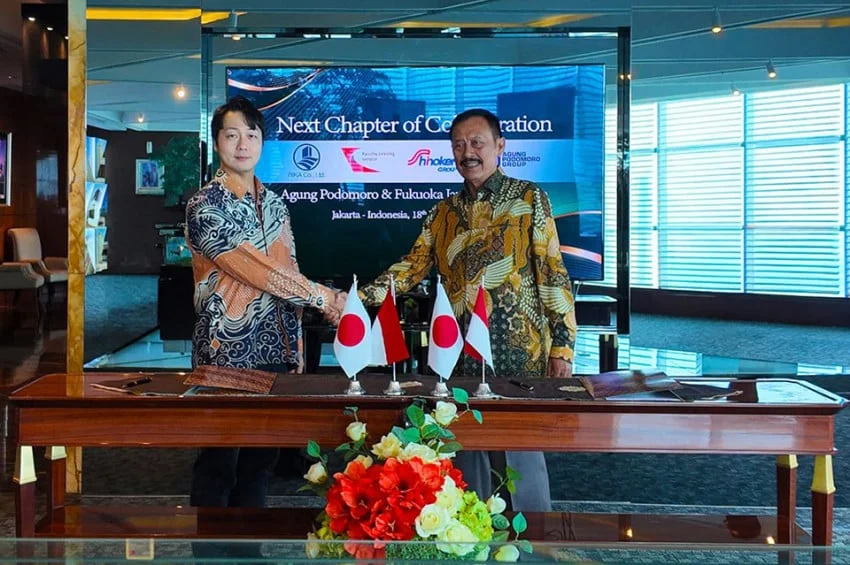
The rapid evolution of Kota Podomoro Tenjo into a premier residential and commercial hub in West Java marks a significant milestone in Indonesia’s property sector. Developed by the renowned Agung Podomoro Group, the township has emerged as one of the most high-growth real estate projects in the Bogor region. This sustained development is evidenced not only by the thousands of residents who have already transitioned into their new homes but also by the sustained influx of both domestic and international capital. The recent decision by the Fukuoka Consortium—a prominent group of Japanese investors—to expand their footprint in the development serves as a powerful endorsement of the project’s long-term viability and the broader health of the Indonesian property market.
A Chronology of Growth and Strategic Development
Since its inception in 2020, Kota Podomoro Tenjo has been designed as a transit-oriented development (TOD) that addresses the critical need for affordable yet high-quality housing within commuting distance of Jakarta. In the four years since the project launched, the developer has successfully navigated the post-pandemic economic landscape, maintaining steady construction progress and aggressive marketing campaigns.
The partnership with the Fukuoka Consortium began in 2025, marking a pivotal shift in the township’s profile. In September 2025, the consortium initiated the development of the Edelweiss Cluster, a project that served as a litmus test for Japanese-standard residential quality in the Indonesian market. The success of this collaboration was rapid; within just one year, over 70% of the units in the Edelweiss Cluster were absorbed by the market. This high sales velocity provided the necessary confidence for the consortium to commit to further development, leading to the current announcement regarding the upcoming Mahogany Cluster.
Official Perspectives on the Partnership
Marketing Director for Region 1 at Agung Podomoro, Yenti Lokat, emphasized that the continued investment from the Fukuoka Consortium is not merely a financial transaction but a validation of the township’s strategic planning. "The Fukuoka Consortium has demonstrated a clear commitment to the vision of Kota Podomoro Tenjo. By deciding to expand their investment and develop the new Mahogany Cluster, they are signaling their confidence in the project’s infrastructure and the sustainable demand for high-quality housing in the Bogor corridor," Lokat stated in a recent briefing.
She further noted that the integration of international design standards—specifically the Japandi style—has been a major differentiator for the project. "The Mahogany Cluster will introduce the Midori Type, which synthesizes Japanese aesthetic minimalism with Scandinavian functionality. This caters to a modern demographic that values both efficiency and environmental harmony," she added.
Technical Specifications and Architectural Innovation
The Mahogany Cluster is designed to be a centerpiece of the township’s second phase of expansion. The introduction of the Midori Type reflects a deeper understanding of urban living, where space optimization is paramount. By incorporating traditional Japanese garden concepts with modern residential layouts, the developer aims to create an oasis-like environment that contrasts with the typical density of Greater Jakarta’s suburban sprawl.
From an engineering perspective, the project utilizes sustainable materials and climate-responsive architecture. The focus on "Japandi" design is not merely stylistic; it involves high-performance building envelopes that improve thermal efficiency, reducing the long-term energy costs for residents. This commitment to efficiency aligns with broader national goals regarding green building certifications and energy conservation in residential developments.
Enhancing the Transit-Oriented Ecosystem
The growth of Kota Podomoro Tenjo is fundamentally tied to its infrastructure. A key component of the project’s success is its integration with the Grand TOD Kota Podomoro Tenjo station. This transit hub is designed to reduce the commuting burden on residents, providing a direct link to the metropolitan rail network. The forthcoming inauguration of the station is expected to act as a significant value multiplier for property owners, as connectivity remains the primary driver of real estate appreciation in the Bogor-Jakarta corridor.
Beyond transportation, the development of the Modern Market (Pasar Modern) represents a strategic effort to empower local micro, small, and medium enterprises (MSMEs). By creating a dedicated space for local commerce within the township, Agung Podomoro is ensuring that the community remains self-sustaining, reducing the need for residents to travel outside the area for daily necessities. This creates a "15-minute city" model, where work, leisure, and essential services are within walking distance of the residential clusters.
Market Implications and Economic Analysis
The continued investment by international entities like the Fukuoka Consortium provides several key insights into the current state of the Indonesian property market. Firstly, it highlights that foreign investors are increasingly looking beyond the saturated luxury markets of Central Jakarta, finding higher yields and growth potential in well-planned suburban townships.
Secondly, the success of the Edelweiss and Mahogany clusters suggests a shift in consumer preference. Buyers are no longer seeking raw floor space alone; they are prioritizing "value-added" living environments. This includes access to clubhouse facilities like the Magnolia Premium Clubhouse, green open spaces, and reliable public infrastructure. As of late 2025, data indicates that property appreciation in the Tenjo area has outperformed the regional average in Bogor, largely due to the rigorous maintenance of the township’s master plan.
The broader impact of this development on the local economy is also substantial. The construction phase alone creates thousands of jobs, while the operational phase of the modern markets and retail facilities provides ongoing employment for the surrounding communities. By acting as an anchor project, Kota Podomoro Tenjo serves as a catalyst for infrastructure improvements in the wider Tenjo district, often leading to improved road access and utility provision from the local government.
Challenges and Future Outlook
Despite the positive momentum, developers in the region face ongoing challenges, including fluctuations in material costs and the complexities of managing large-scale infrastructure projects. However, the partnership with the Fukuoka Consortium provides a layer of institutional stability. The consortium’s involvement likely includes rigorous oversight, which benefits the overall quality control of the project.
Looking forward, the success of Kota Podomoro Tenjo will likely be measured by its ability to maintain its "premium" status as the population density of the township increases. The developer has already planned for future phases, which are expected to include more educational facilities and healthcare clinics, further cementing the township’s role as an independent urban center rather than a mere dormitory town.
Conclusion
The evolution of Kota Podomoro Tenjo into a flagship development is a testament to the efficacy of the transit-oriented development model in the Indonesian context. With the backing of international investors and a clear strategy to integrate lifestyle, transit, and economic empowerment, the project stands as a model for future suburban expansion. As the Mahogany Cluster moves from planning to construction, the market will be watching closely to see if this momentum can be sustained in the coming years. For investors and prospective residents alike, the development offers a stable, high-growth prospect that reflects the ongoing modernization of the Indonesian residential landscape. The collaboration between local expertise and Japanese architectural precision provides a robust foundation for what is shaping up to be one of the most successful urban development stories in West Java.